

My wife’s grandmother was a child in Bergen-Belsen, and her grandfather was a Jewish boy in Nazi-occupied Holland. At the time, it was not yet called the Holocaust; they were simply trying to survive hunger, cold and fear of death in a world where Jews had no power to protect themselves.
After the war, they immigrated to Israel and, like many of their generation, chose to build, raise a family, create new lives and believe there was hope in the young state.
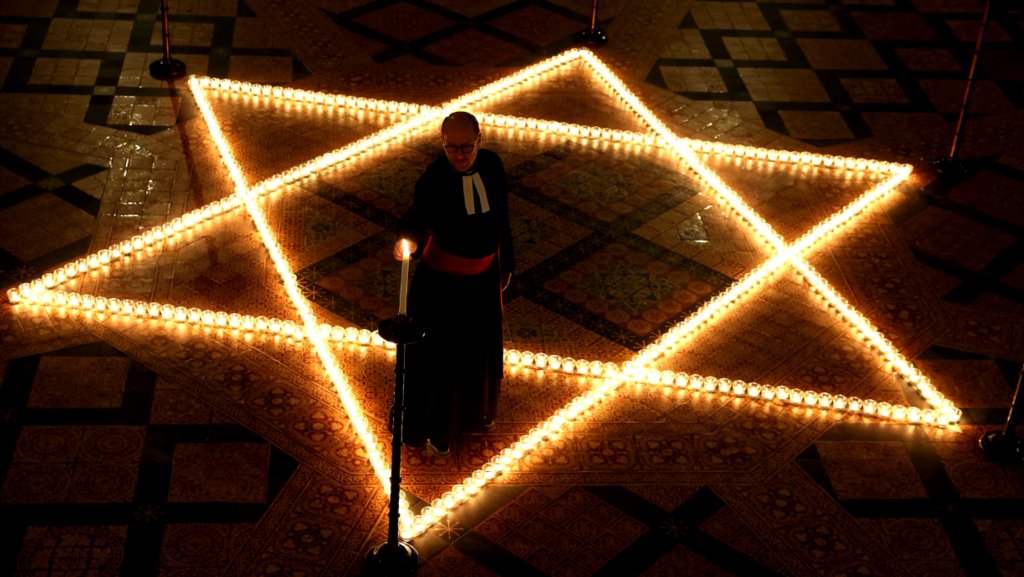
(Photo: REUTERS/Lee Smith)
On the eve of Holocaust Remembrance Day, thoughts of them merge with an old-new reality. Their grandchildren now wear olive uniforms and fight in Gaza and Lebanon. The gap between a world in which Jews were persecuted without the ability to respond and one in which Jews fight to defend themselves may be the most dramatic change the Jewish people have experienced in the past century.
Two years ago, when we entered the home of a Hamas commander in Khan Younis, we found Adolf Hitler’s “Mein Kampf,” worn from heavy use by that despicable terrorist who, thanks to Israeli soldiers, can no longer threaten our lives.
There is a thread connecting these periods: antisemitism has not disappeared, it has simply changed form. It no longer speaks in terms of race, but of “morality.” It often appears in disguise, not as open incitement against Jews, but as international discourse that persistently questions Israel’s legitimacy to defend itself.
The horrors of October 7 brutally demonstrated how real the threat to Israel is. This is an enemy that does not hide its intentions.
Since then, the diplomatic arena has sharpened. Iran openly threatens and speaks of destroying Israel, Turkish President Recep Tayyip Erdogan has intensified his rhetoric and raised the possibility of direct confrontation, and Pakistan, which is mediating efforts between the United States and Iran, does not conceal its deep hostility toward Israel. As 85 years ago, some European leaders respond with hesitation, using seemingly balanced language that struggles to distinguish between aggressor and defender and distorts moral clarity. The United States, for all its complexities, often remains the clearer voice on the international stage.
This so-called moral discourse gradually undermines Israel’s very right to act in defense of its citizens, a discourse in which the accusation is inverted, and the Jewish state is repeatedly required to justify its very existence.
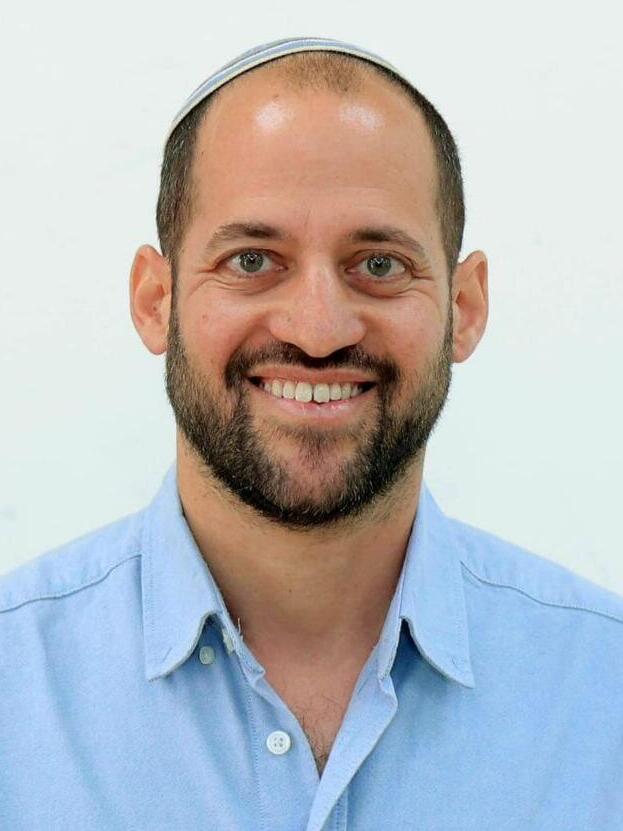 Davidi Ben Zion
Here the immense historical difference becomes clear. My wife’s grandparents lived in a world where Jews had no state and no army and depended on the decisions of others. Their grandchildren live in a completely different world, one in which there is a State of Israel, sovereignty and a military capable of action. This does not eliminate the dangers, on the contrary, it requires greater responsibility: to identify strategic threats in time, to confront dangerous rhetoric even when it is wrapped in diplomatic language, to distinguish between legitimate criticism and delegitimization and, of course, to ensure that our military is always prepared and vigilant.
Holocaust Remembrance Day is a day of looking forward, not only back — a reminder of what happens when Jews cannot defend themselves. This time, history is not repeating itself. We have a responsibility to safeguard the remarkable state we have built and our people. We have strength, we have power and we have the ability to determine our own fate. That is the difference, and it is the whole story.