

Nukhbah terrorists must die. The acts they committed deny them the right to exist on this earth. They realized the most terrible sides of what humans are capable of, behaved worse than predatory animals, and there is no forgiveness or correction for their actions.
The Jewish faith holds that the most fitting description for human beings is being created in the image of God, and this carries immense meaning. It is a description given in the story of creation, before humans divided into different nations and races.
We were all created in the Divine image, and this carries diverse implications: belief in human free will and the capacity to reflect on oneself, the demand for responsibility toward the world, the existence of a moral conscience to which one must act, and so forth. Because of this, a person has a special ethical protection, and we have the supreme duty to prevent bloodshed as much as possible: “Whoever sheds the blood of man, by man his blood shall be shed; for in the image of God He made man.” (Genesis 9:6)
Even though a person is created in God’s image, he can lose it, and the rights associated with it. When he himself acts like a predator and worse, and he deliberately and intentionally, in an organized manner and with a purpose that harms the meaning of his existence as a human being, he is no longer entitled to this special protection. He has no place on this earth. This is one of the deepest messages that arises from a fundamental moral outlook concerning what is demanded of human beings.
This is the basis for Israel’s legislation on the Punishment of Nazis and Their Collaborators, which has existed for many years in the State of Israel, and it is entirely justified and faithful to these values. That law, of course, has been implemented only once in our country’s history. It teaches that not everyone who sheds blood is necessarily condemned to destruction. Sometimes it is done unintentionally, sometimes negligently, sometimes purposely but not as part of a sweeping campaign. In such cases the law requires a severe penalty—but one cannot speak of losing the right to exist.
In this sense, one can certainly understand the results of the survey by the Tzohar organization’s online channel Mashav, which found that 81 % of Jews in Israel support the death penalty for Nukhbah terrorists. The more complex question is whether legislating the death penalty as mandatory for terrorists is the solution we should adopt.
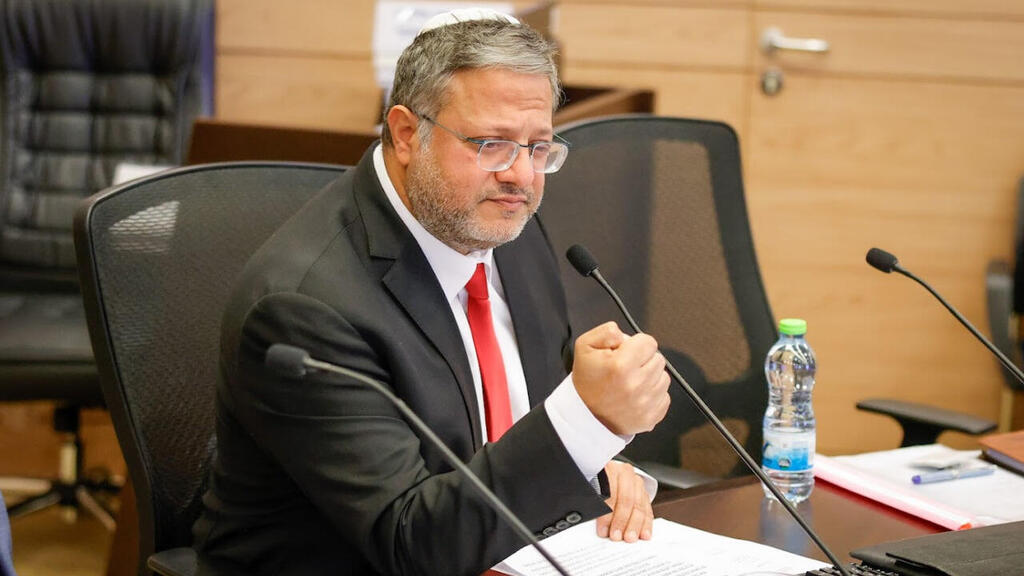
National Security Minister Itamar Ben-Gvir in the Knesset debate on the death penalty law for terrorists
(Photo: Noam Moskowitz, Knesset Spokesperson)
There are many reasons to oppose a blanket death penalty for every act of murder or killing, even if committed for nationalist motives. Especially when it involves removing judicial discretion from the judges.
The arguments against a blanket death penalty and the law as currently proposed are numerous. Even before the value‐based discussion, many argue that not only will it not provide greater protection to citizens, but it may also be harmful because it could bolster recruitment to the martyr movement, justify revenge actions and crime more than what happens today and more.
It does not appear that anyone has the tools to determine with certainty what the practical outcomes of such a penalty would be, and therefore, when in a state of doubt, one should oppose a sweeping law that may flood us with bloodshed when it is unclear whether it has a purpose.
Beyond opposition to sweeping legislation for practical reasons, one must distance oneself from it for ethical reasons. The death penalty is irreversible. In the State of Israel only two people have ever been executed; one of them, Meir Tobianski, was executed unjustly. The fact that as a state we could bring a person to death without justification is horrifying. True, the risk of a long prison sentence for the innocent must also deprive us of sleep, and we must ask ourselves again and again so that such a reality does not happen; but, still, these are entirely different scales.
Already in the Mishnaic era the sages established the trend to avoid widespread use of bloodshed in the courts. Although the Torah law states that there is a death penalty for certain offenses, they said: “The Sanhedrin that executes one person in seven (a week) is called destructive. Rabbi Elazar ben Azariah says: one in 70 years. Rabbis Tarfon and Akiva say: if we were in the Sanhedrin, no person would ever be executed.” (Makkot 1:10) Indeed, to that position there is also a caveat warning against excessive leniency: “Rabban Shimon ben Gamliel says: and so we increase murderers in Israel,” (ibid.) because avoiding severe punishment altogether may lead to contempt for killing.
As is so often the case, both positions are correct and worthy—and therefore it is right to codify a severe penalty only under extreme circumstances, and not to expand it. When we see what happens in societies around us regarding the death penalty: what passions it stirs, what crude behaviors arise in connection with it—we must avoid such a blanket penalty.
We now need a movement in the opposite direction—a movement of rehabilitation and repairing the damage of war. A sweeping death penalty is a move in the other direction. Add to that the new profession we would create—“hangman” or “executioner”—and all that would occur around it, and we would find ourselves only amplifying violence, not reducing it.
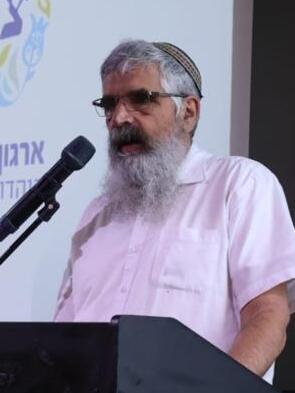 Rabbi Yuval CherlowPhoto: Courtesy of Tzohar
Given the global trend and Israel’s status, we must be even more cautious. Not out of fear of “what they will say,” since our lives are more important, but because of the great importance of human morality represented by the Jewish state's existence.
The war imposed on us has distanced us from the place we wanted to be according to the vision of the nation’s founders. We must strive to return there, and to be part of the nations of the world working for the correct balance between national welfare and the treatment of human beings and abhorrence for bloodshed. Every action that broadens the ability to levy a death sentence widens the gap between us and them, and embeds more deeply the attitude that excludes the State of Israel.
The current legal situation in Israel regarding the death penalty, which is very limited and narrow, is enough. In extreme situations, it is right to press the military prosecution to demand it, and even then to place many barriers before its execution.
The greatest war against terrorists is fought every day in the building of state and society, when they see how we continue to move forward and succeed, and they sink into the abyss of their own evil and detestable conduct. The probability is greater that in this way they will turn to another path and give up fighting us, rather than the attempt to bring this about through a blanket death penalty.
- • Rabbi Yuval Cherlow is head of the Ethics Division at the Tzohar Rabbinic Organization