


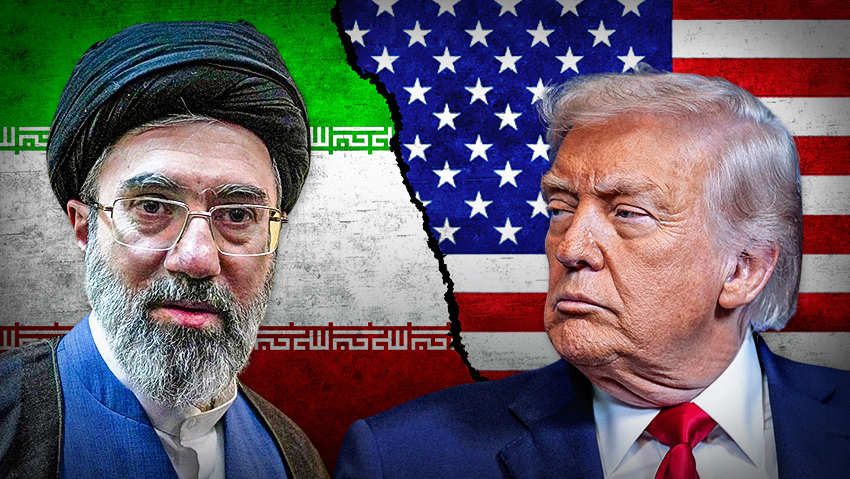
U.S. President Donald Trump’s decision on how to act against Iran will be fateful. The success or failure of an American move could determine whether Iran’s military nuclear project can be ended, or at least delayed for generations. To a large extent, the outcome could also determine the future of the ayatollahs’ regime.
For Israel, the implications would be immediate. A successful or failed operation could bring an end to the war on at least four fronts where the IDF is still operating.
Gallery
(Photo: Hamed Jafarnejad/ISNA/WANA (West Asia News Agency) via REUTERS, shutterstock, AP/Alex Brandon)
Trump has learned that, much like himself, the Iranian regime is not only rigid but also volatile and unpredictable. The split at the top in Tehran means that those negotiating with mediators are Foreign Minister Abbas Araghchi and his team, who represent the more moderate faction.
On the other side are senior Revolutionary Guard commanders and conservative ayatollahs, who do not trust the Americans and, for ideological and emotional reasons, are unwilling to negotiate with them even through intermediaries.
The result is that every understanding reached between the mediators and Araghchi reaches the sickbed of Supreme Leader Mojtaba Khamenei through envoys and envoys of envoys, for his approval. But the younger Khamenei is effectively captive to Revolutionary Guard officials and conservative ayatollahs, who protect him from assassination on one hand and prevent him from being exposed to the views of the moderates, who are more attentive to the distress of Iran’s citizens, on the other.
Khamenei did meet with moderate President Masoud Pezeshkian, but as someone rooted by family background in the conservative-militant camp, he still prefers to rule according to those advocating a hard line of no surrender to the United States.
The motivation of that faction is largely religious. Since the days of founder Ruhollah Khomeini, the regime in Tehran has viewed the restoration of Shiite Islam to what it sees as its rightful place in the Muslim world as a sacred mission. Its ambition, accordingly, is to export the revolution.
What the United States is demanding is that Iran give up the main tool for carrying out that mission: its nuclear program, which is intended both to protect Iran and to provide a security umbrella for exporting the revolution and for Shiite proxies acting on its behalf across the Middle East.
Beyond that, in the Shiite ethos, surrender is humiliation, and humiliation is worse than death. It projects weakness that endangers the regime’s survival.
Another reason Trump is encountering difficulties is that the Iranian regime feels it has survived both the civil protests against it over the past winter and the military strikes by the United States and Israel, which damaged its nuclear program, military assets and symbols of power.
During the war, Iran’s civilian national infrastructure — energy, electricity and transportation — was barely attacked. Damage to those systems could worsen the economic distress and spark another wave of protests that might threaten the regime.
For that reason, experts and security officials in the United States and Israel believe the regime will be forced to soften its position only if it faces a combined campaign of siege, economic sanctions and destructive kinetic strikes on sensitive infrastructure such as electricity and oil. Such attacks would deepen the hardship already felt by Iranian citizens and make it harder for the regime to rebuild the country and its military capabilities.
A blow of that kind could threaten the regime’s survival within a period of several months to two years, forcing even the hard-line factions in Tehran to recalculate.
But that assumption is not necessarily justified.
(Photo: AFP PHOTO / US NAVY / NAVCENT PUBLIC AFFAIRS)
First, the regime’s senior figures act to a large extent out of religious motives and a sense of religious mission, and are not particularly sensitive to the suffering or economic distress of the people. Second, the regime has built powerful defense mechanisms, first and foremost the Revolutionary Guards and the Basij, which have already shown they have no problem killing thousands of civilians to suppress protests and unrest.
Therefore, the regime may be able to absorb and survive even if national infrastructure such as bridges and power stations is destroyed.
In addition, the Iranian regime, across all its factions, declares — and apparently believes — that it can withstand several more months of damage caused by the American economic siege. By contrast, Tehran appears to believe that Trump will be unable to withstand opposition to war in the United States, rising fuel and food prices, and the need to justify a global energy crisis that drives up oil and natural gas prices.
The Iranians also believe that even in the event of a military blow, they can inflict heavy casualties and material damage on the Americans, Arab oil producers and Israel using the ballistic missiles, coastal missiles, naval mines and drones they can still operate.
By all indications, Tehran believes that causing casualties and destruction could intensify opposition to the war in the United States, the Gulf states and Israel. All of this leads the Iranians to think, with considerable justification, that time is working in their favor.
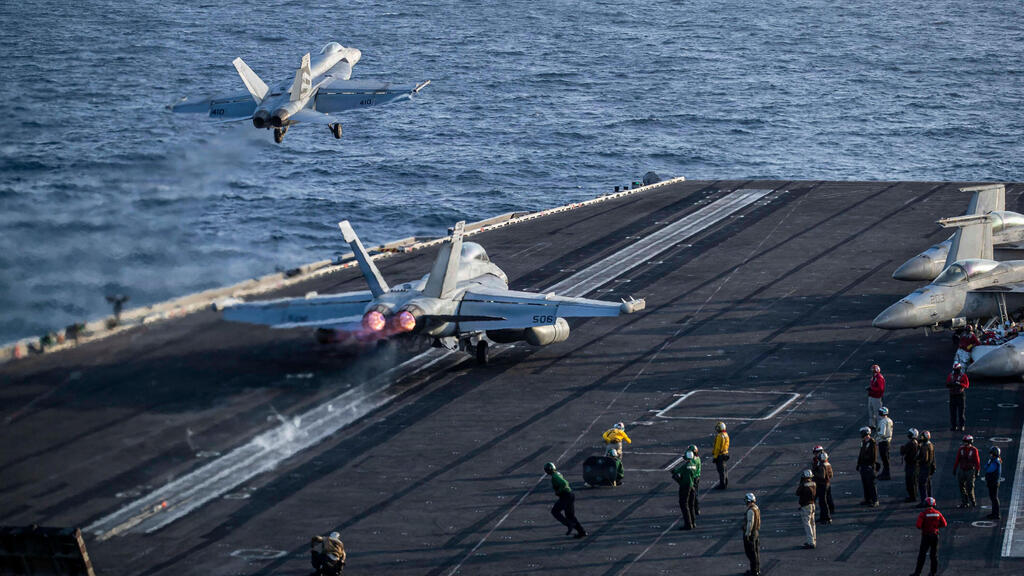
Given these forces above and below the surface, Trump must focus his efforts only on what can produce his desired result within a few weeks, while minimizing casualties and damage to the Gulf states, Israel, U.S. bases and American naval forces.
In light of all this, it can be assessed that a short and powerful strike on essential infrastructure will not be what changes the position of the regime in Tehran. Rather, what may be required is an intensive and broad joint military operation by the U.S. military and the IDF, lasting one to two weeks and carried out across almost all of Iran while avoiding harm to civilians as much as possible.
The goals of such an operation would likely be to deepen and expand the damage to what remains of Iran’s launch and production sites for ballistic missiles and attack drones.
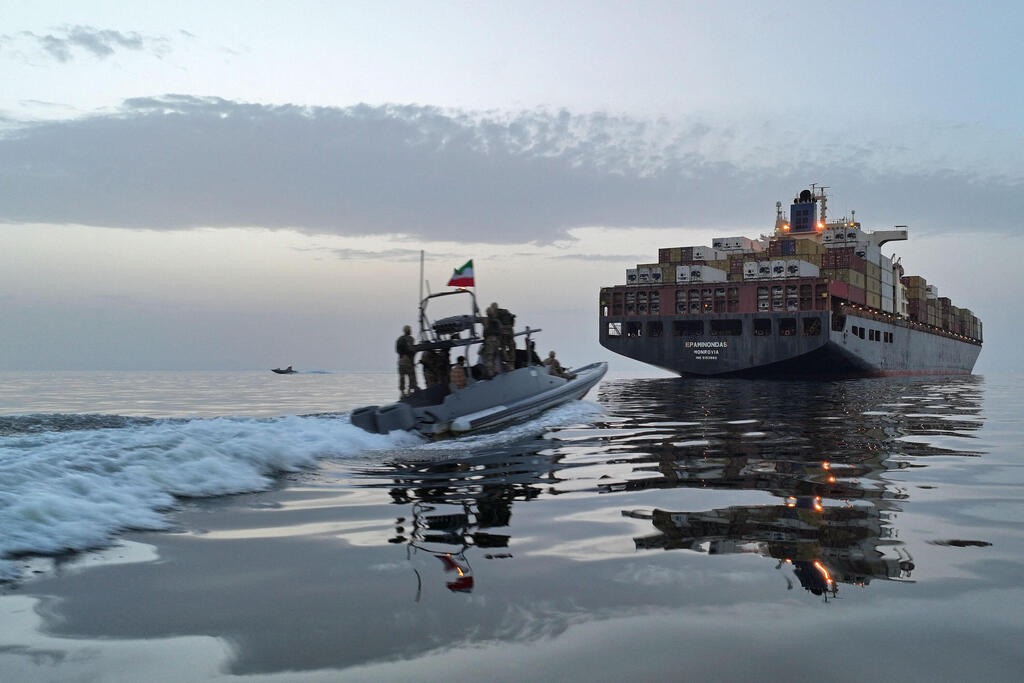
This would involve an air and naval attack, possibly also with a ground element, for example from the United Arab Emirates, broad in scope and sustained over time. It would strike most of the main facilities simultaneously, including along the coast of the Strait of Hormuz, Kharg Island and other islands.
(Photo: Meysam MIRZADEH / TASNIM NEWS / AFP)
Such an operation would be effective if based on intelligence and lessons produced by U.S. Central Command and the IDF during the ceasefire, as well as on the munitions, logistics and deployments accumulated in recent weeks in both Israel and the Persian Gulf.
If carried out at maximum strike tempo, such an operation could reduce Iran’s ability to hit Israel, Gulf states and oil tankers in the region to a minimum. More importantly, it could lead even the hard-liners in Tehran to conclude that Iran is defenseless and will remain exposed to Israeli or American attack if it tries to rebuild its strategic capabilities or suppress protest demonstrations, all while the economic siege and sanctions continue.
Suffering losses without the ability to respond, combined with moderate and gradual damage to infrastructure, could push the regime to soften its positions out of fear for its survival and out of recognition that soon it may no longer be able to use its main weapon: closing the Strait of Hormuz.
The right path, in this assessment, is not a short, fast and powerful military operation against infrastructure, but a focused campaign that would likely target Iran’s entire offensive missile and drone array — ballistic missiles, cruise missiles and attack drones — simultaneously and extensively, both in the Strait of Hormuz and across Iran.
If, after a week of intense strikes, perhaps a little more, Tehran still refuses to show flexibility in negotiations, it may then be possible to reopen the Strait of Hormuz to shipping with reduced risk and gradually move to attacks on civilian infrastructure targets until the deadlock is broken.
That feeling — that Iran is exposed and suffering losses without the ability to respond — is what led Ayatollah Khomeini in 1988 to accept the UN ceasefire terms, which effectively amounted to surrender in the war against Iraq.
There is a good chance the same could happen now.