


Israel wakes up today to a rare moment of hope. Under the first stage of the agreement with Hamas, based on a plan presented by U.S. President Donald Trump, all hostages are to be released. Families are reunited, a moral responsibility is fulfilled and the entire country can finally breathe. But this moment must not remain symbolic. If Israel wants to turn this humanitarian achievement into lasting security and stability, it must act decisively in the next stages of the process.
The first stage closes a painful chapter. The next stages must ensure that such a tragedy never repeats itself. This requires a clear strategy, determined leadership and strong cooperation with regional and international partners.
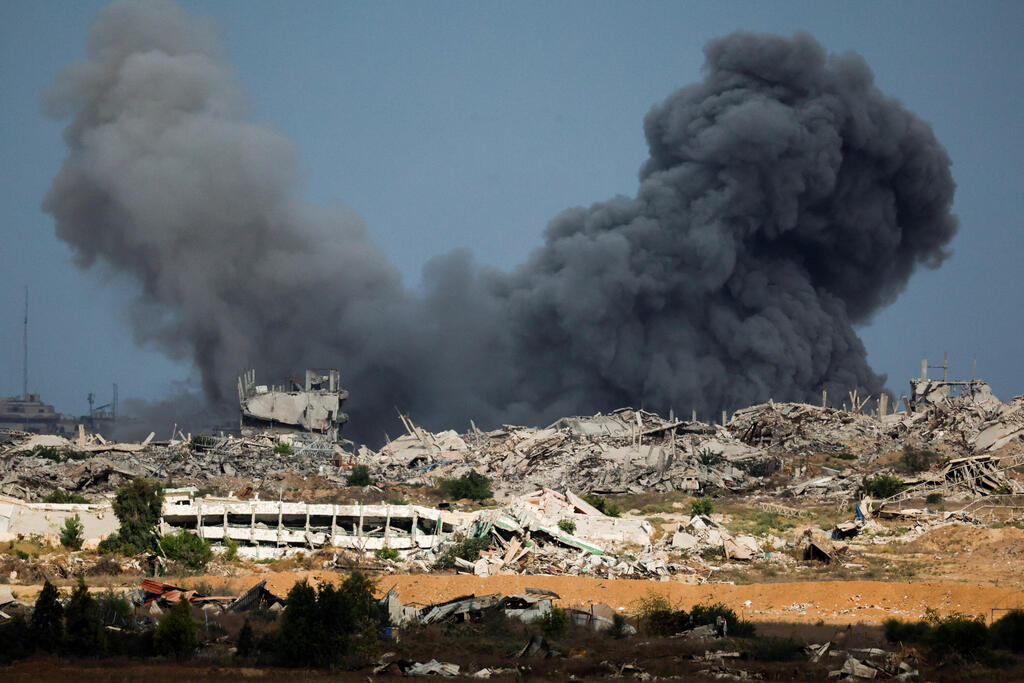
IDF airstrikes in Gaza
(Photo: REUTERS/Ammar Awad)
Security is the foundation of any future arrangement. Israel must insist on full demilitarization of the Gaza Strip, the dismantling of Hamas’ military infrastructure, weapons and tunnels. This must be done through strict timelines, third-party inspections and clear consequences for violations. Without these measures, “demilitarization” will remain a vague concept that can easily be undermined.
Gaza’s daily life must be managed by a civilian authority, not by armed groups. This body should operate like a municipal administration, handling education, healthcare, infrastructure, water, electricity and other essential services. It should be staffed by vetted local professionals, with international oversight to ensure transparency and prevent corruption. A functioning civilian authority can improve daily life, reduce Hamas’ influence and give Gaza’s population a reason to support stability.
Reconstruction is a moral and humanitarian necessity, but it must go hand in hand with verified security progress. The first phase should focus on hospitals, power and water infrastructure. Heavy construction materials, such as cement and steel, must be carefully monitored to prevent their diversion to tunnels and weapons. International supervision and conditional funding will ensure that reconstruction supports peace, not rearmament.
Israel cannot and should not carry this process alone. Regional partners, including Egypt, Jordan, Saudi Arabia and the United Arab Emirates, must play a central role alongside Western countries. Their involvement will provide financial support, diplomatic legitimacy and operational capacity. A stable and secure Gaza could also serve as a platform to expand the Abraham Accords, creating a broader regional coalition for peace and stability.
 Munir Dahir
For any long-term arrangement to work, there must be transparency, clear timelines and measurable goals. This includes regular reporting on tunnel destruction, weapons dismantling, reconstruction milestones and service delivery. Independent monitoring will ensure that all parties live up to their commitments. Accountability will give the process credibility, both domestically and internationally.
The release of the hostages is both a moral victory and a strategic opening. It gives Israelis, Palestinians and regional actors a tangible foundation on which to build a different future. The choice now is between structure and chaos. If Israel insists on genuine demilitarization, supports the establishment of a credible civilian authority, ties reconstruction to security benchmarks and anchors the process in regional cooperation, the south could look very different in a year: quieter borders, functioning services and renewed hope.
This moment is historic. It must be used wisely, or it will be lost.