

After the most expensive war in its history, Israel may be entering a more dangerous security reality.
Roughly half a day after the sudden ceasefire that halted the regional war that had engulfed the Middle East for six weeks, Prime Minister Benjamin Netanyahu, his ministers and senior IDF commanders have remained silent. Israelis learned of the ceasefire from statements by U.S., Iranian and Pakistani officials.
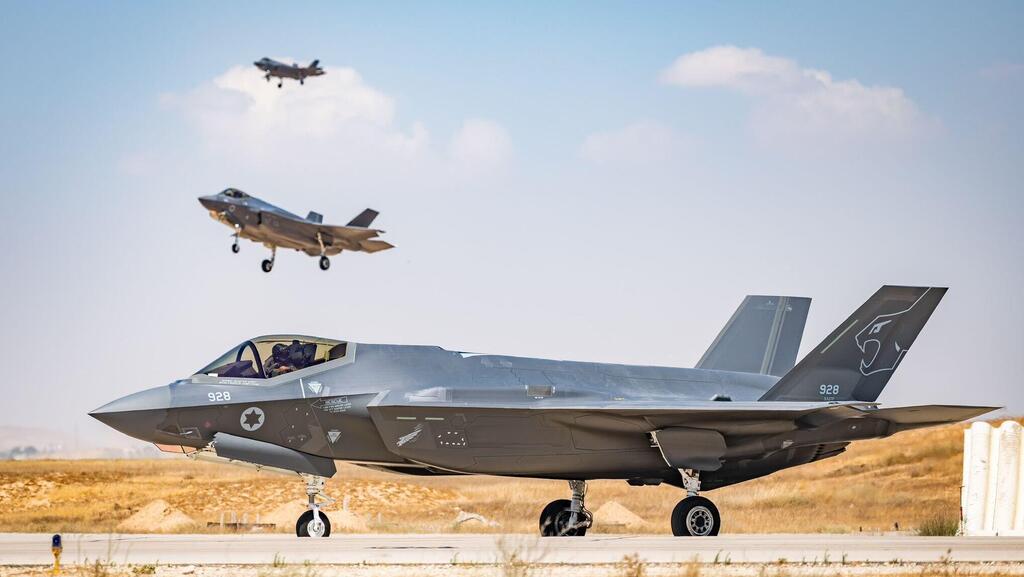
Nevatim Airbase
(Photo: IDF)
Meanwhile, Israel’s declared war goals, including securing Iran’s enriched uranium, toppling the ayatollah regime, destroying its ballistic missile systems and halting funding for proxy groups, have not been achieved.
As of midday, with no official addressing the public, confusion prevails. Israelis who spent weeks running to shelters day and night under the threat of Iranian missiles are now asking questions that no one appears willing or able to answer.
Netanyahu, who only hours before the ceasefire released a video reiterating his message about “crushing Iran,” has since gone silent. His only public comment came shortly before 6 a.m., in English.
In the absence of clear leadership, local authorities have begun making independent decisions, including reopening schools. The Home Front Command has yet to issue updated guidance and has not lifted restrictions imposed at the start of the war. Conflicting reports persist regarding the status of Israel’s operations against Hezbollah in Lebanon in light of the ceasefire reached by U.S. President Donald Trump with Iran.
Defense officials estimate that by the end of the year, and assuming no further escalation, an additional NIS 34 billion ($11.0 billion) will be needed to fund military operations and procurement plans.
The second Iran war is the most expensive in Israel’s history. Rough estimates put the cost of about 40 days of fighting at NIS 50 billion to NIS 60 billion ($16.2 billion to $19.4 billion). A single day of combat costs roughly NIS 1 billion ($320 million) on average, with the opening days reaching NIS 2 billion to NIS 3 billion ($650 million to $970 million) per day.
These sums cover extensive air force operations, munitions used in strikes on Iran and the high cost of air defense systems.
Despite the scale of the military, economic and civilian effort, the war may end similarly to previous rounds of fighting in Gaza over the past two decades. Those conflicts also began with strong declarations from Netanyahu and ended in uneasy stalemates, often accompanied by heavy final barrages on Israeli territory.
This time, instead of rockets from Gaza, Iran launched ballistic missiles across Israel within minutes, from Eilat in the south through Tel Aviv and central Israel to Haifa and the north.
Under the emerging circumstances, Israel may be entering a worse security environment than before the war. A possible end to the conflict through agreements between the United States and Iran could restrict Israel’s ability to act against Iran in the future, even as Iran has demonstrated its capacity to inflict significant damage.
Even without formal U.S. restrictions, a return to a “campaign between wars” approach could lead to frequent clashes between Israel and Iran, similar to the repeated rounds of fighting with Hamas before October 7.
Each such round could cost the Israeli economy tens of billions of shekels, further strain the already expanding defense budget and increase reliance on reserve forces amid ongoing manpower shortages and continued exemptions for ultra-Orthodox conscription approved by the government.
Defense officials said it is still too early to declare the war over. One official noted that, for now, there are no indications that Trump intends to reduce U.S. forces in the region.
Whether the ceasefire marks a step toward ending the conflict or only a pause, the defense establishment says the current defense budget of NIS 143 billion ($46.3 billion), even after a recent increase of about NIS 30 billion ($9.7 billion), is insufficient.
Officials estimate that an additional NIS 34 billion ($11.0 billion) will be required by year’s end to cover the costs of operations in Iran and ongoing fighting in Lebanon, as well as preparations for the possibility that tensions with Iran could reignite in the near future.