


No matter how many gaps emerge between the original plan behind Operation Roaring Lion, centered on the ambition to topple Iran’s regime, and the reality in which it survived, and may now be even more extreme than it was before the confrontation, with its domestic and regional power not necessarily diminished, Israel continues to call fervently for that goal to be carried out. This was evident in speeches delivered last week, particularly at the ceremony marking the change of Mossad chiefs.
In this context, the declarations that the likelihood of the Iranian regime’s collapse has increased following the campaign stand out, echoing similar promises about growing signs of collapse within Hamas and Hezbollah. In the background, media discourse is once again filled with unquestioned "mantras" about confusion, despondency, internal cracks and functional difficulties among the enemy — which, despite the severe blows it has suffered on all fronts, continues to surprise with its survivability and continued activity, as Hezbollah has demonstrated in recent weeks.
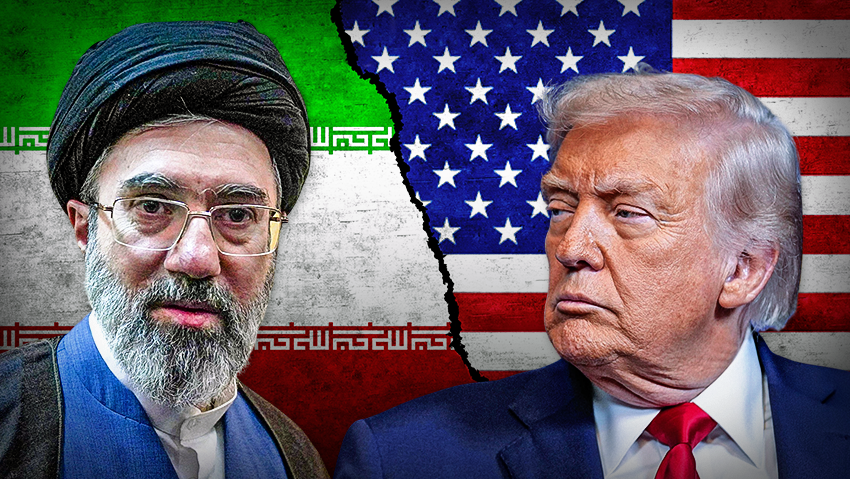
(Photo: Hamed Jafarnejad/ISNA/WANA (West Asia News Agency) via REUTERS, shutterstock, AP/Alex Brandon)
In Iran’s case, this was the failure of an unprecedented strategic experiment based on a combination of "decapitation," a broad elimination of the enemy’s leadership through airstrikes and without ground maneuvers, damage to its military and governmental capabilities, encouragement of domestic unrest and the use of fringe groups, mainly minorities, which according to the plan was supposed to bring down the regime. The formula may have worked in other arenas around the world, but not against ideological, fanatical religious actors in the Middle East shaped by the doctrine of "muqawama," resistance, who are willing to absorb severe blows but not raise a white flag.
The nature of the enemy
A series of revelations in recent weeks illustrates the limited understanding among the planners of Roaring Lion of the enemy’s nature. At the center was the belief that the regime could be destabilized through Kurdish militias, without asking whether a peripheral minority could topple a governing center, or how such a move would be perceived by the Persians, the dominant group in the country. In the background, an excuse was raised that this fundamentally absurd idea failed only because of Erdogan’s opposition, or an attempt was made to offer "comfort" with a report that the weapons transferred to the Kurds had been seized from Hamas and Hezbollah.
An even more serious expression of the distorted understanding of the Iranian system is embodied in the delusional idea of promoting the appointment of Mahmoud Ahmadinejad, Iran’s former president, who holds extreme anti-Israel and antisemitic views, as a supposedly "improved alternative" to the senior officials in Tehran eliminated by Israel and the United States during the war.
The problem does not lie in the legitimate desire for an enemy to disappear, but in the fact that the discourse on the issue is not accompanied by an honest analysis of mistakes, let alone an admission that the original and unrealistic plan failed, in a way that would allow for a healthy process of learning lessons and change. Instead, a rigid approach is presented, one that ostensibly reflects commitment to the goal but in practice conceals mistakes and serial offenders, while continuing to deny the value of investigation.
All this is happening nearly three years after October 7, a trauma that exposed a gap in understanding "the other" and should have pushed decision-makers toward correction. It reflects a grim pattern: Those who insist on not investigating the original sin continue to take misguided steps that contain the seeds of the very conception that collapsed. Yet it seems no failure prompts soul-searching or an examination of mistakes. Instead, Israel advances with confidence and enthusiasm toward the next failure, as was evident in Gaza with the GHF ventures, the cultivation of militias and the promotion of the Trump vision.
These harmful adventures show little, if any, improvement in the deep understanding of the other side, particularly when it comes to its culture, history and ideology. They sharpen disturbing questions about whether other voices existed in the planning processes, voices that expressed doubt or opposition to the claim that the regime in Tehran could be toppled, and how effective the oversight bodies tasked with systematically challenging the dominant thesis really are.
To all this was added last week’s farce over the appointment of the state comptroller, which likely ensures the continued postponement, or an inherently biased examination, of the roots of the October 7 failure. All this blocks the drawing of real lessons and the launching of essential corrections for any society that has experienced trauma and wants to ensure it does not happen again.
The problem is not only serial mistakes stemming from an insistence on not investigating failures, but the normalization and justification of this approach. As a result, a value system is taking hold that embodies a refusal to accept responsibility, tell the truth and admit mistakes — or even to see failure as sufficient reason not to continue holding a central role in shaping reality.
The October 7 conception, with its destructive seeds, has thus become orphaned. But at the same time, it has become entrenched in thought and action in Israel, especially among policymakers, increasing the likelihood that it will reappear in the form of a new tragedy in the future.
- The writer is a senior researcher at the Moshe Dayan Center at Tel Aviv University and author of the book "Generation of the flood."