

From the outside, Donald Trump's decision to allow the sale of NVIDIA’s H200 chips to China may look like just another twist in the ongoing economic tug-of-war between the U.S. and China. But zooming out reveals a deeper, far more strategic story; one that starts with the often-misunderstood architecture of the global chip industry.
The world of semiconductors operates within a strict hierarchy. At the base are the low-tech chips that power washing machines, car systems and factory machinery. These are reliable, older-generation chips, mostly manufactured in Chinese mega-factories. They're important, but not transformative. They’re the fuel—not the engine—of modern economies. For this reason, the West doesn’t fight over them.
Gallery
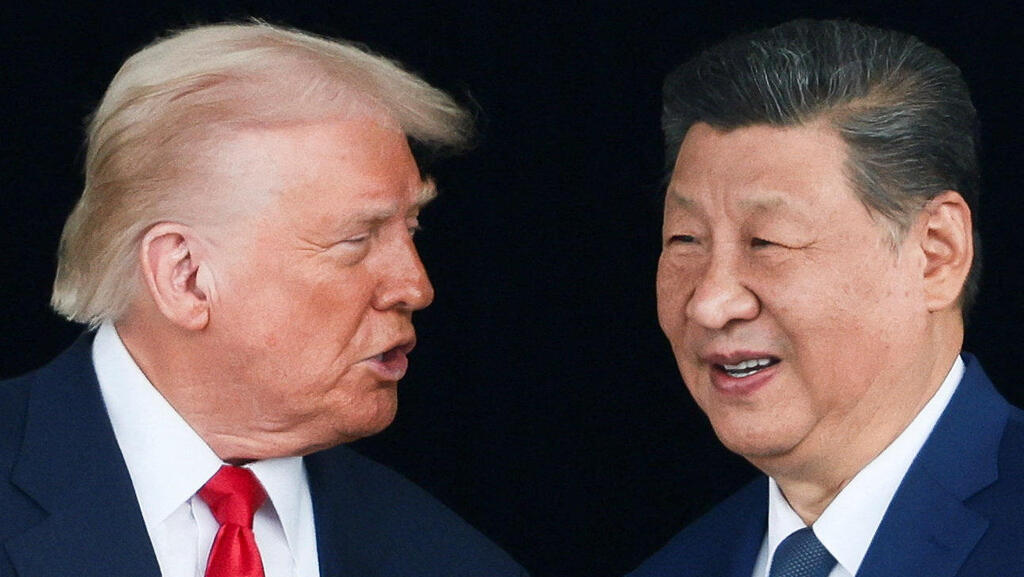
US President Donald Trump and Chinese President Xi Jinping at a summit in South Korea
(Photo: Evelyn Hockstein/Reuters)
Above that tier sit what could be called the economic core: mid-range chips like NVIDIA’s H100 and H200. While not cutting-edge, these are the chips that drive today’s digital economy. They enable national AI models, allow startups to scale and underpin advanced defense systems that were unthinkable just five years ago. This is the level China is striving to dominate, and the level the U.S. still controls.
At the very top of the pyramid are the ultra-advanced, high-end chips: the crown jewels of global tech. These are designed in the U.S., manufactured in Taiwan and built using Dutch equipment. China isn’t even close to entering this elite circle. This bottleneck is tightly guarded by the West because it holds the key to long-term global power.
Trump’s decision must be seen through this strategic lens. From his perspective, 2027 marks the point of no return: if China manages to develop a sovereign AI ecosystem by then, any effort to slow it down will be futile. If it fails, it remains dependent on Western technology for another generation. This perspective recognizes that technological races are not just about innovation, they’re about geography, resources, demography and conscious inclusion or exclusion from global systems.
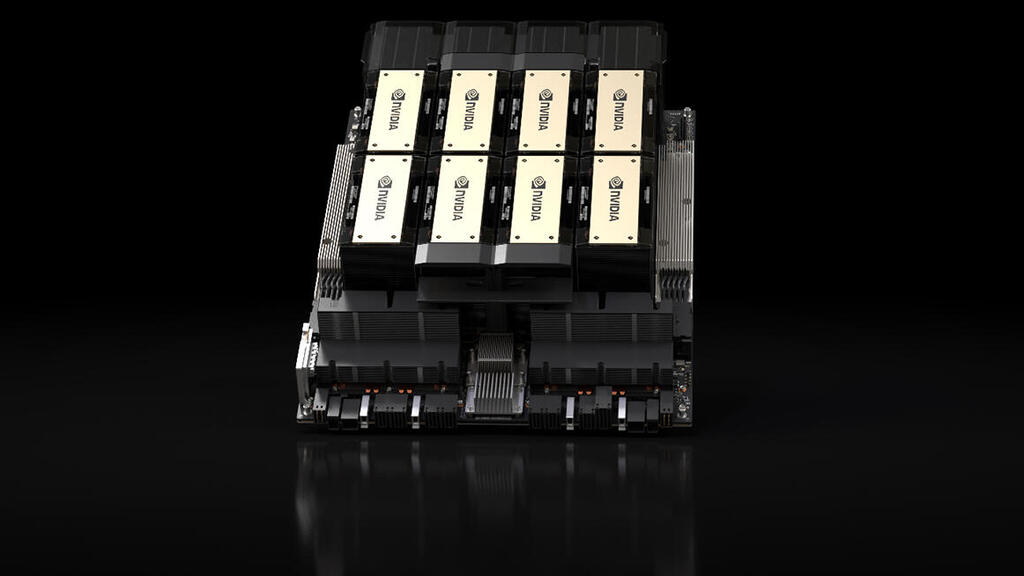
A Nvidia H200 chip
(Photo: Nvidia)
That’s why Trump is building a strategic coalition. It's not an ideological alliance, but an infrastructure-based pact among nations that support the continuity of the U.S.-led AI supply chain. This includes the U.S., Israel, Japan, South Korea, the Netherlands, Singapore, the UK, Australia and the UAE. Together, they form a new supply web, one grounded in control over rare minerals, semiconductor manufacturing, power infrastructure to run data centers and supply chains that don’t collapse under pressure.
So why is Trump letting China buy the H200 chips at all? The answer lies in controlled dependency. Denying China access entirely could backfire by potentially triggering a national effort to break through the technological blockade, a feat that large, determined nations sometimes achieve. Trump doesn’t want China to develop its own high-end chips out of desperation.
Instead, he wants China to remain hooked. The H200 is powerful enough to keep China’s economy humming—but not powerful enough to let it leap ahead. As long as Beijing relies on U.S. chips, Washington holds the keys to the kingdom.
 Dr. Kobby BardaPhoto: Tal Givoni
Then comes the masterstroke: a 25% tariff on every H200 chip sold to China. This means China isn’t just dependent, it’s bankrolling the very industry that keeps it dependent. Every shipment of H200 chips generates revenue to fund new U.S.-based fabs, strengthen Western supply chains and deepen America’s technological edge. In essence, China is financing the advantage of its biggest rival.
And that is the heart of the matter. Trump isn’t trying to crush China; he’s locking in its dependence. Not total suffocation, not full liberation, but a smart boundary: tight enough to prevent technological breakout, loose enough to keep the economic lever in hand.
In a world where chips equal power, wealth and dominance, absolute sanctions aren’t always necessary. You just have to make sure the other side never forgets who holds the key.
- Dr. Kobby Barda is a researcher in American political history and geo-strategy at the Holon Institute of Technology (HIT).