


The memorandum of understanding taking shape between the United States and Iran, which could be signed in the coming days and possibly as early as Sunday, is not the end of the matter. It would be followed by negotiations expected to last 60 days. But experience shows that nuclear talks, including under the Obama administration, can stretch far longer. That process took more than a year and a half. So this is still far from a final agreement.
Even so, the emerging framework already points in a direction that appears good for Iran’s regime and bad for Israel, and to some extent also bad for President Donald Trump and the United States.
Gallery
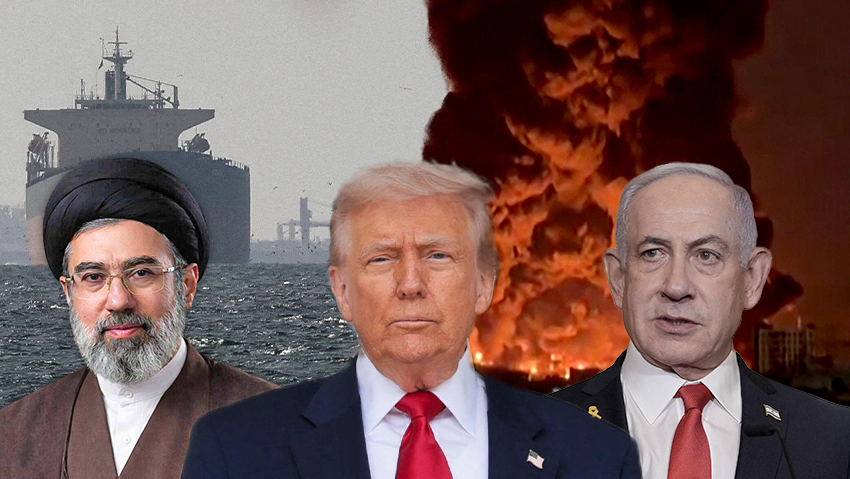
(Photo: AFP - SOURCE: UGC / UNKNOWN, REUTERS/Jessica Koscielniak/Stringer, Oliver CONTRERAS/AFP)
Why? Because from the outset, the agreement would gradually free up sources of income for Tehran. That money would allow the regime, over time, to begin addressing some of the immediate and severe hardships facing Iranian citizens, and in doing so strengthen its ability to survive.
Beyond that, the resources Iran would receive during the roughly two months of negotiations and afterward could, at least in theory, allow the regime to rebuild its nuclear project and its ballistic missile program. Both were badly damaged in earlier Israeli and U.S.-Israeli operations, including the Israeli campaign against Iran last year and the more recent offensive that effectively ended several months ago.
From Israel’s point of view, this is the biggest flaw in the emerging Washington-Tehran agreement, assuming the issue of uranium enriched to 60% is somehow resolved, either by diluting it or by removing at least part of it from Iranian territory. But here too, it remains unclear what will happen and how.
At the moment, everything is still clouded by uncertainty. That uncertainty also appears to exist in Washington and Tehran, for a simple reason: Iran’s regime is divided, there are internal disagreements, and U.S. officials do not know who has agreed to what. For now, the best course is to wait and see how the memorandum of understanding that opens the next round of negotiations is actually worded.
Iran as a regional power
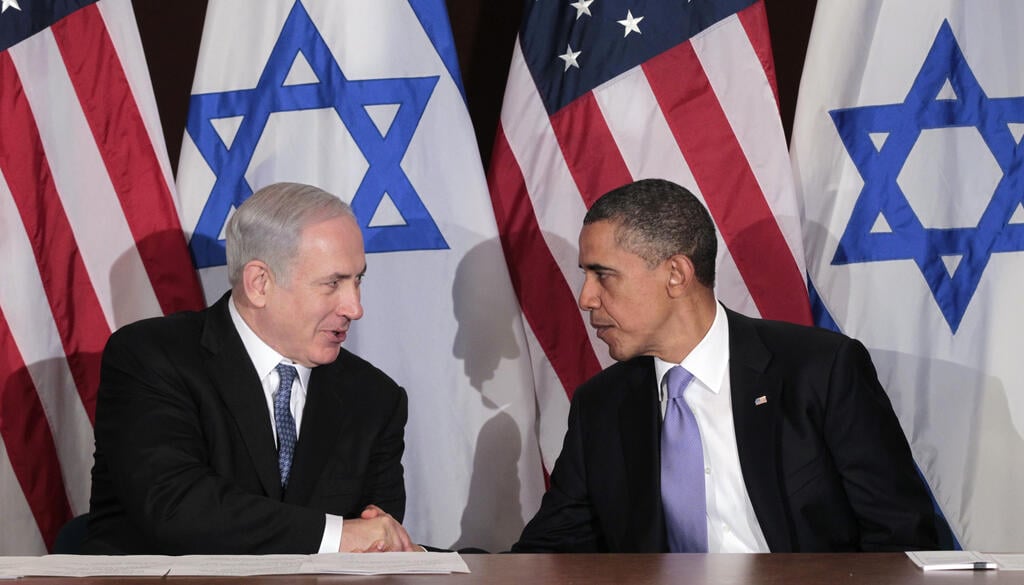
But the worst part for Israel is that it has been almost completely excluded from the negotiations with Iran and has very little ability to influence them in a way that serves its own interests. The American president is acting according to his own political calculations and U.S. interests. The frequent calls between Netanyahu and Trump appear to have only marginal influence. Israel is not only failing to shape the talks, it also does not really know what is happening inside them.
What happened under Obama is happening again, this time under the president considered the friendliest to Netanyahu ever to sit in the White House. The humiliations Netanyahu has absorbed show just how much he irritates Trump.
(Photo: AP)
The second reason the agreement is bad from Israel’s perspective is that Iran has identified the Strait of Hormuz as its main pressure tool and bargaining chip, not only against the United States and the Arab Gulf states, but against the global economy. Tehran has learned that by threatening to close the strait, or by closing it in practice, it can pressure a world that depends on oil and gas from the Persian Gulf.
In addition, Iran’s regime has strengthened its regional standing and positioned itself as a power. First, because it survived the Israeli and American attack. Second, because the Arab Gulf states, Saudi Arabia, the United Arab Emirates, Qatar, Kuwait and Bahrain, saw that the United States was either unable or unwilling to protect them from Iranian attacks.
That also affects their approach to normalization with Israel. The Gulf states are not now rushing to normalize relations with Israel. They are moving instead toward normalization with Iran. Saudi Arabia, the UAE and Qatar are already making at least initial efforts to court Tehran, not Jerusalem. Israel, despite its military achievements against Iran, is increasingly viewed in the region as a power that must be feared and handled carefully.
Another negative element in the emerging memorandum is that Iran, with American consent, has renewed the link between itself and its proxies. That gives Tehran a pressure tool and could tie Israel’s hands in Lebanon, Yemen and other arenas.
On the northern front, Iran is now demanding, at least in its public statements, that Israel withdraw from southern Lebanon. These declarations do not necessarily reflect what will appear in the agreement, but they matter. Through them, Iran is trying to position itself as the actor that determines what happens in Lebanon through Hezbollah, and what happens in the Bab el-Mandeb Strait through the Houthis in Yemen.
The advantages for Israel
All of this, along with other negative aspects, has created a justified feeling in Israel that the war’s goals were not achieved. That feeling is not entirely correct. Iran’s nuclear program was damaged, even if not completely. Its missile, ballistic missile and drone systems were damaged less than Israel would have wanted, but Iran will still need time to recover and rebuild them.
The main flaw in the new memorandum, as noted, is that Iran will now receive resources. The United States may release sanctions and frozen funds gradually, but the regime will receive assets it can use almost as it wishes.
Still, after saying all of that, Israel should recognize that the memorandum, and especially a halt to the war at this point, may also carry some advantages.

(Photo: US NAVY / AFP)
First, the Strait of Hormuz would reopen. Once that happens, and assuming it does not happen under Iranian terms that allow Tehran to charge for passage, the pressure on Trump will fall dramatically. Global and U.S. oil prices would stop rising, and the United States would avoid being stuck in a war that many Americans, especially Democrats, see as unnecessary.
Once the strait reopens, the political pressure on Trump to end the war will drop, including ahead of the midterm elections. With less pressure, Trump could negotiate more forcefully and more effectively with Iran, provided, of course, that the unpredictable president does not simply lose interest and move on to another issue that is less politically controversial and less damaging to the economy.
At the same time, another trend is already emerging among Gulf states: the development of alternative routes for transporting oil, gas and goods that would reduce today’s heavy dependence on ships passing through the Strait of Hormuz. These include overland routes, mainly pipelines for oil and gas, railways for moving large quantities of container goods and highways. Together with protective systems around them, these routes could connect India to the Arab Gulf states and from there to the Mediterranean and Europe.
Turkey would benefit from these projects, which are already in advanced negotiations, but Israel could also gain from land routes bypassing both the Strait of Hormuz and the Bab el-Mandeb. Egypt would likely lose from them.
The Iranian people may return to the streets
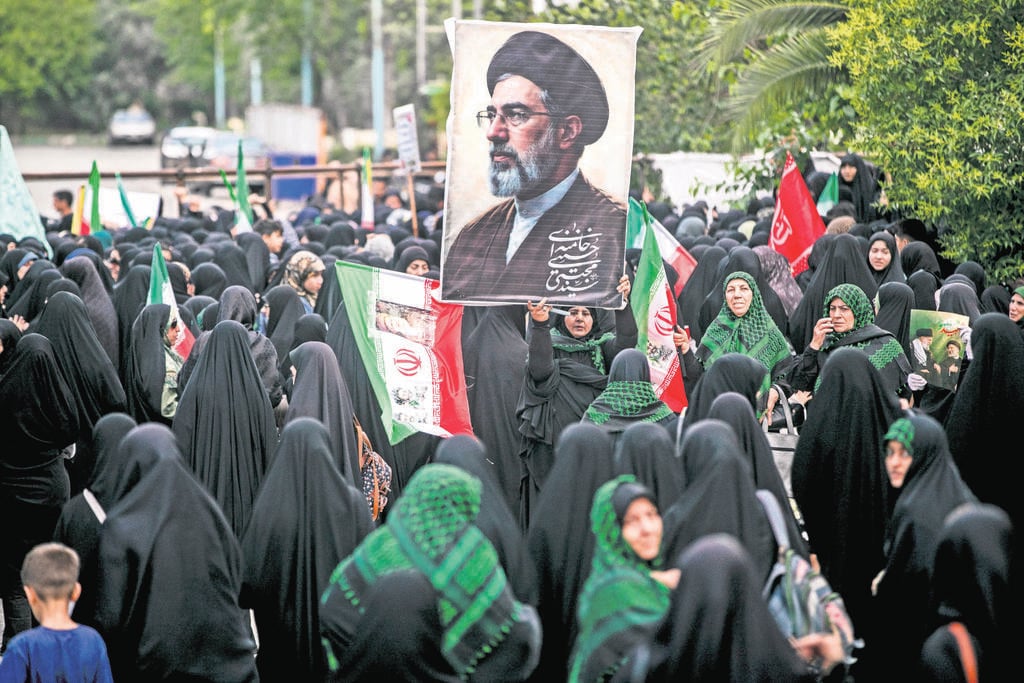
Another possible advantage of ending the war is internal Iranian pressure. Iranian citizens are suffering from deep economic and social distress, and there is widespread distrust of the regime. But Iranians tend to rally around the government during wartime, and people do not take to the streets while bombs are falling.
If the United States does not lift sanctions too quickly, and if the Iranian regime remains as hard-line as it is today, then once the fighting stops, the chances increase that Iranians will take action against the regime, whether through mass protests or in other ways.
(Photo: Majid Saeedi/Getty Images)
The regime must deal not only with public anger, which is contained as long as the country is under fire, but also with its own internal divisions. It must reach agreement on how to respond to the distress, anger and mistrust of Iran’s large population.
Iran has more than 90 million people, a huge population that must be fed and sustained. It suffers from shortages of clean water and medicine, and the regime must address those problems. When the regime is divided between those who want to ease public suffering and those who prefer to showcase Shiite jihadist power, that tension should be allowed to play out. It will not do so while the fighting continues.
In short, the Iranians should now be allowed to stew in their own problems until the regime changes. That could take one to three years, but many Iran experts believe it will happen, provided the United States does not release resources too quickly and instead does so gradually, as Trump says, according to Iran’s performance.
The advantages of a ceasefire in Lebanon
As for Lebanon, it is not certain that an end to the fighting, even if imposed on Israel by Trump as part of the memorandum, would be only negative. It is clear that Iran’s ability to connect itself to its proxies, what Tehran calls the “unity of fronts,” strengthens its position. But a ceasefire in Lebanon, and probably in Yemen as well, has positive aspects.
On the ground in southern Lebanon, the IDF has created a situation that forces the Israeli government to decide how it intends to neutralize and dismantle the threat posed by Hezbollah. The question is whether Israel does this by conquering much of Lebanon, as it did in the First Lebanon War in 1982, or through a series of complex diplomatic and economic moves carried out in coordination with the United States, Saudi Arabia and the UAE.
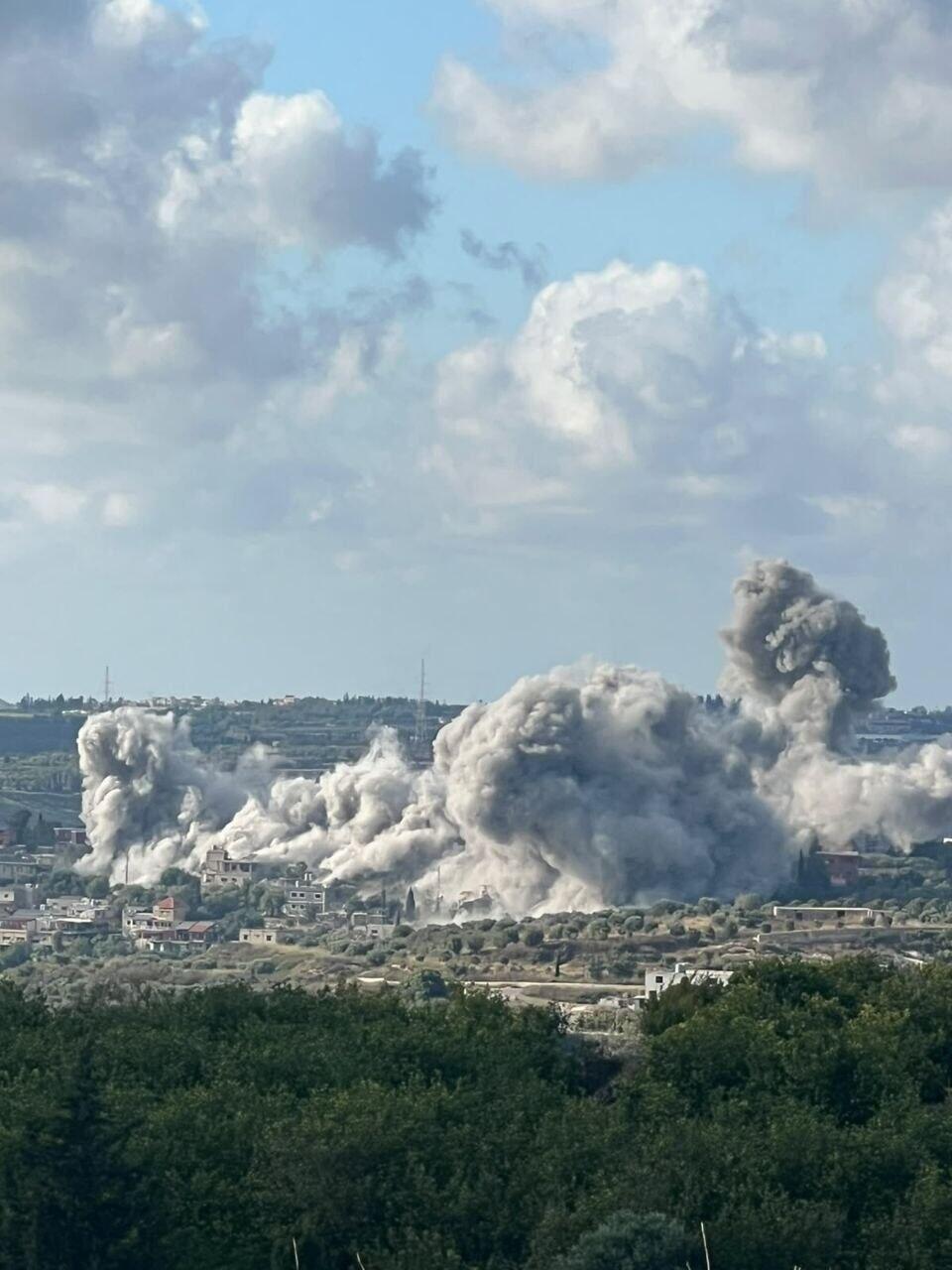
IDF strike in Lebanon
The goal of such moves would be to strengthen the Lebanese government, isolate Hezbollah and strip it of the legitimacy it claims as “Lebanon’s defender.” That could weaken Hezbollah through softer, non-kinetic means, possibly to the point of internal collapse or gradual disintegration.
Such moves would also require Israeli concessions, mainly territorial withdrawals. But they appear possible if carried out as one integrated system: strengthening the Lebanese government with funding, strengthening the Lebanese army so it can confront Hezbollah militarily, and advancing political agreements between Israel and Lebanon that normalize relations and make Hezbollah’s armed struggle illegitimate.
It is important to note that Israel’s crossing of the Litani River and its control of parts of southeastern Nabatieh, including the Beaufort Ridge, give it important military advantages that can be used as diplomatic, economic and social bargaining chips.
In the Beaufort Ridge and Nabatieh areas, the IDF destroyed two huge underground tunnel systems that it calls “cities of refuge.” These were built by Iran across from Israeli communities in the Galilee Panhandle and Upper Galilee. They can be described, as the IDF describes them, as Hezbollah’s “Navarone guns.”
Destroying these systems was a significant achievement. They served both as logistical bases and underground fire bases from which Hezbollah could continue firing rockets and drones at northern Israel while the Israeli air force bombed from above. The underground network was largely protected from airstrikes, and its tunnels, shafts and openings gave Hezbollah high survivability and the ability to keep fighting underground, including launching rockets, missiles, drones and UAVs.
The fact that Israel managed to deny Hezbollah this system gives the IDF an important advantage in protecting the Galilee. Nabatieh can also be used as a significant bargaining chip, both against the Lebanese government and in diplomatic negotiations. Lebanon already has more than a million displaced people, most of them Shiites, who can influence Hezbollah.
More rounds of fighting with Iran
Still, Israelis are left with the troubling question of whether the agreement between Washington and Tehran will force Israel into additional rounds of military confrontation with Iran, and probably also with its proxies in Lebanon and Yemen.
The answer is probably yes. Wars in the 21st century against jihadist Islamist enemies are long processes. They do not end, as World War II did, with surrender or total victory. At most, the state armies of democratic countries can achieve temporary decision, followed by a period in which Islamist fanatics, including Iran, recover. Then the cycle repeats until the wave of religious extremism eventually fades.
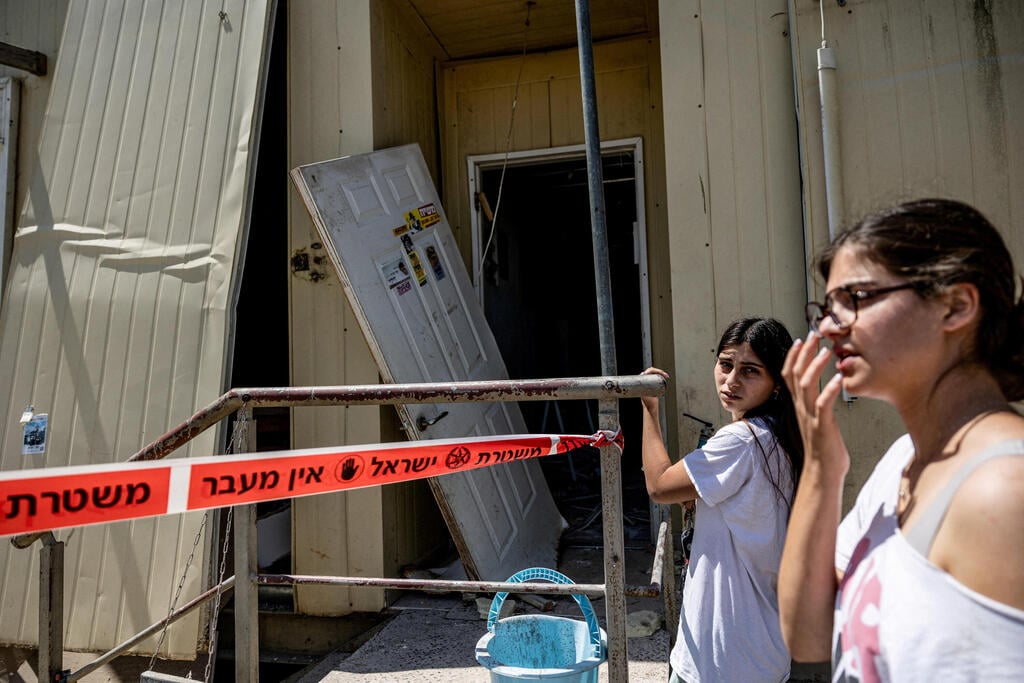
Aftermath of an Iranian missile strike in the West Bank
(Photo: REUTERS/Naama Stern)
Israel should hope that the recovery period for the “axis of resistance” will be long, and that it can be slowed and disrupted. This means more rounds. The reason is that Iran’s air defense system was badly damaged in the war, leaving the country exposed to attacks and close intelligence monitoring. Therefore, Iran will not rush to break out toward a nuclear weapon or manufacture large quantities of missiles before it rebuilds its air defenses and its ability to cope with Israeli strikes.
Another reason is that Iran’s nuclear program and missile production system were badly damaged, and Iran will struggle to quickly regain the development, production and launch capabilities it had. That will take more than a year.
But experience shows that the State of Israel, under an effective government with a long-term national security strategy, makes better and faster use of periods of calm and technological progress than its enemies do. Therefore, it is possible to estimate that the quiet periods between rounds, if Iran’s regime does not change, will be long, perhaps five to 10 years, and that the final result will be the fading of the “axis of evil.”