

Pakistan’s Foreign Ministry said Saturday that U.S.-Iran negotiations had entered their final stage, with a signing ceremony scheduled for Sunday, even as Tehran cast doubt on the timing of the expected Islamabad memorandum.
The ministry said Deputy Prime Minister and Foreign Minister Mohammad Ishaq Dar spoke by phone with Saudi Foreign Minister Prince Faisal bin Farhan, and that the two welcomed the progress in the negotiations.
Gallery
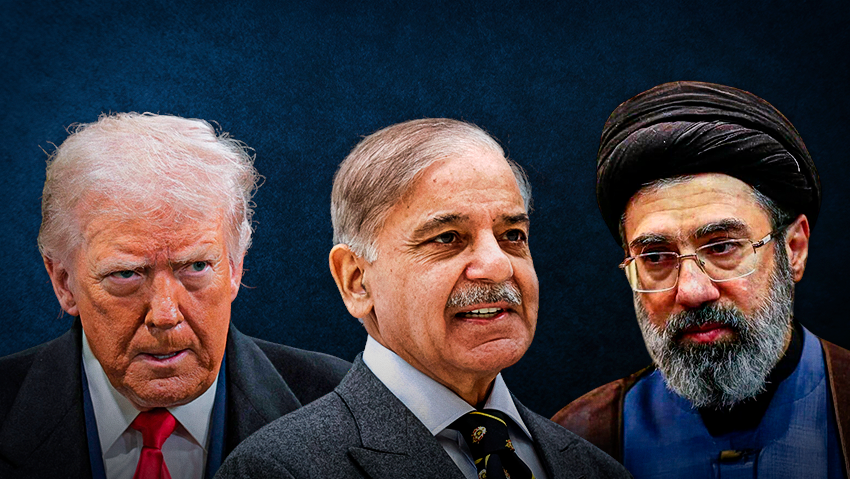
(Photo: Anna Moneymaker / AFP, ATTA KENARE / AFP, Sputnik/Alexander Kazakov/Pool via REUTERS)
“They welcomed the US-Iran negotiations in their final stage, with the signing ceremony scheduled for tomorrow, and expressed the hope that this important development will contribute to lasting peace and stability in the region,” Pakistan’s Foreign Ministry said.
The Saudi foreign minister also praised Pakistan’s “consistent and sustained efforts” in support of mediation and dialogue throughout the process, the ministry said.
A senior U.S. administration official also voiced optimism, telling Reuters: “We think we have an Iran deal. It’s a strong deal.”
Iran, however, sounded more cautious. Foreign Ministry spokesperson Esmaeil Baghaei said the exact timing of the signing of the Islamabad memorandum would not be Sunday, according to Iranian state media.
Baghaei said the possibility of signing the memorandum in the coming days could not be ruled out, but added that caution was needed regarding any comment on the signing date because of hesitation from the other side.
Pakistani Prime Minister Shehbaz Sharif said earlier Saturday that the United States and Iran had agreed on a framework for a peace deal after more than three months of war and were expected to sign an initial agreement shortly.
Sharif, whose country has been mediating in the war, said Pakistan was preparing for an electronic signing that would be followed by technical-level talks next week.
“We are closer to a peace deal than ever before. With finalization likely expected in the next 24 hours, Pakistan is preparing for the electronic signing of the peace deal immediately after, followed by technical level talks next week,” Sharif wrote on X.
“We are confident that this historic peace deal will form a strong foundation for lasting peace.”
The U.S. and Iran had signaled Friday that an agreement to end their war was close, with a senior U.S. administration official saying both sides had agreed on a text and that Washington expected to sign an initial deal in the coming days.
What is in the deal?
Iranian Foreign Minister Abbas Araqchi said Friday that while changes in the deal were still possible, the tentative agreement showed his country had emerged stronger from the conflict.
“Iran is the winner of the war with the U.S.,” he said on state television Friday.
Hours after those remarks, U.S. forces shot down multiple Iranian one-way attack drones heading toward the Strait of Hormuz, a source familiar with the matter told Reuters. The source, who spoke on condition of anonymity, said the drones had posed a threat to commercial traffic. U.S. Central Command later confirmed the action and said the waterway was open.

(Photo: US NAVY / AFP)
The proposed memorandum of understanding calls for reopening the strait and lifting the U.S. naval blockade on Iranian ports, sources on all sides of the talks said. Negotiations over Iran’s nuclear program, U.S. President Donald Trump’s stated rationale for starting the war, would take place afterward.
A U.S. official, speaking on condition of anonymity, told reporters Friday that the deal met Trump’s core objectives and put negotiations “in a very, very good place.”
Draft terms described to Reuters by multiple sources indicate the U.S. would begin releasing billions of dollars in frozen Iranian assets and waive sanctions on its oil exports in return for Iran opening the strait.
Iran’s nuclear program would be addressed during a 60-day period of talks. The U.S. official said the agreement would ultimately lead to the dismantling of Iran’s nuclear program, with its stockpile of highly enriched uranium to be destroyed and removed.
But Araqchi said Iran, which sources said has not accepted the dismantling of its nuclear program, wanted to retain the uranium in diluted form.
The proposals also include discussion of possible war reparations for Tehran and dropping longstanding U.S. demands for limits on Iran’s missile program, the sources said. The U.S. official disputed that account.
First published: 16:37, 06.13.26