

One of the 13 Syrians killed in the IDF raid on the town of Beit Jinn in southern Syria, Hassan al-Saadi, drew significant public attention because he died a day before his wedding. Hassan was among the young men in the town who opened fire at Israeli troops entering the area to arrest wanted members of Jamaa al-Islamiya, wounding six soldiers. In a photo circulated after his death, Hassan is seen holding an M-16 rifle with a stock manufactured by Israel’s Emtan Karmiel and a Picatinny rail produced by IMI Defense. He had not stolen the weapon. According to two acquaintances, it had been given to him by Israel when he belonged to a Syrian rebel faction supported by Israel until 2017, during the period in which rebel forces controlled southern Syria.
Based on my research among residents of southern Syria, Israel provided support to more than a dozen armed rebel groups in Quneitra province and western Daraa between 2013 and 2018. The Israeli assistance helped prevent Hezbollah and other Iran-backed militias from entering the border region. Fighters belonging to factions under the banner of the Free Syrian Army, as well as civilians, were admitted to Israeli hospitals for lifesaving treatment. Through the “Good Neighbor” directorate, Israel also delivered humanitarian aid to southern Syria. In conversations with many residents of the south, it was clear that Israeli assistance meaningfully shifted local perceptions of Israel.
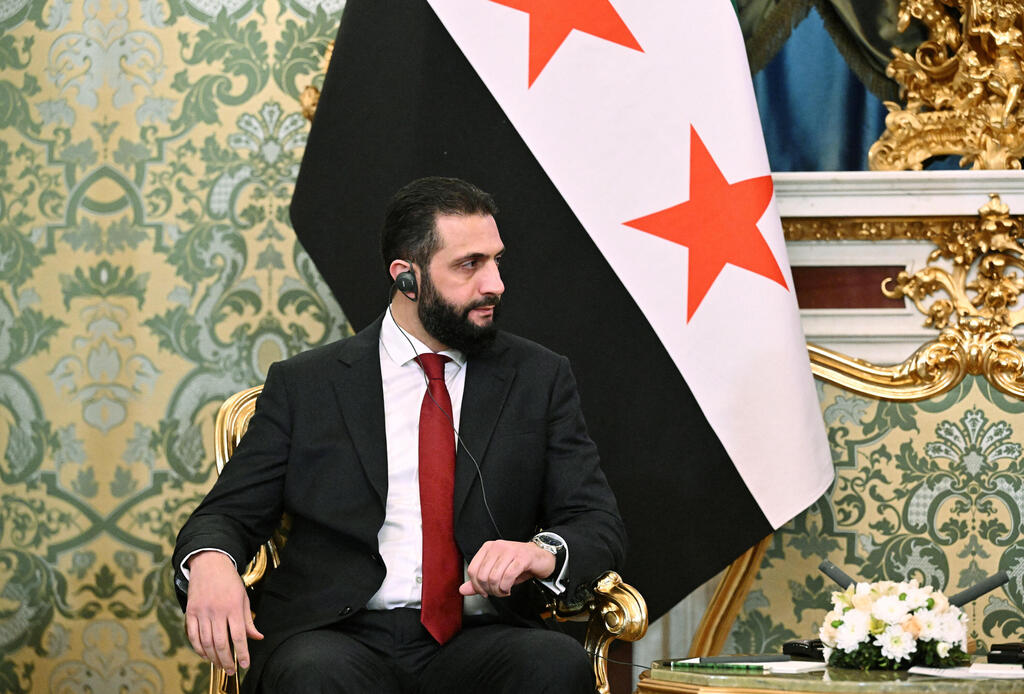
(Photo: Sputnik/Sergey Bobylyov/Pool via REUTERS)
Sources in southern Syria told me repeatedly during the civil war that Israel’s cooperation with the dominant rebel faction in Beit Jinn — the Omar ibn al-Khattab Brigades — was especially extensive. The group, led by Iyad Kamel, known as “Moro,” received Israeli-made weapons, not only Eastern Bloc arms captured by Israel. When the regime tightened its siege on the town in 2017, Israeli food shipments prevented residents from starving, unlike in other besieged areas such as Madaya, Zabadani and the outskirts of Damascus. By late 2017, Beit Jinn fell despite Israeli efforts to assist the rebels. In 2018, the Syrian regime and Hezbollah retook all of southern Syria, ending Israel’s support to rebels and civilians there.
Even after the cooperation ended, many in the south remained grateful to Israel, especially the thousands treated in Israeli hospitals and their families. Israel’s war against the Iranian axis earned broad sympathy among Syrians opposed to the regime. After Israel assassinated Hezbollah leader Hassan Nasrallah — who had dispatched thousands of fighters to Syria to save Assad’s rule — residents of Idlib, a rebel-held province, celebrated in the streets and handed out sweets. Many Syrians credited Israel for weakening the Iranian axis and helping hasten the collapse of the Assad regime, which killed hundreds of thousands and forcibly displaced millions.
Israel’s reaction to the fall of the Assad regime reflected, in many ways, fears rooted in the horrors of Oct. 7 and a superficial understanding of Syria’s new rulers. Since the formation of Jabhat al-Nusra in late 2011, the organization has changed dramatically. Ahmad al-Shar’a (al-Jolani) and his closest advisers — Asaad al-Shibani (foreign affairs), Anas Khattab (interior), and Abdul-Rahman Aton (religious adviser) — have embraced pragmatism and a deep desire for power and control. That drive led them to abandon puritanical policies such as enforcing strict modesty rules and banning Sufi religious practices. They also accepted the presence of the Turkish military — a secular state’s army — in Idlib, recognizing its necessity to protect the province from regime offensives. This leadership quartet purged, fired or imprisoned hard-line members who resisted the shift, and moderated the organization’s religious curricula.
Their thirst for power transformed Jabhat al-Nusra from a 20-man militia into Syria’s de facto rulers. This dominance is dangerous for minorities and, eventually, for Sunni opponents of the regime. But it also means that al-Shar’a’s rule does not pose a threat to Israel. Damascus understands that any deliberate provocation — or even a loss of control allowing attacks from its territory — would trigger a crushing Israeli response that could topple al-Shar’a’s government.
Israel’s posture since Assad’s fall lacks a clear strategic goal. The presence of Israeli forces in Syria has produced friction with civilians who once viewed Israel favorably, but whose attitudes shifted after the Israeli incursion, as demonstrated by Hassan al-Saadi’s attack and the broader participation of Beit Jinn’s residents. IDF conduct has fueled local resentment: imposing curfews, destroying orchards and blocking access to farmland and grazing areas that are the main sources of livelihood in these impoverished regions.
Israel needs a stable government in Damascus — one capable of preventing arms smuggling to Hezbollah and halting Iran-directed Palestinian cells. Current Israeli policy only deepens instability and undermines its own objectives. Beyond seeking stability, Israel should also work to curb Turkish and Qatari influence in Syria. The path forward lies in widening and diversifying its channels of engagement with the government in Damascus. A security agreement with Damascus, now under negotiation for months, would be an important first step.
Elizabeth Tsurkov is a research fellow at the Forum for Regional Thinking at the Van Leer Institute and a doctoral candidate at Princeton University. She has researched Syria for 14 years.