

For centuries, the split between Sunnis and Shias has defined political and religious tensions within the Muslim world. The division dates back to 632 CE, following the death of Islam’s Prophet Muhammad. Sunnis—who today make up roughly 90% of the Muslim population—believed leadership should be determined through consensus and supported Abu Bakr as the first caliph. Shias, by contrast, maintained that leadership should remain within the Prophet’s family, specifically through his cousin and son-in-law Ali.
Despite this historical rivalry, recent statements by the Muslim Brotherhood suggest that ideological hostility toward the West and Israel has overridden sectarian differences.
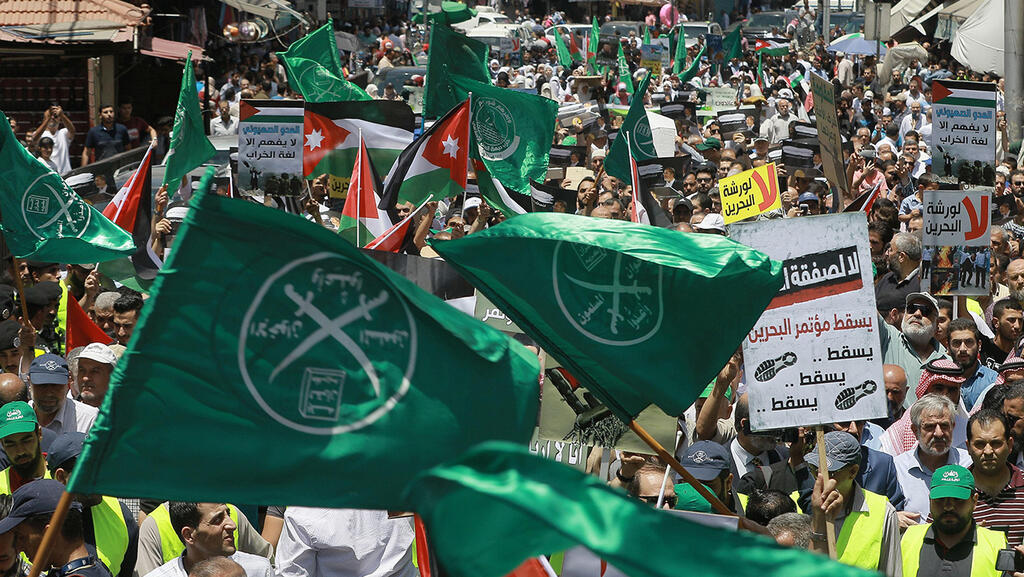
In a statement issued on March 1, Mahmoud Hussein, acting general guide of the Muslim Brotherhood, condemned the U.S. and Israeli strikes on Iran. The Brotherhood accused Washington and what it referred to as the “Zionist entity” of attempting to impose dominance over the Middle East and warned that such actions could ignite wider regional conflict.
The statement called on Arab and Islamic populations, as well as international institutions, to confront what it described as “Zionist recklessness” and American “arrogance.” It also urged broader mobilization against Western influence in the region.
The message highlights an increasingly visible ideological convergence between the Muslim Brotherhood and Iran’s ruling establishment. Although Iran’s leadership represents a Shiite theocratic system and the Brotherhood stems from Sunni Islamist traditions, both movements share deeply entrenched opposition to Western influence and strong hostility toward Israel.
Across the Middle East, the Brotherhood remains a controversial force. Several Arab states—including Egypt, Saudi Arabia and the United Arab Emirates—have classified the organization as a terrorist group. Nevertheless, the movement continues to operate through extensive networks across the region and maintains affiliated organizations in Europe and North America through media platforms, charities, think tanks and advocacy groups that promote its ideological framework.
Security analysts note that the organization functions through several international leadership structures. According to research from the Institute for National Security Studies in Tel Aviv, the Brotherhood’s global movement is currently divided among multiple leadership fronts, including those based in London and Istanbul.
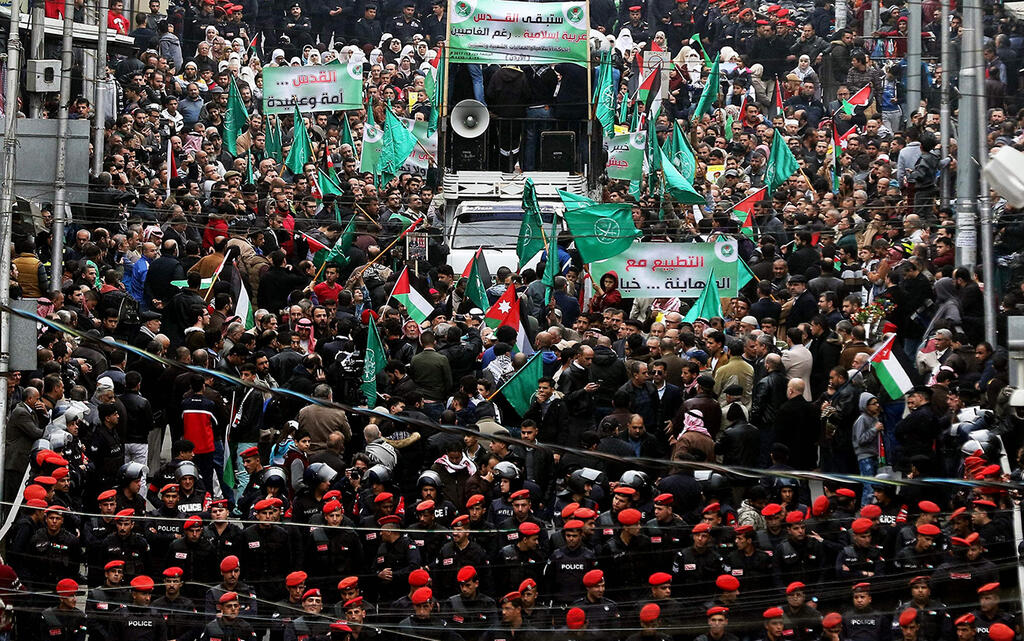
Muslim Brotherhood members in Jordan protest the move of the US embassy to Jerusalem in 2017
(Photo: AFP)
The organization maintains a broad communication infrastructure that includes satellite television channels, digital platforms and social media networks. Media outlets such as Mekameleen, Rabia, Al-Sharq and Misr al-Aan have frequently been associated with Brotherhood messaging, while a number of websites and online networks serve as ideological platforms.
In addition, research institutes and publications linked to the movement continue to circulate its political vision. Some analysts also argue that sympathetic coverage from certain regional media outlets has amplified Brotherhood narratives across the Arab world.
Security experts increasingly warn that confronting the Muslim Brotherhood requires a long-term strategy that extends beyond military measures. Because the organization operates through political, educational and social institutions, efforts to counter its influence must include legal restrictions, financial oversight and ideological challenges to its messaging.
Such strategies often include designating affiliated groups as terrorist entities, dismantling financial channels used to support organizational activity, and limiting the movement’s influence within educational and religious institutions.
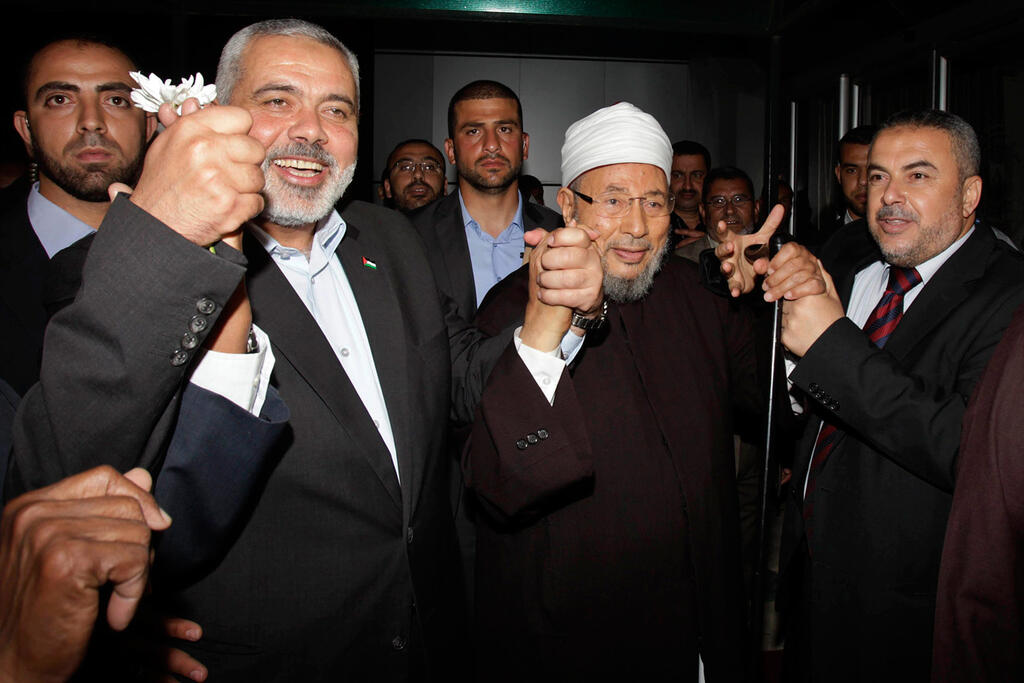
Egyptian Sheikh Yusuf al-Qaradawi with Hamas' Ismail Haniyeh
(Photo: Reuters)
Critics argue that the Brotherhood and Iran’s leadership share more than just political convenience. Both have supported terrorist organizations such as Hamas—the Palestinian branch of the Muslim Brotherhood—and both promote visions of regional transformation rooted in political Islam.
Some analysts also point to historical ideological connections between Iran’s revolutionary leadership and the intellectual tradition of the Muslim Brotherhood. Iran’s recently assassinated Supreme Leader, Ali Khamenei, reportedly translated several works by Sayyid Qutb, the Egyptian Islamist theorist whose writings played a central role in shaping modern radical Islamist thought.
Qutb’s philosophy argued for the restoration of what he described as “pure” Islam through the implementation of strict sharia law and the overthrow of governments considered incompatible with divine authority. He described modern societies as existing in a state of jahiliyyah—a term referring to ignorance or deviation from true Islamic governance.
The relationship between the Brotherhood and Iran extends beyond temporary political alignment and reflects deeper ideological influences
His writings called for a committed vanguard of believers who would lead a struggle to re-establish an Islamic political order. These ideas later influenced several extremist organizations.
Scholars have noted that Qutb’s ideology had a significant impact on figures such as Ayman al-Zawahiri, a leading strategist behind al-Qaida, as well as Osama bin Laden, who studied under Qutb’s brother during his university years in Saudi Arabia. Elements of Qutb’s worldview—particularly the emphasis on revolutionary struggle—became central components of the ideological narratives promoted by various terror groups.
Some Arab intellectuals have also described a documented intellectual exchange between Iranian revolutionary thinkers and the Muslim Brotherhood. Political analyst Radwan al-Sayed has written about conversations with Khamenei in which the Iranian leader recalled how early revolutionary circles translated Brotherhood writings into Persian during the 1960s.
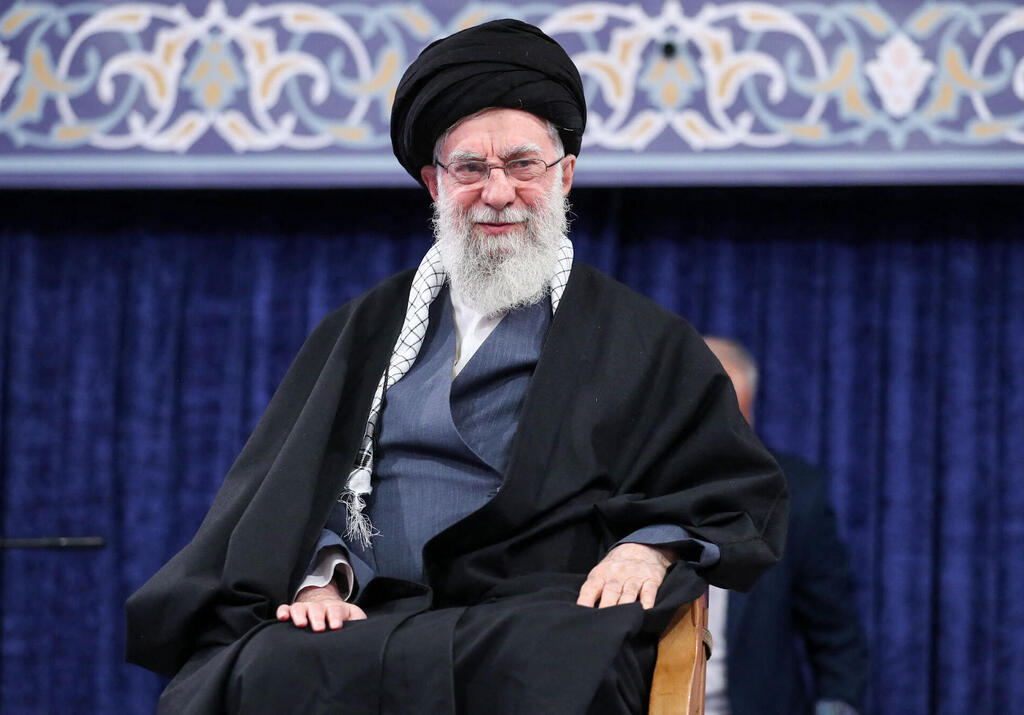
Iran's Supreme Leader Ali Khamenei was killed in an Israeli airstrike
(Photo: AFP photo / HO / KHAMENEI.IR)
These historical interactions, according to al-Sayed, demonstrate that the relationship between the Brotherhood and Iran extends beyond temporary political alignment and reflects deeper ideological influences.
The current geopolitical landscape suggests that ideological movements and state actors can form alliances that transcend traditional sectarian divides. In this context, critics argue that focusing solely on state actors such as Iran may overlook the broader ideological networks that shape regional conflicts.
Recent actions by the United States government have targeted specific branches of the Muslim Brotherhood. Following an executive order issued in November 2025 by President Donald J. Trump, certain chapters of the organization—particularly in Egypt, Jordan and Lebanon—were designated as foreign terrorist organizations.
Supporters of the measure argue that it represents an important step in countering extremist networks. Others contend that broader policies are necessary to address the movement’s global infrastructure and ideological reach.
The debate over how to respond to the Muslim Brotherhood reflects a broader challenge facing policymakers: how to address movements that operate simultaneously as political organizations, ideological networks and social movements.
As tensions in the Middle East continue to evolve, the intersection of ideology, geopolitics and security remains central to understanding the region’s future trajectory.
Rami Al Dabbas is a writer/commentator known for opinion pieces on Middle East politics, critiques of Islamist movements, advocacy of political realism and engagement and a controversial presence on social media