


These days, we should be concerned about the cracks appearing in what we call “national resilience,” the public’s ability to endure hardship while understanding it is necessary and believing it can ultimately succeed.
In simple terms, resilience is the willingness of citizens to bear the burdens and disruptions of war while maintaining a sense of collective capability: yes, we are able and willing to endure these difficulties until the war’s objectives are achieved.
Those cracks were clearly visible last Wednesday in the television studio discussions, as Hezbollah launched heavy barrages of rockets, missiles and drones at northern and central Israel, coordinated with Iranian attacks.
The damage caused by these barrages was minimal. There were no fatalities, several people were lightly wounded by interceptor debris and two homes were damaged despite hundreds of projectiles fired toward Israel. Air defense systems and the Israeli Air Force intercepted nearly all of them.
Yet what was said and written in the media largely reflected disappointment that Hezbollah remains standing and capable of firing despite the blows it suffered during Operation Northern Arrows. There was also widespread confusion about the objectives of the current war and skepticism about Israel’s ability to achieve them in Iran as well as in Lebanon.
Residents of the north, broadcasters and various self-appointed experts said openly that what we are being told consists mostly of empty slogans. In reality, they argued, the enemy still stands and cannot truly be defeated, and the suffering endured during the war is therefore pointless.
A sense of helplessness
These feelings did not arise in a vacuum.
They stem partly from the fact that roughly 30 percent of Israel’s population lacks proper protected spaces. At the same time, the rehabilitation of the north is proceeding slowly while billions of shekels in coalition funds finance draft exemptions, directly or indirectly.
The real battle, in many ways, is being fought on the home front. Success or failure depends heavily on protecting civilians. When that protection is lacking, many citizens feel helpless, a sentiment that leads to frustration and resentment.
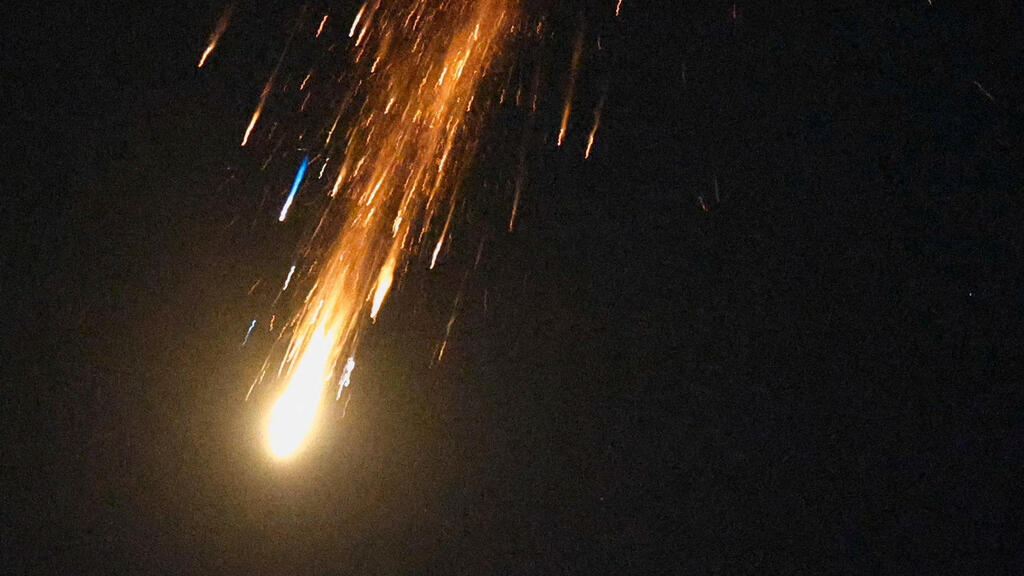
A missile interception
(Photo: Reuters/Amir Cohen )
Another reason for the deep lack of trust in the civilian government and the military stems from hollow declarations, particularly by politicians.
When the public hears the prime minister speak about “total victory” or eliminating threats “for generations,” or listens to the dramatic and often inflammatory announcements of Defense Minister Israel Katz, whose statements frequently begin with the phrase “I instructed,” the gap between rhetoric and reality becomes evident.
Such statements create expectations. When those expectations are not met, uncertainty deepens and disappointment grows, reinforcing the discouraging sense that nothing truly changes.
A surprising number of people refuse to acknowledge that political leaders, including U.S. President Donald Trump, Prime Minister Benjamin Netanyahu and members of the Israeli government, are not reliable sources of information or insight about what is really happening on the battlefield.
Trump is a unique mental case that I do not pretend to explain. Israeli politicians, however, are transparent enough. When they speak about achievements in the war and praise the Israeli military and the public for demonstrating “national resilience,” they are often gathering political support that will help them survive in power.
Clichés that create unrealistic expectations
For that reason, the public is rarely given factual reporting about the real state of the war. Instead, it is showered with clichés that generate unrealistic expectations.
Anyone with a clear mind understands there is no such thing as “total victory.” Islamist fundamentalist enemies often remain standing even after suffering heavy blows. We are not superheroes, and our women are not all “lionesses.” We do not live in an era of miracles and the messiah has not yet arrived.
The reality is that we are fighting a Sisyphean war, closer to mowing the grass than to Superman’s triumphant flight.
When such clichés are repeated by national leaders, they inflate expectations. When those expectations inevitably collapse, they produce disappointment, bitterness and the feeling that everything is futile.
In Arabic, this is called kalam fadi, empty words.
Senior Israeli military commanders sometimes contribute to the problem with their own excess of cliché-filled rhetoric, which does little to strengthen public trust.
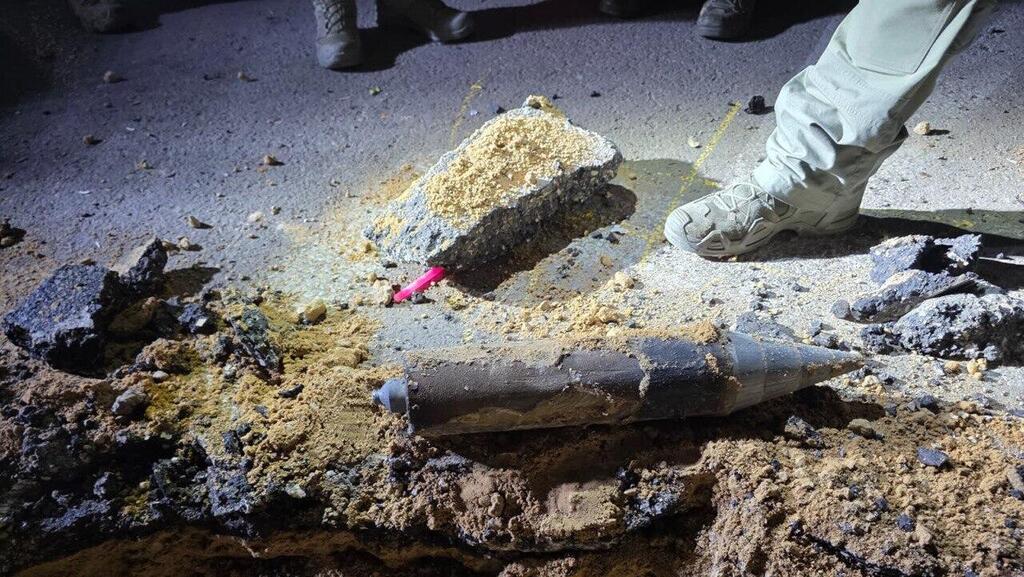
Cluster missile recovered from a road in Rishon Lezion
(Photo: Meir Turgeman)
The mindset of instant victory
Another factor behind public frustration is the “mindset” shaped by the digital age. In the 21st century, influenced by video games and binge-watched television series, many people expect immediate results and dramatic victory scenes.
But such moments do not exist in the wars Israel is fighting today against terrorist armies.
In these conflicts, the enemy does not raise a white flag or sign a surrender agreement in a humiliating ceremony. Success can only be measured months or years after the fighting ends.
Fighting terrorist armies
Israel today is not fighting regular state armies but terrorist armies driven by religious fanaticism. These groups are supported by regimes and movements with similar jihadist motivations that provide them with resources and capabilities.
Such organizations resemble stubborn weeds that grow back even after being uprooted. Again and again, you weaken them to the point where they can barely harm you, yet if you do not continuously monitor and suppress their capabilities, they recover and become a threat once more.
This is the case with Hezbollah in Lebanon.
After the Israel Defense Forces destroyed roughly 80 percent of the group’s capabilities and leadership during Operation “Northern Arrows” in late 2024, Hezbollah still retained around 25,000 short-range rockets and other weapons, including anti-tank missiles, along with dozens of precise ballistic missiles capable of striking Israel, including the Tel Aviv metropolitan area.
Hezbollah did not use this remaining capability for more than a year, fearing a powerful Israeli response. The organization, under heavy pressure from both the Lebanese public and government, avoided escalation even as it refused to disarm.
A fundamental shift
The joint Israeli-American campaign against Iran prompted Tehran to demand that Hezbollah intervene in order to slow Israeli air operations over Iranian territory.
Under pressure, Hezbollah could not ignore the request. Its leadership apparently decided to gamble that Iran would survive and continue supporting the organization. If Iran collapses, Hezbollah would likely disappear as well.
That is why Hezbollah is now deploying its remaining capabilities, a decision it may come to regret even if the Iranian regime survives.
Although the war against Iran remains Israel’s main military effort, Northern Command is gradually building intelligence capabilities to locate and destroy remaining launchers, supported by significant airpower from a special task force established for that purpose.
Israel’s focus on Iran and its partnership with the United States currently prevent a major ground operation in Lebanon. Nevertheless, forward defensive positions inside Lebanon and sustained airstrikes against Hezbollah targets may achieve the desired results.
The Lebanese government and much of the Lebanese public oppose Hezbollah, which offers reason for cautious optimism that continued Israeli pressure could ultimately force the organization to dismantle its remaining military capabilities.
Israel must therefore be careful not to alienate the Lebanese government and population by striking civilian infrastructure. Hezbollah itself does not care if Christian residents of Beirut lose electricity.
Measuring success in the war with Iran
As for the war with Iran, success or failure will ultimately be measured by whether the Iranian regime wants and is able to rebuild its nuclear, ballistic missile and drone capabilities, along with its ability to support regional proxies.
 Ron Ben-YishaiPhoto: Yair Sagi
The real test will not be how many launchers or missile factories were destroyed, but whether Iran and its allies can restore those capabilities.
All of this could change dramatically if there were a regime change in Tehran. That outcome should certainly be desired.
But regime change cannot be ordered like a military operation, nor does it unfold like the end of World War II with surrender agreements signed aboard an American flagship.
The fall of the regime must come from within Iranian society. No one can predict whether or when that might occur, though it may happen eventually with some assistance from outside supporters.
A long war that demands patience
Israel must also recognize that after the war ends, it will need to operate according to the new security doctrine that emerged after the October 7, 2023, terror attack.
Under this doctrine, Israel will not allow threats to grow. It will stop them immediately at their earliest stage. If Hamas attempts to rebuild, Israel will intervene. If Hezbollah attempts to rebuild, Israel will intervene.
However, if the Iranian regime eventually collapses, Israel may not have to exert as much effort.
The current partnership with the United States has created conditions in which this historic strategic objective may be achievable.
But achieving it will require patience and persistence, continuing the campaign until the operational plan and the target bank are fully exhausted.
This will likely take another week or two, a period that will test Israel’s national resilience, which at the moment is far from its strongest point.