


On August 21, 2026, the Republic of Türkiye Ministry of Justice formally petitioned the International Criminal Police Organization (Interpol) to issue Red Notices for Israeli Prime Minister Benjamin Netanyahu and Israeli official Afek Moskovitch. The petition stems from an indictment issued by the Istanbul 11th High Criminal Court concerning the May 2026 interception of the Global Sumud Flotilla in international waters. The Turkish court issued domestic arrest warrants against 35 defendants on charges that include genocide, crimes against humanity, torture, unlawful deprivation of liberty, intentional bodily harm, and the hijacking of maritime vessels.
Far from representing a legitimate effort to uphold international law, Ankara’s assertion of extraterritorial jurisdiction is a calculated deployment of lawfare. It seeks to delegitimize the Israel Defense Forces, isolate Israeli officials, and erode Israel’s sovereign right to self-defense.
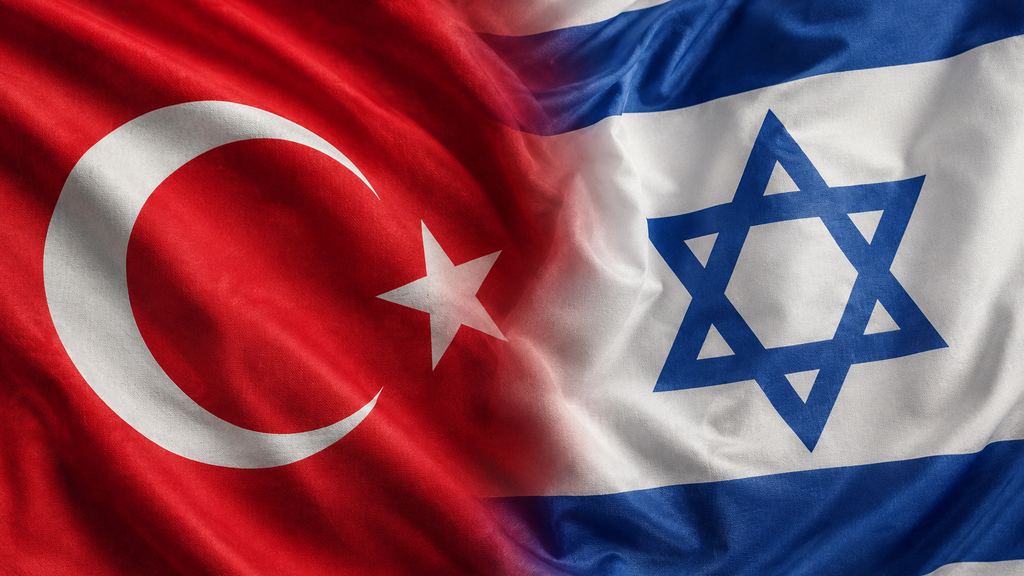
An Interpol Red Notice is not an international arrest warrant. It is a standardized request for member countries to locate and provisionally detain an individual pending extradition or similar legal proceedings. All submissions are reviewed by the Commission for the Control of Interpol’s Files for compliance with the organization’s constitution. Article 3 of that constitution strictly prohibits any intervention or activity of a political, military, religious, or racial character. By submitting domestic indictments arising from an active armed conflict and naval blockade enforcement, Turkey is attempting to force an international policing body to violate its own neutrality rules.
Even if Interpol ultimately rejects the request under Article 3, the filing itself advances Ankara’s immediate objectives. The public submission generates hostile headlines, creates legal ambiguity around Israeli officials, and seeks to impose practical travel restrictions on government leaders and military commanders. By converting domestic court rulings into instruments of international pressure, Turkey aims to establish a precedent of extraterritorial intimidation. The goal is to induce hesitation among IDF commanders enforcing maritime blockades, inject friction into Israel’s diplomatic relations, and shrink the operational space of a democratic military.
Ankara’s claim to legal and moral authority collapses under the weight of its own record. Under President Recep Tayyip Erdogan, Turkey has served as a political, logistical, and financial sanctuary for senior Hamas leadership. Unlike the United States, the European Union, and most Western governments that designate Hamas as a terrorist organization, the Turkish regime has granted Hamas operatives residency, official protection, and direct access to high-level officials. After the October 7, 2023 massacre in which Hamas terrorists murdered approximately 1,200 people in southern Israel, Erdogan publicly defended the group, declaring it a “liberation movement” rather than a terrorist organization. Senior Hamas figures have continued to operate political offices and financial networks from Istanbul with state tolerance. That the Turkish Ministry of Justice now seeks to prosecute Israeli personnel for enforcing lawful counter-terrorism measures while shielding a designated terrorist organization exposes the entire legal offensive as ideological warfare.
The Turkish judicial system itself lacks the independence required to act as a credible arbiter of international norms. Human Rights Watch, Amnesty International, and other independent monitors have documented the systematic erosion of judicial independence following the 2016 coup attempt. Broad anti-terrorism statutes and laws criminalizing insults to state officials have been used to detain tens of thousands of political opponents, journalists, academics, and civil society figures. Former Kurdish political leader Selahattin Demirtas remains imprisoned despite repeated, binding rulings by the European Court of Human Rights ordering his release. A regime that weaponizes its courts against domestic dissent has no standing to lecture democratic states on the rule of law.
This hypocrisy is sharpened by Turkey’s own military conduct. Since 1974, Turkish forces have maintained a continuous occupation of more than one-third of the Republic of Cyprus. The self-declared “Turkish Republic of Northern Cyprus” is recognized solely by Ankara and stands in direct violation of United Nations Security Council Resolutions 541 and 550, which declared the secessionist entity legally invalid. At the same time, the Turkish military conducts regular cross-border operations in northern Iraq and northern Syria against Kurdish groups. These operations, carried out without host-nation consent or Security Council authorization, have produced civilian casualties, population displacement, and infrastructure damage. A state that occupies foreign territory and launches unilateral military campaigns cannot credibly pose as a defender of international legality when criticizing Israeli naval enforcement.
From a strategic standpoint, the Interpol petition is a textbook case of asymmetric lawfare. Unable to alter Israel’s core security posture through conventional pressure or proxy forces, adversaries increasingly turn to legal and institutional harassment. The objective is threefold: restrict the international mobility of Israeli decision-makers, create operational caution among IDF commanders, and drive political wedges between Israel and its Western partners. Turkey understands that democratic governments take international legal processes seriously. By inserting politically motivated filings into global policing systems, Ankara seeks to exploit that procedural respect to impose costs on Israel.
The legal campaign is also linked to Turkey’s broader regional ambitions in the Eastern Mediterranean. Through unilateral maritime claims, including the 2019 memorandum with Libya’s Government of National Accord, Ankara has sought to expand control over vital sea lanes and energy resources. Israel’s maritime defense capabilities, expanding offshore energy infrastructure, and security partnerships with Greece and the Republic of Cyprus form a structural counterweight to these ambitions. By attempting to criminalize Israeli naval operations, Turkey aims to weaken the cohesion of this alignment and expand its own freedom of action.
To neutralize this threat, Israel must pursue a coordinated counter-strategy across diplomatic, financial, and military domains.
Diplomatically, Jerusalem should immediately engage core Western partners, including the United States, the United Kingdom, France, and Germany. Israeli representatives must secure clear public commitments that these governments will uphold Article 3 of Interpol’s constitution and reject politically motivated Red Notice requests. Western capitals need to understand that permitting autocratic regimes to abuse global policing mechanisms sets a precedent that will eventually be used against their own forces and officials.
Financially, Israel should intensify pressure on terror-financing networks operating inside Turkey. Working with the U.S. Department of the Treasury and the Financial Action Task Force, Jerusalem can document and publicize Istanbul-based channels that facilitate resource transfers to Hamas and other designated groups. Targeted secondary sanctions against financial institutions that enable such activity would raise the economic cost of Ankara’s policy.
 Amine Ayoub
Regionally, Israel must deepen the Eastern Mediterranean security architecture. Expanded joint naval operations, intelligence integration, and energy infrastructure coordination with Greece and Cyprus, alongside closer defense ties with moderate Arab partners, would demonstrate that Turkish legal and political pressure cannot isolate Israel or fracture regional stability.
Finally, the Israel Defense Forces must preserve complete operational independence. Lawful naval blockades designed to prevent arms transfers to hostile actors cannot be compromised by foreign legal theater. Domestic warrants issued by hostile courts must not influence tactical decision-making or rules of engagement. National survival and the defense of Israeli citizens take precedence over the political decrees of adversarial judicial systems.
Ankara’s Interpol petition is a direct challenge to Israeli sovereignty. By answering it with disciplined diplomacy, targeted financial pressure, strengthened regional alliances, and unyielding military readiness, Israel can ensure that lawfare fails to constrain its legitimate right to self-defense.
- Amine Ayoub, a fellow at the Middle East Forum, is a policy analyst and writer based in Morocco. Follow him on X: @amineayoubx