

Iran’s decision to block the Strait of Hormuz in February 2026 marked a move the world had feared for decades. In the short term, it worked.
About 20 million barrels of oil per day stopped flowing. Roughly one-fifth of global liquefied natural gas trade disappeared from the market. A third of international fertilizer trade — urea, ammonia and sulfur — was stranded in the Gulf. About a third of global helium production, critical for semiconductors and artificial intelligence industries, was blocked in Qatar.
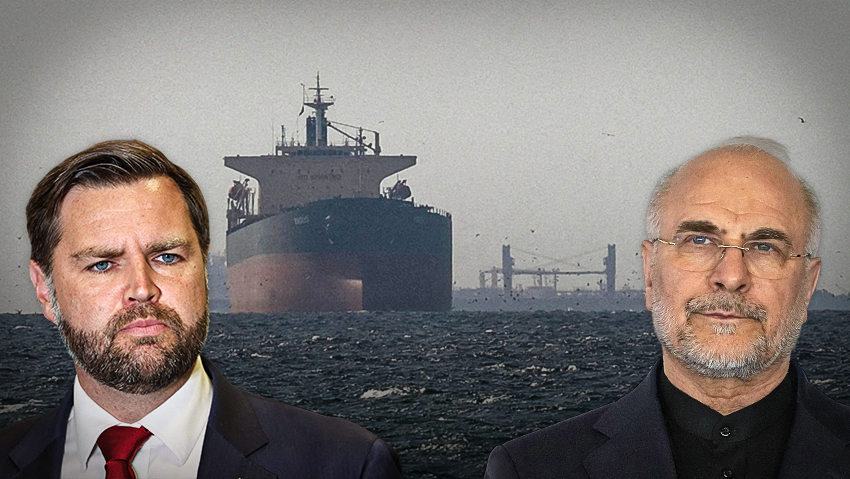
(Photo: AP Photo/Eraldo Peres, Fadel SENNA/AFP, REUTERS/Stringer)
Oil prices rose above $115 per barrel. Urea prices jumped by 50%. The International Energy Agency described it as “the largest supply disruption in the history of the global oil market.”
The move also translated into diplomatic and military gains. The United States failed to build a coalition to reopen the strait, both among European and NATO allies and among key Asian economies most affected by the blockade. A similar initiative by Gulf states at the United Nations Security Council was blocked by vetoes from Russia, China and France.
Countries such as Japan, South Korea and France turned directly to Tehran to secure safe passage for their vessels. It was a moment of strategic success that is difficult to dismiss.
Yet despite the immediate gains, the move has set in motion processes that are likely to erode the value of the leverage Iran is now using. As seen in other cases in recent history, such a strategy can ultimately backfire.
The Strait of Hormuz differs from other global chokepoints such as the Suez Canal or the Panama Canal. In those routes, goods must pass through to reach their destination. Hormuz functions differently: ships enter to collect resources — oil, gas and petrochemicals — and then leave. If those resources can be obtained without entering the strait, its strategic value declines.
History shows that when a monopolist uses its leverage aggressively, it can accelerate its own decline. In 2025, China imposed strict export restrictions on rare earth metals, a resource essential to industries ranging from defense to electric vehicles and artificial intelligence. The move prompted the United States and its partners to remove regulatory barriers, pass legislation and expand production capacity, aiming to reduce dependence on China within years.
Iran has exposed a similar vulnerability. Its leverage over Hormuz is lower than China’s in rare earths and can be reduced more quickly if alternatives are developed. Three processes are already underway.
The first is the expansion of U.S. energy exports. Once dependent on foreign energy, the United States has become the world’s largest producer of oil and natural gas. It currently operates eight liquefied natural gas export terminals, with eight more under construction that will double capacity. By the end of the decade, exports are expected to rise significantly, positioning the United States to replace Gulf supplies in Asian markets.
After Russia’s invasion of Ukraine, U.S. gas replaced Russian supply in Europe, creating both dependency and major revenue gains. A similar shift could occur in Asia, where countries such as Japan are already investing in U.S. energy infrastructure to reduce reliance on Hormuz.
The second process is the rapid expansion of pipeline infrastructure bypassing the strait. Saudi Arabia activated its east-west pipeline within days of the crisis, transporting oil from the Gulf to the Red Sea. The pipeline proved capable of moving about 7 million barrels per day. The United Arab Emirates is using its pipeline to the port of Fujairah outside the strait, adding another 2 million barrels per day.
Together, these routes already provide about half of Hormuz’s oil transport capacity. Additional projects to expand pipeline capacity, previously delayed due to the low likelihood of a prolonged closure, are now being reconsidered. A potential corridor linking Gulf energy supplies through Syria to Turkey could further reduce reliance on the strait.
The third process is a renewed push toward civilian nuclear energy. In Europe, leaders have shifted their stance, describing nuclear power as essential for energy independence. Germany has reconsidered its previous policy, while Japan has restarted major reactors and is investing heavily in new nuclear projects in partnership with U.S. companies.
Other countries, including Egypt and Poland, are also advancing nuclear programs. Across regions, the shift reflects a growing urgency to reduce dependence on vulnerable supply routes.
If these trends continue, the leverage of Hormuz could be significantly reduced within three to five years. Even if Iran succeeds in imposing transit fees, the financial gains are limited. Estimates suggest annual revenue of about $12 billion — a modest figure relative to the country’s broader economic challenges and reconstruction needs.
 Jonathan Adiri
Before the war, Iran’s economy stood at roughly $400 billion. Years of sanctions, investment in its nuclear program and damage to energy infrastructure have already imposed significant costs.
The longer-term impact of the move may lie less in immediate financial gain and more in how it reshapes global energy flows and alliances.
It remains difficult to identify structural turning points while they are unfolding. But past disruptions — from shipping reroutes around the Red Sea to the collapse of Russian gas supplies to Europe — have shown how quickly global systems can adapt.
The closure of the Strait of Hormuz may follow a similar pattern, triggering a shift that ultimately reduces its own strategic importance over time.