

Israel does not need recognition from Lebanon. It does not need peace. It does not need love. It needs only one thing: that no rockets or drones cross the border.
Lebanon cannot provide that. It does not matter how many peace initiatives France’s president produces.
Gallery
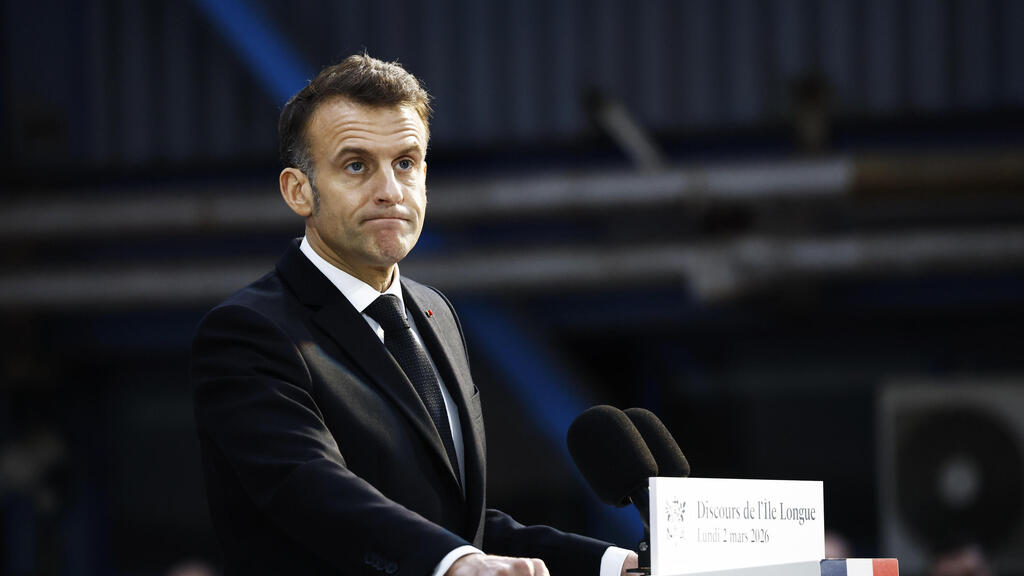
French President Emmanuel Macron proposed negotiations between Israel and Lebanon to reach ceasefire
(Photo: Yoan Valat/ AP)
Channel 12 reporter Barak Ravid published on Saturday night details of a French proposal for negotiations between Israel and Lebanon. Additional reports, including a post by French President Emmanuel Macron, appeared to confirm the plan. According to those reports, the Israeli government and the U.S. administration are examining it.
Peace is a noble aspiration. In international relations, there is hardly a more respected or sacred word. Governments feel the need to proclaim their desire for peace even while doing everything possible to continue fighting indefinitely.
But advocates of peace should not get carried away. Macron’s proposal is essentially a distraction. It will not solve Israel’s problem on its northern border.
Peace with Lebanon was once considered a realistic dream. In the 1950s and 1960s, Israelis often said Lebanon would become the second Arab country to sign a peace treaty with Israel. During the first Lebanon war in the early 1980s, there was even an attempt to force Lebanon’s government to sign such an agreement. That effort collapsed with the assassination of President-elect Bashir Gemayel.
Lebanon never became the second country, nor the third. Egypt and Jordan came first, each for its own reasons. The PLO also entered a process that ultimately stalled. In recent years, several states joined the Abraham Accords.
Every agreement with an Arab country produced a wave of euphoria: romantic tourism, global business ventures, intimate ties between governments and leaders, and grand promises of a new Middle East.
Eventually, reality set in. The peace rhetoric gave way to security arrangements.
For Israel, that is a great deal. For its neighbors as well. But security arrangements are not the kind of thing people write songs about.
The lesson is clear. It applies to Trump and to Macron alike: leave peace aside. Leave the dream of a new Middle East aside.
What Israelis need after two and a half years of difficult fighting is security. If peace follows, it will be a bonus.
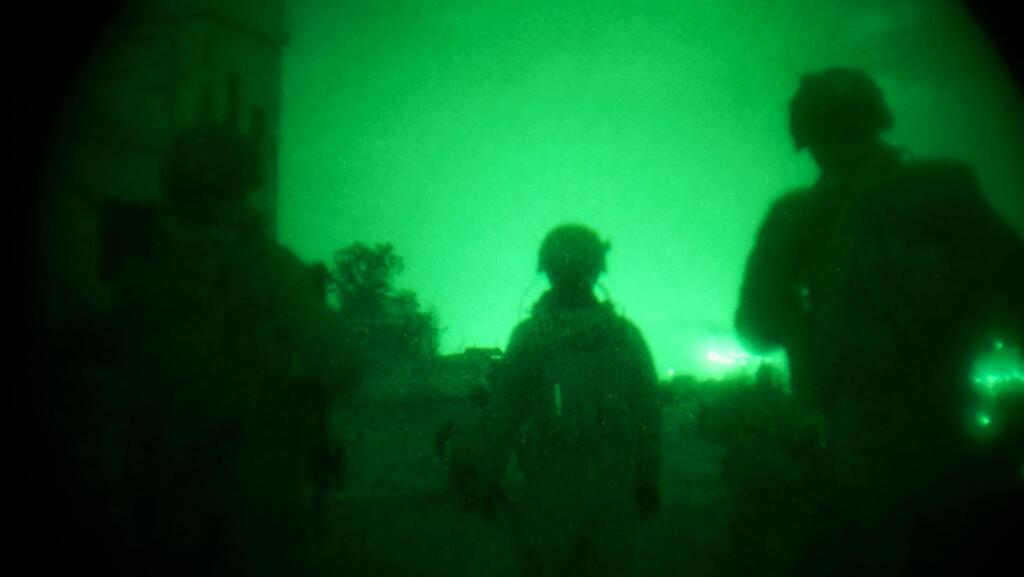
IDF forces launch a targeted operation in southern Lebanon
(Photo: IDF)
Lebanon is a failed state. Since the 1970s, it has been exposed to every outside power, from Syria and Palestinian terrorist groups to Israel and Iran.
Every player in Lebanese politics operates under the patronage of a foreign power: one aligned with the United States, another with France, another with Iran, another with Saudi Arabia, another with Israel. The system is lubricated by intelligence agents, influence, and cash.
A Lebanese politician can shift allegiance from Israel to Syria, or the other way around, within a single day. It has happened before.
Lebanon’s government understands that the country cannot be rebuilt as long as Hezbollah remains an armed organization. In 2024, it signed a ceasefire agreement that placed responsibility for disarming Hezbollah on the Lebanese state.
The government wants to do it. It cannot.
Its army is too weak and too divided. It is not built for the internal conflict that would erupt if it moved against Hezbollah strongholds.
The result is tragic for both sides. Israel does not need recognition from Lebanon. It does not need peace or affection. It needs only one thing: that no rockets or drones cross the border.
Lebanon cannot provide that.
Some in Israel argue that if Lebanon’s government cannot fulfill its commitments, Israel should teach it a lesson. The air force could destroy what remains of Lebanon’s civilian infrastructure: power stations, leaving the country in darkness; the airport, placing it under siege.
Those who make such arguments know that destroying infrastructure will not improve the performance of the Lebanese army. What it will do is strengthen Hezbollah.
Concern for Lebanon’s civilian infrastructure lies at the heart of the French initiative. To prevent Israel from bombing, Macron proposes negotiations. The foreign ministers of Israel and Lebanon would meet in Paris and pose for photographs with him.
Then they would discuss agreements already signed and violated long ago, from U.N. Security Council Resolution 1701 to the 2024 ceasefire agreement.
When peace talks are underway, bombs do not fall, at least not when the United States and France sponsor the process.
The most troubling clause in the French proposal concerns UNIFIL, the U.N. peacekeeping force in Lebanon.
 Nahum BarneaPhoto: Avigail Uzi
During the 48 years the force has been deployed there, it has done nothing to stop Hezbollah rocket fire. It is doing nothing today. More than 1,000 rockets have been launched toward the Galilee, yet UNIFIL posts saw nothing and heard nothing.
Under the ceasefire agreement signed two years ago, both countries agreed to remove this “dead horse.” The force is supposed to be phased out next year.
Now, Macron proposes assigning UNIFIL the task of disarming Hezbollah in southern Lebanon.
The weakling will suddenly become Rambo.
Hezbollah needs to be dried out. Ideally, that process should begin in Iran. Without money, without weapons, without a patron, the threat will shrink.
Arab oil states and the U.S. administration could strengthen the Lebanese government’s motivation and improve the capabilities of its army. Israel can help through intelligence and precise, surgical strikes.
Occupation of the territory will not help. Nor will a desperate chase after the last Hezbollah fighter.
David Azoulay, the head of the Metula Regional Council, told me his dream is to drink coffee in Marjayoun, just across the border in Lebanon.
My dream is to drink coffee in Metula, secure, peaceful and full of visitors.
Marjayoun can wait.