

There are moments in a managerial career when everything seems to converge on a single point of decision: mounting pressure, an unresolved conflict, a system slipping out of control. Then the “strong” solution appears—a sharp, almost violent decision. One that settles the argument, silences opposition, and redraws the field.
Many young managers fall in love with this moment. It carries power, clarity, a sense of control. And yet, sometimes it is precisely there—in such drastic moves—that the fall begins.
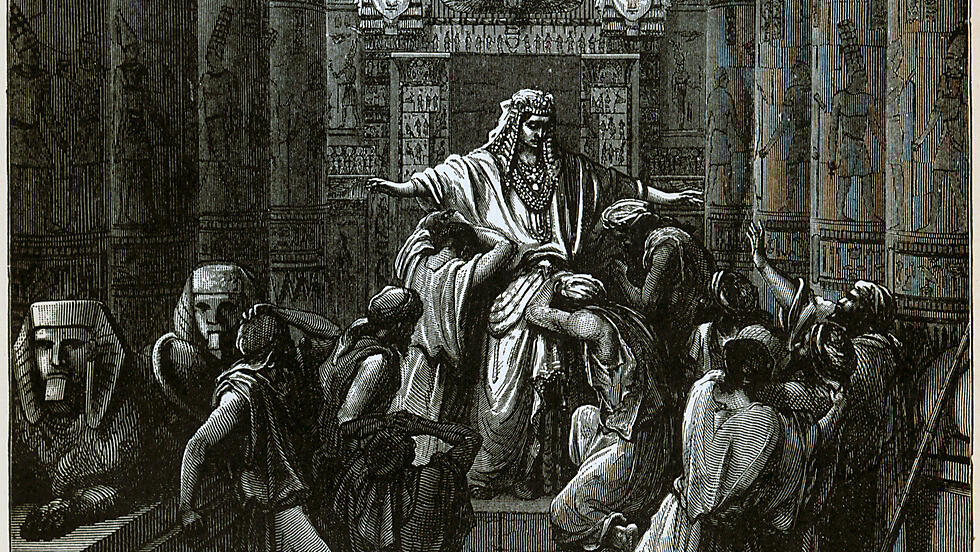
Rabbi Isaac ben Moses Arama, one of the sharpest thinkers ( c. 1420 – 1494), describes this with an image that lingers in the body long after reading: a snake that does not strike the horse’s head, but bites its heel. A seemingly marginal, almost tactical blow. But the result is dramatic: the horse recoils, the rider falls, and the snake itself is crushed beneath the heavy body collapsing on it.
A brilliant move-but one from which the snake has no escape.
This interpretation refers to Jacob’s blessing to the tribe of Dan, from which Samson the hero emerged. When Samson brought down the pillars of the building, he said, “Let me die with the Philistines.” He, too, succumbed to the same blow—absorbing it and falling along with it.
It is an uncannily precise description of a certain kind of leadership: one that succeeds in shaking foundations, toppling structures, “winning” at the price of total collapse-both of the system and of the leader within it. And so Rabbi Isaac Arama makes a sharp assertion, almost brutal in its honesty: “A salvation that brings death with it is not salvation.”
That sentence resonates far beyond its biblical context. It touches the core philosophical question of human action: is the outcome alone enough to justify the act?
Already in Aristotle we find a similar line of thought. For him, a good action is not measured only by what it achieves, but by what it does to the person who acts. An action that brings external success but corrupts a person’s character is not a moral action, even if it “works.” The true test is whether the deed shapes a worthy, stable, whole human being.
The same idea recurs again and again in the Stoic tradition: external control without inner control is an illusion. One who is willing to break everything in order to win eventually discovers that he himself was the tool that shattered.
In this sense, the example of Samson, which Rabbi Isaac Arama invokes, is almost tragic in the classical sense. He succeeds in collapsing the house upon his enemies—but dies with them. It is a total victory with no future. Like a Greek tragic hero, he pays with his life for a single moment of power.
Now place all of this on the table of a modern boardroom.
How many times have we seen “successful” moves that leave scorched earth behind:
• A team that stays, but is afraid.
• An organization that functions, but without trust.
• A manager who proves they are, but left alone, exhausted, or cynical.
This is where leadership is truly tested. Not in the moment of decision, but the day after. Not in the question of whether the move worked, but in who is still standing when the dust settles.
Mature leadership asks a completely different question: does my success enable life, or merely survival? Does it build continuity, or close a story?
(Image generated by DALL-E)
The verse that seals Jacob’s words, “For Your salvation I hope, O Lord,” is not a mystical cry but the setting of a standard. A search for salvation that does not depend on self-destruction, that does not require the total sacrifice of the individual or the system. A salvation that contains light, continuity, breath.
For young managers, this may be the most important insight of all: not every move that can be made should be made. Not every sharp decision is leadership, and above all, not every victory is worth the price it exacts from the one who wins.
This week I read about Michael Burry, the serial short-seller who is unafraid of past mistakes and continues to place massive bets against Wall Street darlings, NVIDIA and Palantir. He may be ahead of his time, or he may not. But in practice, the pressure created by the public, sharp, and prolonged bet became so great that it led to the closure of his hedge fund. This is no longer just a story of a forecast that proved wrong or bold, but an example of a heavy cost: harm to people, to companies, and ultimately to the one who led the move.
I have seen quite a few startups that chose not to sell at a certain price, driven by a gut feeling that “it’s about to take off,” even when no better alternative was on the table. Sometimes this is faith, sometimes stubbornness, and sometimes a dangerous mix of the two. The result was often a spiral through periods of uncertainty, ending in complete shutdown and zero return for founders and investors alike. Some will call this legitimate venture risk; others will see it as a managerial failure—especially when the human and systemic cost was never truly examined.
Because real leadership is not the ability to “bring down” through a brilliant forecast or a dramatic move, but the ability to remain standing—with the people around you, long after the decision has been made and the headlines have already changed.