

Throughout my career in scientific research, I saw how easily ideas could cross borders. Labs welcomed visiting scholars enthusiastically, scholarship moved freely from one desk to another and the work itself was the only passport anyone cared about. Collaboration began by showing up with a question worth exploring.
Two decades later, the mood has changed. The enthusiasm for Israeli scientists like me has become more hesitant and sometimes openly hostile.
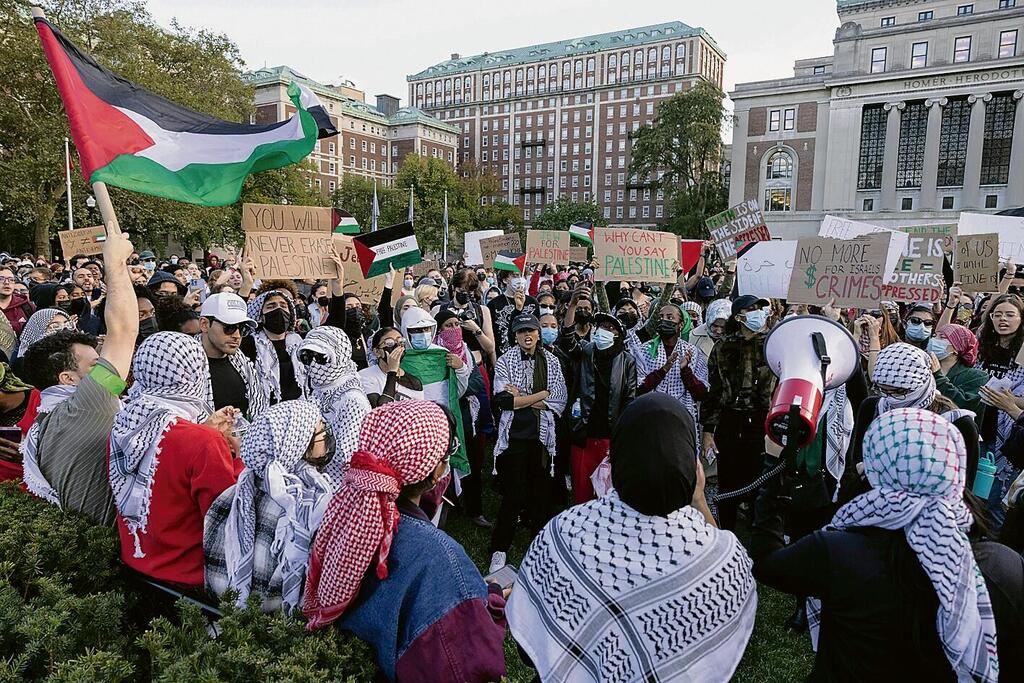
Pro-Palestinian demonstration at Columbia University
(Photo: Yuki Iwamura, AP)
Even after fighting in Gaza has stopped, a quieter separation continues: conference invitations evaporate, grant partners hesitate to sign. The ongoing academic boycott campaign may claim to target Israeli policy, but in practice, it hits precisely the people with the least political power and the greatest potential to shape the future.
Global attention is now focused on what happens after the war in Gaza. The “day after” matters in science as well. If we let boycotts replace collaboration, we will delay the research needed to rebuild lives on both sides.
I write this both as a college president and as someone who has spent a career building international collaborations. My research on keratoconus and myopia has relied on data from many countries and on colleagues who only asked whether the science was rigorous and could improve sight.
The current boycotts reshape global science. They do not simply remove a country from the map; they push the system toward blocs. If European or North American institutions decide they will not collaborate with Israelis, that does not mean Israeli scientists stop doing science. It means we will look for other partners – often in Eastern Europe, Asia or other regions less engaged in boycott campaigns.
A fragmented research ecosystem is less able to work across political divides and more vulnerable to pressure from governments and funders. Nature has reported that global collaborations are quietly being rerouted away from Israel.
This fragmentation comes at a fraught moment. Climate change, chronic disease and mental health do not respect borders. They require the best minds from many places working together, including people who may disagree profoundly about politics, history and justice.
I am not asking for silence about the Israeli-Palestinian conflict. Israelis themselves have been deeply divided over government policy and strategy, before and since October 7. Criticizing policies is legitimate. But refusing to review a paper on corneal biomechanics because of the author’s identity is a withdrawal from the shared pursuit of knowledge.
The irony is that Israeli campuses are among the few spaces where large numbers of Jewish and Arab citizens study and work side by side. At Jerusalem Multidisciplinary College, where I am president, they share classrooms and clinics. Many go on to serve the entire population in public service.
You can disagree sharply with Israeli government policy and still collaborate with Israeli scientists. You can condemn civilian suffering, Israeli and Palestinian, while co-authoring a paper on myopia. You can sign statements calling for humanitarian aid and, in the same week, examine a PhD thesis from Jerusalem.
To my international colleagues, I say: hold us to high standards and challenge us. But do not close the door on scientific collaboration. Parents of children who will benefit from a future treatment do not care about the discovering scientists’ politics or policies.
To Israeli institutions and decision-makers, we have responsibilities as well: to defend academic freedom and invest in the next generation of scientists, Jewish and Arab alike. When the world looks at our universities, they see places where critical thinking, empathy and shared responsibility thrive.
Academic boycotts will not rebuild what the war has broken. They will only make it harder for the scientists who could help repair a more just and livable future, for Israelis and Palestinians alike, to do their work together.
- Prof. Ariella Gordon-Shaag is president of Jerusalem Multidisciplinary College