

I don’t currently live in Israel. I live in New York, but I am Israeli in every fiber of my being. I pay taxes in Israel. Most of my family is in Israel, my children are in Israel, my friends are there and my heart is there. Like many Israelis living in New York, I am involved in Israeli and Jewish projects. I speak Israel, breathe Israel and ache for Israel.
Two weeks in the country were enough for me to realize how much I cannot sleep at night from anger, not only over the war but over the injustice.
(Photo: AP Photo/Leo Correa)
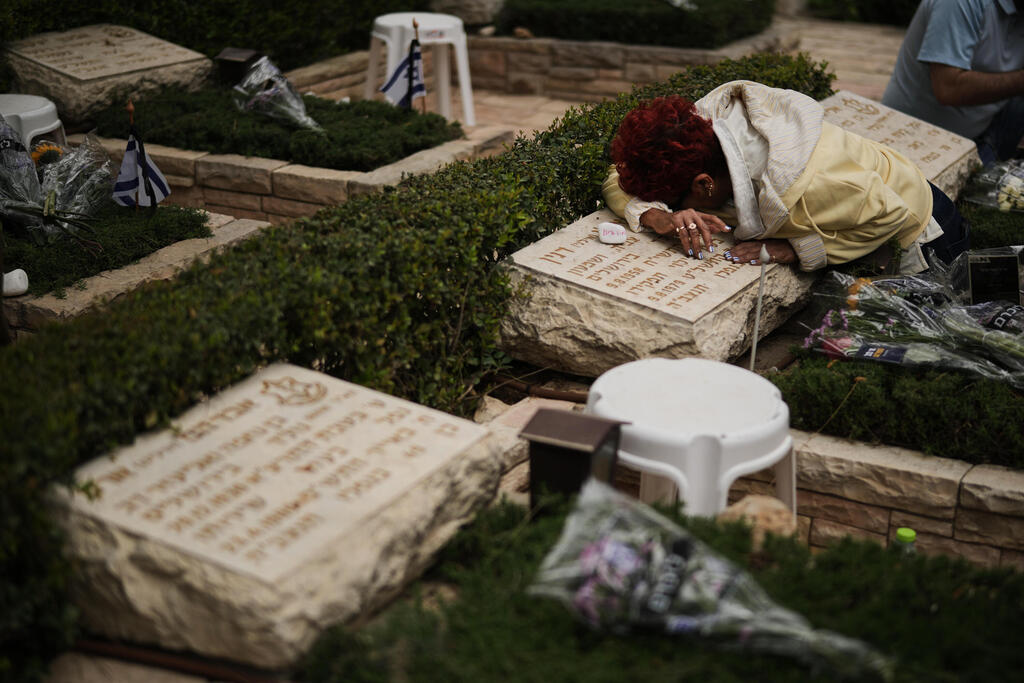
Every day, soldiers fall here — the salt of the earth, someone’s children, young people who will never be the same if they return at all.
Entire families are shattered by grief. Reservists are collapsing financially and emotionally. The public is carrying an endless war, anxiety, the cost of living and taxes on its back.
And amid all this, the government keeps channeling millions, some would say billions, in public funds to keep a coalition alive.
That money also comes from my taxes. But the hardest feeling is not just about the money. It is the sense that an entire public is expected to sacrifice everything, while another public manages again and again to evade the most basic burden in a country fighting for its life.
I do not hate Haredim. I do not hate people for no reason, not at all.
In New York, I have met Haredim who work very hard. People who run businesses, work from morning to night and integrate into the modern world without feeling that their faith is harmed by it. I have seen Haredim sitting in cafes without kosher certification, living ordinary lives, and the world did not collapse.
That is why it is even harder for me to accept what is happening here. Because this is no longer just an argument about religion. It is an argument about justice, equality and mutual responsibility. Instead of Israel’s battered and bruised police dealing with crime, violence and citizens’ security, they are once again dragged into internal clashes with those who refuse to accept the laws of the state when those laws are inconvenient.
 Judy Shalom Nir-Mozes
 And the most frightening thing? People are starting to say sentences I never thought I would hear from Israelis: “We are beginning to understand where antisemitism comes from.”
That sentence shocks me, because we must not reach that place. Anger over inequality must not turn into hatred. To prevent that, real change is needed.
The same public cannot be asked again and again to sacrifice its children, its money and its life, while exemptions, budgets and political discounts continue to be handed out for the sake of a government’s survival.
I love Israel, and that is precisely why I am angry. And precisely because I am far away, I sometimes see more clearly how precious this country is and how dangerous it is to keep tearing it apart from within.
It is so frustrating to know that right now, I have no way to change the situation. I wish I did.
Despair from afar is slightly more comfortable.