

As the war enters its second month, uncertainty remains over the extent of damage to Iran’s nuclear program and ballistic missile arsenal. But another objective — regime change — appears to be unfolding gradually, though not in the way the United States and Israel had hoped.
Amid the war and a series of assassinations targeting senior figures in the Islamic Republic, a process already underway has accelerated: the consolidation of power by senior figures and veterans of the Islamic Revolutionary Guard Corps.
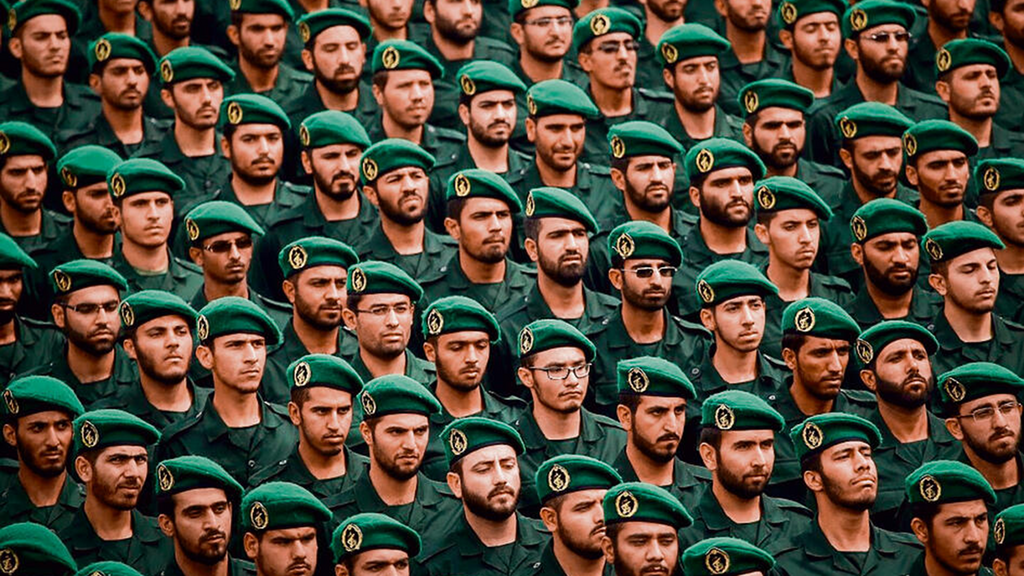
The Revolutionary Guard has long served as the backbone of the Islamic Republic. Like similar ideologically driven regimes, it functions as the guardian of the founding vision, a pipeline for leadership and manpower across state institutions and a force tasked with suppressing internal and external enemies. It is a group that sees itself as elite, marked by a willingness to sacrifice for its ideology and a lack of moral restraint in using violence against perceived enemies, including fellow citizens.
In recent years, a number of senior Guard figures have been killed, both in office and after retirement. Among them were Qassem Soleimani, commander of the Quds Force, killed in 2020, and Hossein Salami, the Guard’s commander, as well as his successor Mohammad Pakpour and navy commander Alireza Tangsiri in the current conflict.
As with other fundamentalist organizations, these assassinations have dealt blows but have not led to internal reckoning or collapse. Those killed are replaced — often by figures seen as less experienced but more hardline — and leadership continuity is maintained without creating a vacuum.
“It appears that political leaders and senior Revolutionary Guard figures who have been killed are being replaced by more extreme figures,” said Vali Nasr of Johns Hopkins University, citing the replacement of relatively pragmatic Supreme National Security Council head Ali Larijani with Mohammad Zolghadr, a Guard figure with more hawkish positions.
“At least for now, there are no cracks or signs of disintegration in the Guard, as the Americans and Israel had hoped,” he said.
From Israel’s perspective, the Revolutionary Guard represents the spearhead of the Iranian threat. It has driven the strategy of exporting the revolution, cultivated Hezbollah and other proxies across the Middle East and advanced attacks on Israeli and Jewish targets abroad. Ahmad Vahidi, who currently serves as a senior commander, has been linked to major attacks in Argentina.
The Guard also controls Iran’s most threatening military capabilities, particularly its missile systems. Because of its role in terrorism and regional subversion, many of its senior officials are under Western sanctions, and the organization itself is designated as a terrorist group by several countries.
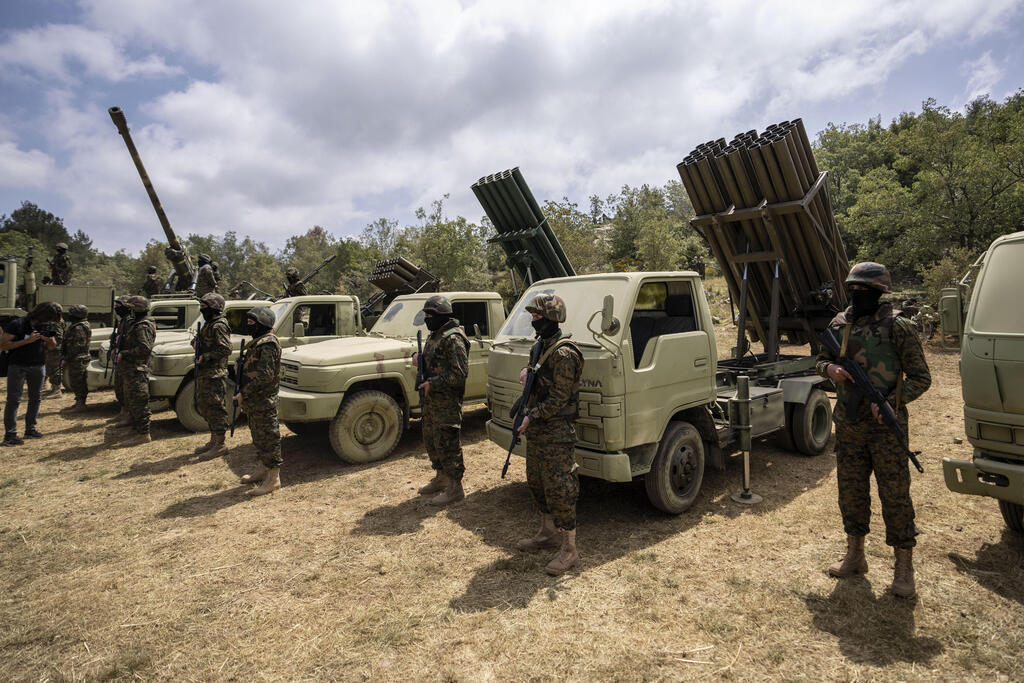
Hezbollah fighters
(Photo: AP /Hassan Ammar)
The personal backgrounds of the Guard’s leadership reflect broader social changes that accompanied the early years of the Islamic Republic. Many were born in the late 1950s and early 1960s in peripheral towns or rural areas to poor, traditional families. As young people, many moved to major cities, particularly Tehran, where they experienced economic hardship and developed hostility toward the monarchy of the shah.
They became politically active as students, joining protest movements that ultimately contributed to the fall of the monarchy. After the establishment of the Islamic Republic, they joined the Revolutionary Guard, and the Iran-Iraq War from 1980 to 1988 became a formative experience that helped consolidate their status and propel many into positions of power.
Senior Guard officials are typically devout but not clerics. Many hold academic degrees in fields such as engineering and management, a profile common among Islamist movements in the region, including Hamas. They operate within a dense network of long-standing personal and family ties, maintaining close contact between those in active service and those who have moved into other senior roles. It is also common for former officials to return to positions of influence after periods outside formal service.
“The Revolutionary Guard is not a centralized organization but a networked space with different bodies and factions,” said Arash Azizi, an Iranian scholar based in the West. As with groups such as Hezbollah and Hamas, membership is often seen as a way of life rather than a conventional career, making full disengagement rare.
The expansion of Guard influence has been underway for decades. Veterans of the organization have moved beyond the military sphere to take control of key centers of power across Iran’s political, economic and municipal systems. Former Guard figures have held top positions, including the presidency and parliamentary leadership.
They also exert control over major sectors of the economy, including oil, gas, communications and transportation, giving them significant financial resources and influence.
Relations between the Guard and the religious establishment are characterized by both cooperation and limited competition. Supreme Leader Ali Khamenei strengthened the Guard while maintaining a balance with more pragmatic elements within the system.
Following his death, the Guard’s influence has increased further, though not at the expense of the clerical establishment. Instead, the two appear to be operating in closer alignment. Mojtaba Khamenei, who succeeded his father, is seen as closely tied to the Guard and aligned with its worldview.
“Khamenei saw himself more as commander of the Guard than as an ayatollah, and it is likely his son holds a similar view,” Nasr said.
Analysts say that if in the past the Guard was a central component of the system, it is now effectively the system itself, wielding near-total influence over decision-making.
Key figures from the Revolutionary Guard now in senior positions include Mohammad Bagher Ghalibaf, Ahmad Vahidi, Mohsen Rezaei — a former Guard commander who served for 16 years and now advises Mojtaba Khamenei — and Mohammad Zolghadr.
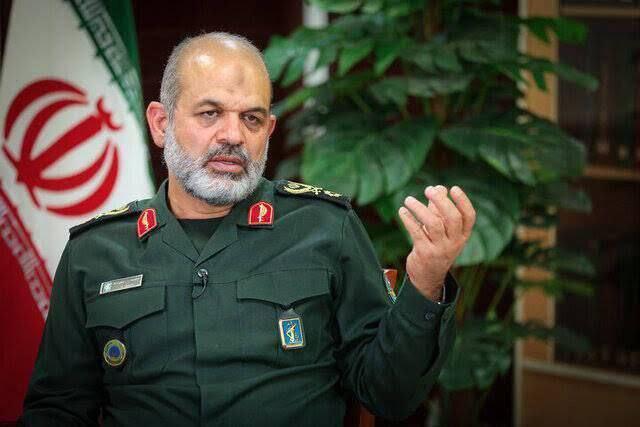
Ahmad Vahidi
At the same time, more moderate figures remain within the leadership, though with limited power. President Masoud Pezeshkian is seen as representing a more pragmatic camp that has attempted to promote a conciliatory approach externally, including signaling regret over attacks on regional countries during the war. Such efforts, however, have been quickly blocked by Guard leadership.
According to reports, more moderate figures are pushing to end the war, warning that Iran’s economy is nearing collapse. This has contributed to growing tensions within the leadership in Tehran.
The country’s evolving leadership structure remains in flux, with power centers, relationships and strategic direction still taking shape. It is difficult at this stage to define its characteristics or the direction it is likely to take.
“The regime is expected to take a hard line in foreign policy, particularly toward Israel and the United States,” said Danny Citrinowicz, an expert on Iran and the so-called axis of resistance. “At the same time, there may be a softer approach domestically, out of concern over internal unrest and the declining influence of hardline clerics.”
If the regime survives the war — whether it ends in an agreement or not — it is likely to emerge more extreme than it was before. A group of more hardline figures, driven by a sense of having withstood major challenges, could consolidate power in Tehran.
In such a scenario, the regime is likely to take a more aggressive approach toward Israel and, if not constrained, will seek to rebuild its conventional military power and the so-called axis of resistance, which has been significantly weakened since Oct. 7. More seriously, it may pursue a military nuclear capability as a means of deterrence and ensuring its survival.