

The war that the United States and Israel finally initiated against Iran is saving the West. It is an extraordinarily positive fact that for the first time in their history, the two allies are fighting a war together, combining their different and complementary capabilities. The entire world is a beneficiary of the Allied campaign, since there was no remaining alternative to war.
Back in July 2024, then-U.S. Secretary of State Antony Blinken, not remotely a supporter of Donald Trump, assessed that Iran’s breakout time to produce enough weapons-grade uranium for a nuclear weapon “was now probably one or two weeks.”
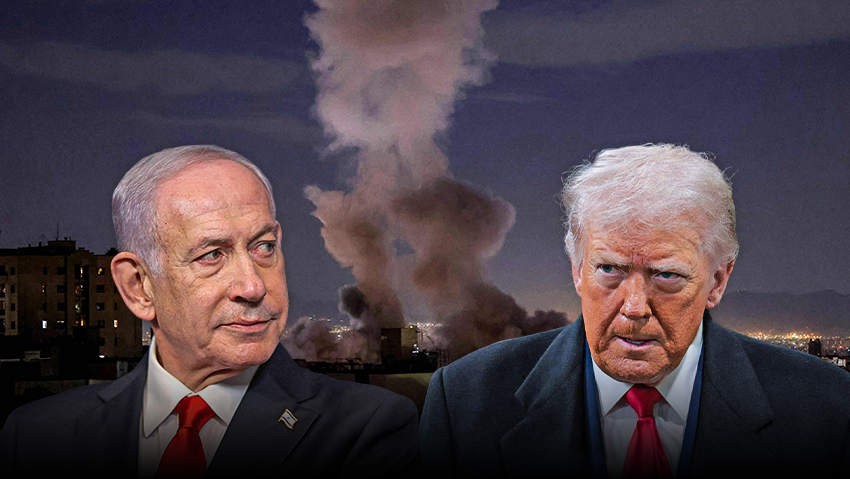
Since then, President Trump’s decision to launch the “Midnight Hammer” airstrikes in June 2025 did apparently obliterate Iran’s nuclear program, if the assessment provided by Director of National Intelligence Tulsi Gabbard is correct.
Yet, Prime Minister Benjamin Netanyahu has publicly stated that Iran responded by planning a restored program and hiding it “deep, deep underground, under high mountains… immune to any strike.” This is not political rhetoric. One such location, the so-called Pickaxe Mountain Tunnel complex, has been repeatedly discussed by experts.
The decision to attack Iran was taken at the very last moment, in almost cinematic fashion. The decision should have been taken two decades ago, in February 2006, when Iran brazenly resumed uranium enrichment and was referred by the Board of Governors of the International Atomic Energy Agency (IAEA) to the Security Council.
It is an incredible feat that after so many years of dithering by different Western leaders to no positive purpose, the decision to attack Iran was made. The world was faced with the prospect of a catastrophe, of Iran attaining nuclear weapons, and had absolutely no plan to prevent it.
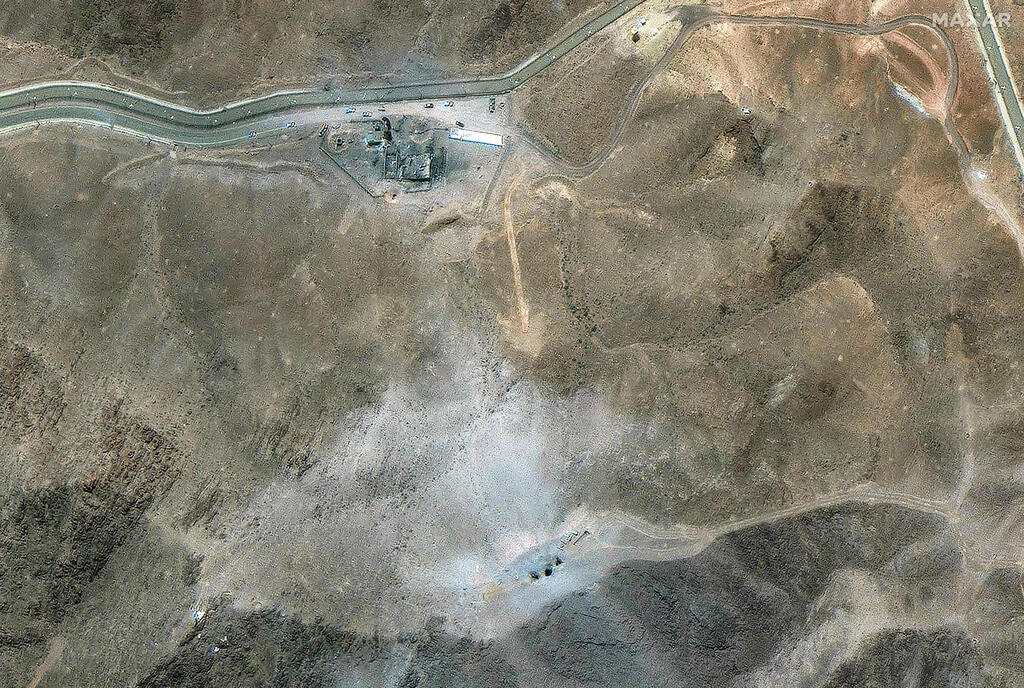
Satellite imagery of Iran's Fordo nuclear facility carrying the scars of the June 2025 US airstrikes
(Photo: SATELLITE IMAGE ©2025 MAXAR TECHNOLOGIES / AFP)
Experts like Richard Haass, president emeritus of the Council on Foreign Relations, who insist against all evidence that “the United States had other policy options available,” had helped take the world to the edge of disaster over the course of decades. The U.S. was, in practice, pursuing only one policy option. Waiting for Iran to obtain the means to mass murder either Americans or America’s allies.
Plenty of experts, among them the Atlantic Council’s Danny Citrinowicz, are complaining that there is no clear endgame to the war. Without the war, there was a very clear endgame — a nuclear Iran and very probably nuclear war. Mr. Citrinowicz himself, as an Israeli, benefits in a very direct sense from Trump and Netanyahu’s decision to ignore the complaints and doomsday predictions of experts. Quite possibly, they have saved the life not just of Mr. Citrinowicz, but of tens of thousands of others.
It is not, of course, clear how the war will end. What is absolutely clear is that the war brings itself the possibility, not the certainty, of a positive outcome. Without war, a catastrophic outcome was certain.
Right now, it is important above all else to continue the war. The foremost reason for this is that the military situation is uniquely favorable. Not only was the excruciatingly difficult decision to initiate the war taken, but the war’s first weeks have also been very successful. Iran’s military capabilities are being radically and rapidly undermined. Israel assesses that around 85% of Iran’s air defenses are gone. America reports Iranian attacks have declined about 90% from the war’s first day. It would be intolerably foolish to let go of this extraordinary opportunity, to abandon the task incomplete.
US pilot to Israeli Air Force peer: 'Be safe out there, strike hard'
(Video: IDF)


Quitting the war now and then returning to attack Iran for a third time, after the strikes last June and the current campaign, would be a nonsensical waste of money and materiel, because any pause has been and would in the future be used by the Iranian regime to restore its capabilities.
Expecting immediate political changes within Iran is foolish. The population of Iran needs time to observe that the situation inside the country has fundamentally changed, to sense and understand the weaknesses emerging within the regime, and to gather up the will to resist after the vicious campaign of mass murder that was inflicted upon it by the regime in January. The population needs to be given time.
The United States Air Force and the Israeli Air Force also need time in order to work through a very long list of various targets. A bombing campaign cannot be completed in a rush to meet an extraneous deadline, one divorced from the achievement of specific and essential military objectives.
It is worth remembering that the war has so far lasted less than a month, which is an incredibly short time for a military undertaking. By comparison, NATO’s Operation Allied Force against Serbia in 1999 lasted 78 days. It would be entirely reasonable and wholly appropriate to give the Allied air forces at least this amount of time to act against Iran in 2026, given the extraordinary threat that an Iran armed with nuclear weapons and ballistic missiles would pose to the world.
- Dan Zamansky is a British-Israeli independent historian and author of The New World Crisis, a Substack analyzing the problems of today.