


Ten days after the exposure of the Military Advocate General leak affair, Israel’s law enforcement system remains mired in uncertainty legal disputes and political infighting as questions mount over authority and accountability.
The controversy involving Military Advocate General Maj. Gen. Yifat Tomer-Yerushalmi has triggered what officials describe as a major breach of trust within Israel’s legal establishment. Justice Minister Yariv Levin’s handling of the situation has deepened tensions across multiple institutions and sparked what observers call one of the most serious power struggles in recent memory.
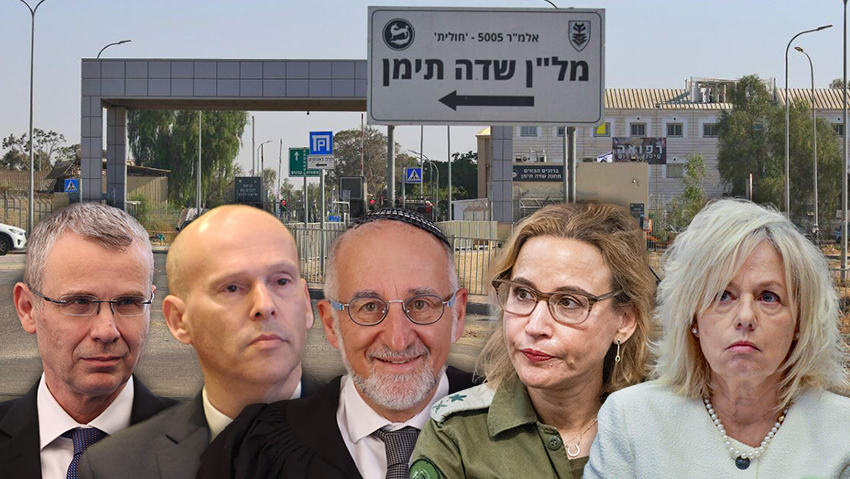
Conflicting legal opinions have been issued by senior officials accompanied by public exchanges of accusations. The dispute ostensibly about jurisdiction has evolved into a broader battle over control of Israel’s law enforcement hierarchy — a clash that could permanently reshape the country’s justice system and the standing of its gatekeepers.
Tomer-Yerushalmi is accused of misleading senior officials including the chief of staff the attorney general and the Supreme Court over the handling of a case involving the alleged abuse of a Hamas prisoner at Sde Teiman base. Critics have called her conduct a “strategic assault” on one of the state’s key principles — truthfulness between government institutions and political leadership.
The affair erupted at a time of deep national division and ongoing war fueling public mistrust in state institutions and widening fractures among Israelis over what constitutes shared truth. The debate now extends beyond interpretations to disagreements over basic facts.
Some Israelis claim there was no mistreatment of the detainee at all while others promote conspiracy theories about the timeline of leaks and the alleged deception surrounding them. The lack of consensus has further eroded confidence in official investigations.
The affair has also exposed rifts between the police investigations division the state prosecution and the attorney general’s office — institutions that have long maintained professional cooperation despite internal disputes. A new divide has emerged between the prosecution and a “special investigating judge” appointed by Levin, a move critics say inserts political influence into a professional police inquiry.
The Supreme Court is expected to intervene this week with various parties seeking to influence its ruling. The unfolding crisis, described by one commentator as “a Had Gadya chain of events without humor,” has thrown the justice system into disarray.
The developments come as Prime Minister Benjamin Netanyahu continues his corruption trial. During his cross-examination which he reportedly dislikes attending, the affair has become a political tool for undermining public trust in law enforcement. After a failed effort to remove Attorney General Gali Baharav-Miara, government figures began portraying her as aligned with Tomer-Yerushalmi and demanded she recuse herself from the case due to an alleged conflict of interest.
Levin’s appointment of retired judge Asher Kula — currently the commissioner for judicial complaints — as a “special investigating judge” could set a precedent for similar appointments in future cases including those involving the prime minister. If the Supreme Court approves the move it could legitimize bypassing the attorney general’s authority advancing a long-debated effort to dilute that role without formal legislation.
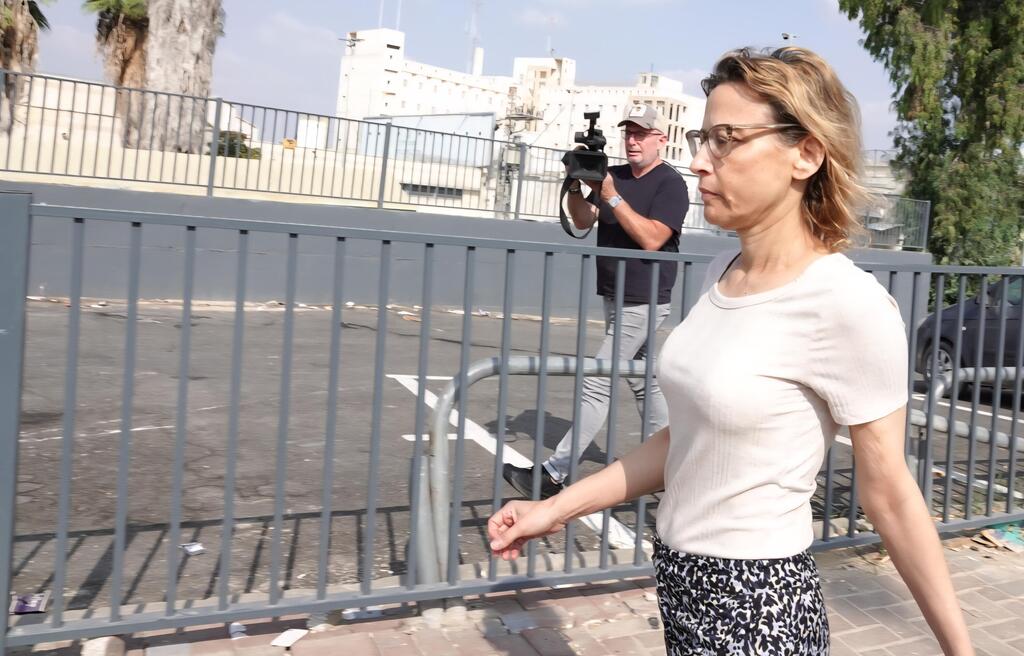
Former Military Advocate General Maj. Gen. Yifat Tomer-Yerushalmi
(Photo: Shaul Golan)
Since Israel’s founding, a clear hierarchy has governed criminal investigations. The police lead inquiries, the prosecution decides on charges, and the attorney general oversees the process when needed. That structure rooted in law and upheld by Supreme Court precedent has provided stability for decades.
Recent developments have fractured that system. After the Justice Ministry’s legal adviser ruled that Baharav-Miara should step aside because of a potential conflict of interest, Levin appointed Kola to head an independent investigation. His authority now overlaps - and in some areas supersedes - that of the attorney general and the police investigations division.
Kola has already sought information directly from Police Investigations Chief Boaz Balat, bypassing Police Commissioner Maj. Gen. Dany Levy. Levy refused to cooperate until the Supreme Court rules on the legality of the appointment. Traditionally the attorney general — not the national security minister — oversees investigative procedures. In the meantime, the police have frozen parts of the investigation pending judicial clarification.
The Supreme Court is expected to deliberate on the case next week. Analysts say the justices face a politically charged dilemma reminiscent of previous cases involving the attorney general’s authority the appointment of the Shin Bet chief and the military draft exemption law.
As speculation grows over whether the court will side with the justice minister, the attorney general or the police, legal experts warn that the affair has already damaged the system’s credibility. With institutional boundaries blurring and political influence deepening, Israel’s judiciary now faces one of its most significant tests since the country’s founding.