


Everyone is counting the wrong soldiers. Five countries promised the International Stabilization Force (ISF) thousands of uniforms stretching from Jakarta to Tirana. Four of those promises are still sitting on paper, stalled since the war with Iran emptied the multinational headquarters at Kiryat Gat back in February. The promise that actually showed up this week, walking through the gate of a base 30 kilometers from the Gaza Strip, came from Rabat.
The deployment itself was confirmed quietly. Israeli military correspondents reported on Tuesday that the first Moroccan representatives had arrived at the Kiryat Gat headquarters, the site that has hosted the joint command structure of the ISF since the Board of Peace stood it up under Washington's Gaza plan.
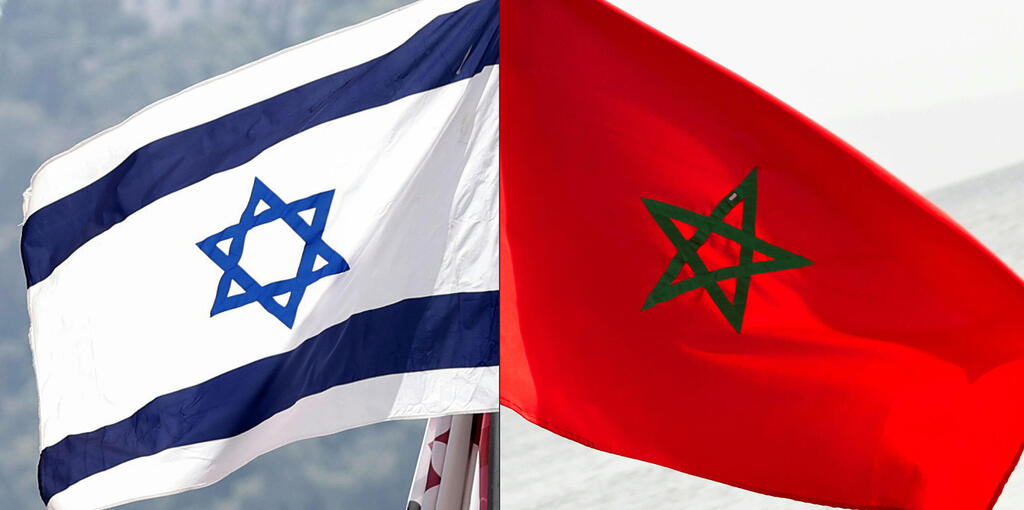
The Board's own account then welcomed its newest members from the Moroccan armed forces, framing their arrival as a reinforcement of the international effort on behalf of Gaza's civilian population. It was a brief statement, but it closed a loop that opened in February, when Foreign Minister Nasser Bourita stood in Washington and pledged that Morocco's commitment to the stabilization force would move from paper to practice.
The force these officers are joining exists because of a United Nations Security Council resolution that gave the ISF a mandate to secure Gaza during its transition away from Hamas rule. On paper, that mandate covers everything from demilitarization to training a new Gazan police force. In practice, the mission has struggled for traction since the resolution passed last November, hampered by vague terms of engagement and partner countries reluctant to commit personnel to an operation nobody has fully defined.
Morocco's arrival does not resolve that ambiguity. What it does is place an experienced, religiously credible Arab military inside the one part of the mission that foreign ministries elsewhere have been most hesitant to staff.
What Morocco is actually putting on the table is worth spelling out, because it is not what most coverage assumes. Rabat is not simply rotating troops through a peacekeeping line. According to Bourita, senior Moroccan officers are being slotted directly into the ISF's joint military command, Moroccan police units are being prepared for deployment alongside the force, and a Moroccan field hospital is being readied to serve the territory.
Morocco has also offered to lead a deradicalization track, built on the same counter extremism architecture the kingdom has spent two decades refining at home and exporting across the Sahel, aimed squarely at the hate-filled messaging that kept Gaza's population captive to Hamas long before the war began.
That distinction matters because of who else was supposed to be in the room. Indonesia pledged up to 8,000 troops and was meant to serve as deputy commander of the force, then paused the deployment in March as the war with Iran widened, and Jakarta has been reviewing its role since.
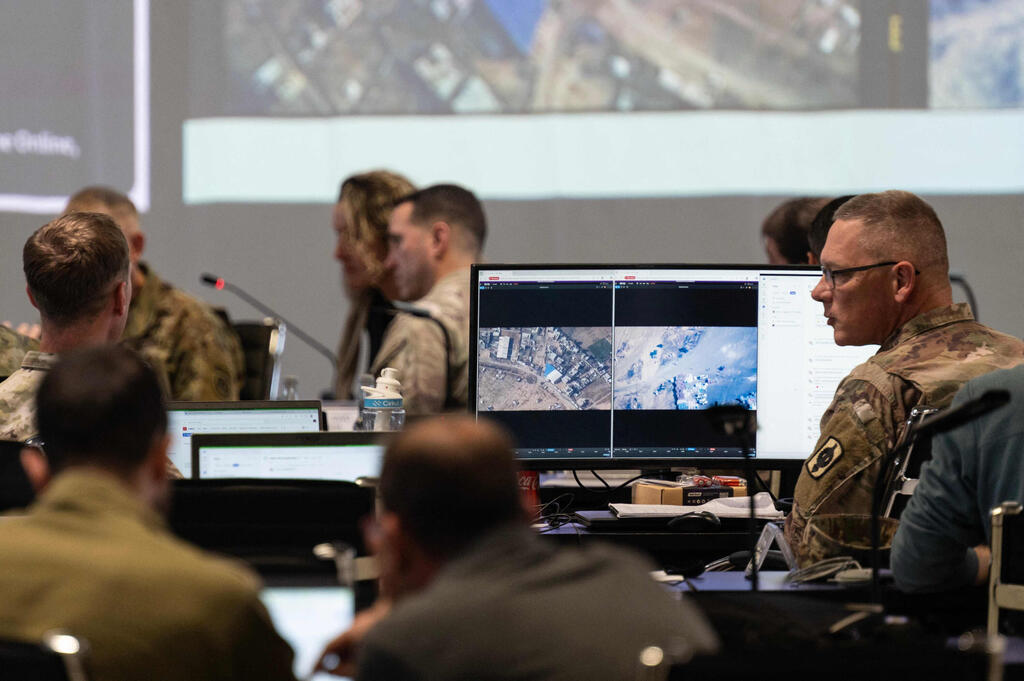
The multinational headquarters at Kiryat Gat
(Photo: Ahikam Seri / AFP)
Kazakhstan's promised medical units have never been confirmed on the ground. Kosovo and Albania sent only a brief evaluation team to Kiryat Gat in April, before most of the multinational staff there evaporated once the fighting with Iran began.
Egypt got the louder rollout, with the U.S. State Department photographing Egyptian soldiers in June and calling Cairo's role critically important, but Egyptian officials have been explicit that they want a peacekeeping mandate only, no peace enforcement and no confrontation with Hamas, and a Hamas delegation landed in Cairo the same week Egypt's ISF role was confirmed.
Jordan has agreed to train Gazan police but has not put officers inside the ISF command itself. Saudi Arabia and the UAE wrote checks and stayed home.
None of them carry the currency this mission actually needs: Arab and Islamic legitimacy paired with a functioning, normalized security relationship with Israel that is not hedged by a parallel back channel to the group the mission exists to disarm.
Morocco carries no Hamas relationship to protect and no mediator role to balance. It showed up as a country whose king carries religious authority as Commander of the Faithful, whose intelligence services have spent years dismantling Salafi jihadist networks at home, and whose defense relationship with Israel already includes years of weapons sales, training exchanges and joint planning under the Abraham Accords.
When a Moroccan officer sits inside that joint command, he is not a stranger learning Israel's habits from scratch, and he is not managing two masters. He is a known quantity to an Israeli security establishment that has worked alongside Moroccan counterparts since 2020.
 Amine Ayoub
None of this was politically cost-free for Rabat. Morocco is heading into a charged election season, and so is Algeria, and Algiers has spent years funding propaganda that brands any Moroccan cooperation with Israel as treason against the Palestinian cause. Domestic Islamist opposition will try to use this deployment as a cudgel. The Polisario lobby in Washington and European capitals will try to use it too.
Rabat sent its officers to Kiryat Gat anyway, in full daylight, confirmed by its own foreign ministry rather than buried in a press leak. That is not the behavior of a government hedging its bets. It is the behavior of a government that has already decided where its long-term interests lie.
Washington has been moving in the same direction on a separate but related track, and the two should now be fused into one policy. Section 1268 of the Fiscal Year 2027 defense authorization bill, advanced by the Senate Armed Services Committee this month, instructs the Pentagon to deliver Congress a full ten-year roadmap for defense cooperation with Morocco, built on the framework signed in Washington in April. That roadmap was written before a single Moroccan boot landed at Kiryat Gat. It now has its first real-world proof of concept.
Congress should pass the NDAA with Section 1268 intact and instruct the Pentagon to treat Morocco's ISF deployment as the pilot program for everything the roadmap envisions: joint planning cells, accelerated training rotations and a standing channel that links Rabat, Washington and Jerusalem on Gaza's post-war architecture, not as three separate bilateral relationships but as one triangle built around a partner who has already shown up.
Israeli officials should stop waiting for Indonesia's stalled brigade to make headlines and start treating Morocco's arrival as the actual headline. A multinational force assembled to stabilize Gaza needs troops who can operate inside an Israeli-aligned command without friction, who carry credibility with Arab and Muslim audiences that Israel cannot project on its own, and who have spent years building the exact counter-radicalization toolkit Gaza will need once the guns finally fall silent.
Morocco checked every one of those boxes before its officers ever reached the gate. The other four countries sent pledges. Morocco sent a relationship that already works.
- Amine Ayoub, a fellow at the Middle East Forum, is a policy analyst and writer based in Morocco. Follow him on X: @amineayoubx.