


While Israelis stay fixed on the rocket sirens and the fronts they know by heart, the most consequential reinforcement of Israel's western flank is happening quietly, far from any battlefield, inside the United States Senate. No press conference announced it. No spokesperson in Jerusalem has mentioned it.
Buried deep in the newly filed Fiscal Year 2027 National Defense Authorization Act, S. 4784, sits Section 1268. It carries an unglamorous title, a plan to enhance defense cooperation with Morocco. But for anyone tracking Israel's strategic depth, this is one of the most important sentences written in Washington this year.
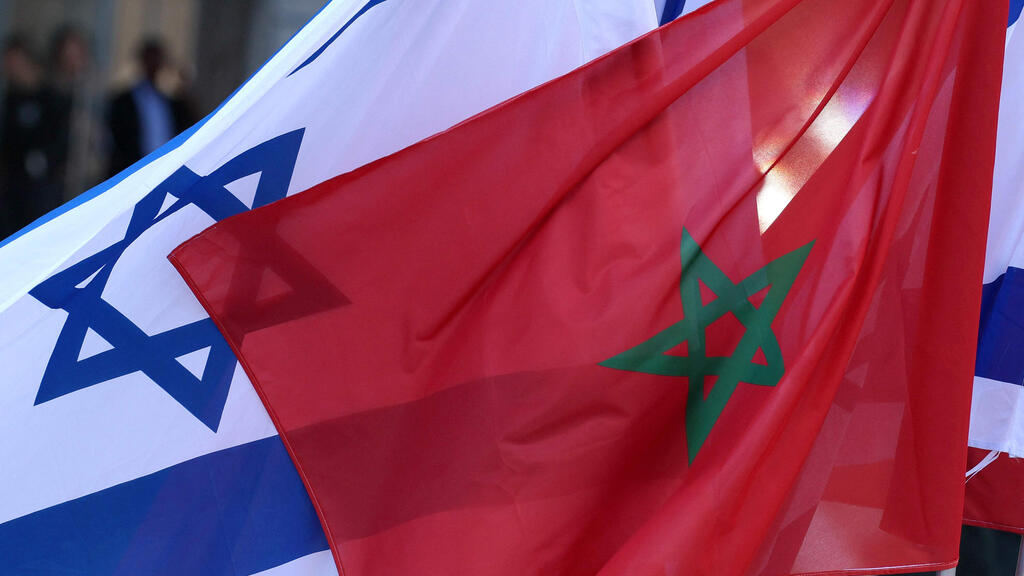
This is not a press release or a wish list. Section 1268 is a binding legislative order. It directs the Pentagon to deliver Congress, within 180 days of enactment, a full ten-year roadmap covering 2026 through 2036 for transforming Morocco into the most capable American military partner on the African continent. The Senate Armed Services Committee, chaired by Roger Wicker, reported the bill on June 15. It now awaits a floor vote, with House language moving in parallel.
Morocco was the first Arab state to normalize ties with Israel that came with real defense substance attached, not just flights and trade missions. What Section 1268 does is take that bilateral defense roadmap, quietly signed in April, and lock it into American law. Once a security relationship is written into the NDAA, it survives elections, budget fights and changes of administration. Israel does not have to lobby for this. Washington is doing it on Israel's behalf, and doing it from Moroccan soil.
Think about what that means geographically. While the IDF holds the line against Iranian proxies on Israel's northern and southern borders, the United States is methodically building a hardened, well-armed, technologically advanced security partner at the far western edge of the Arab world. It is not charity. It is a pincer. A Morocco that can defend its own skies and project power across the Sahel is a Morocco that closes off an entire theater where Iran has been trying to open a new front against Israel by proxy.
The details inside Section 1268 read like a wish list for anyone worried about Tehran's reach into Africa. The bill orders new joint security sites on Moroccan soil, giving American and allied forces forward logistics bases for rapid deployment into the Sahel and across Mediterranean choke points. It mandates the rehabilitation of old Cold War era airfields across the kingdom so they can handle modern strategic airlift and surveillance aircraft, a direct response to the collapse of American basing options elsewhere in West Africa after a wave of juntas turned toward Moscow and, in some cases, toward Tehran's orbit as well.
This is not a small adjustment. For two decades, Washington's African basing map ran largely through the Sahel and the Gulf of Guinea. That map has been collapsing country by country as coups install governments hostile to the West. Morocco is the stable, willing replacement, and Section 1268 effectively writes that replacement into ten years of American defense planning.
It also creates a dedicated center for drone warfare and counter drone defense inside Morocco. That single line should make Israeli defense planners sit up. Morocco has spent the last several years buying Israeli loitering munitions, Barak air defense systems and Elta radars. Layering an American funded drone hub on top of that existing Israeli hardware base does not just help Morocco. It builds a live trilateral testing ground where American, Moroccan and Israeli systems mature together against the exact threat, cheap proliferated drones, that has already killed Israelis and wounded American troops across the region. Every iteration of that hub effectively becomes a free field laboratory for the kind of low-cost aerial threats now shaping every battlefield from Lebanon to the Red Sea.
The bill goes further still. It folds African Lion, the largest multinational exercise on the continent, into this new framework, expanding it to include artificial intelligence, cyber warfare and undersea operations meant to protect Atlantic shipping lanes from the kind of maritime harassment Iran has already road tested in the Red Sea and the Gulf.
 Amine Ayoub
Then there is the resource angle that almost nobody in Israel is discussing. Section 1268 forces the Pentagon to assess vulnerabilities in the global phosphate supply chain, and Morocco controls roughly seventy percent of the world's proven reserves. Phosphates feed precision munitions production and the chemical base for modern explosives. Locking Morocco's reserves into America's defense planning is a direct hedge against Chinese and Russian leverage over the raw materials that keep Western and Israeli weapons stockpiles full during a long war. That is not an abstract economic footnote. It is ammunition security with Israel's name on it, at a moment when every war Israel fights burns through interceptors and shells faster than anyone budgeted for.
None of this happens in a vacuum. Iran's Revolutionary Guard has spent years quietly arming the Polisario Front with drones and anti-tank weapons, hoping to bleed Rabat and distract the West while the core fight rages closer to home. The goal has always been the same one Tehran pursues everywhere from Yemen to Lebanon, open a cheap asymmetric front, force a wealthier adversary to spend money and attention defending it, and use the distraction to extend influence elsewhere. Section 1268 is Washington's answer to that strategy before it can metastasize. A Morocco bristling with counter drone networks and backed by a ten-year American commitment is a Morocco Iran cannot afford to destabilize cheaply, and a Sahara file Algeria cannot keep using as leverage indefinitely either.
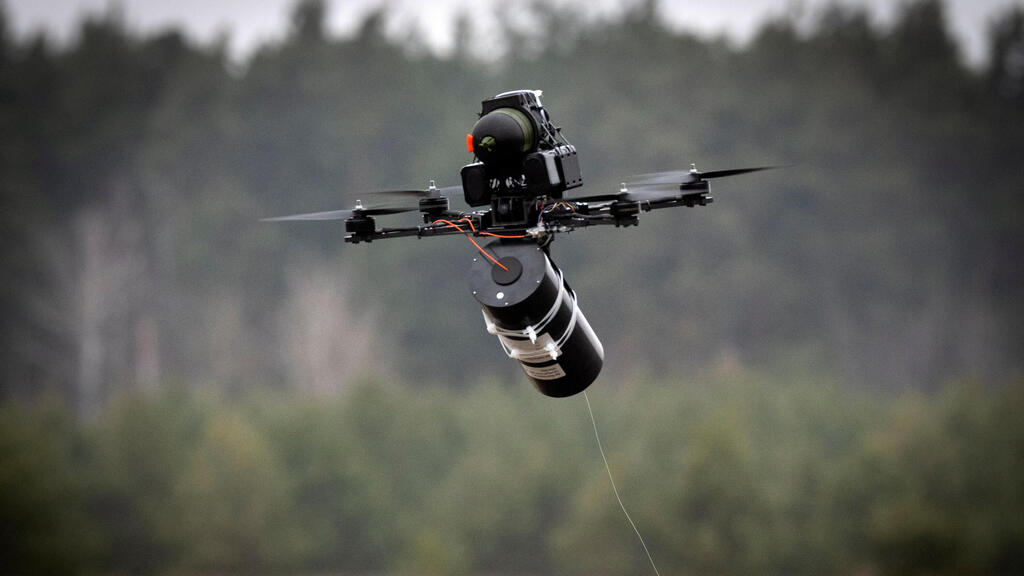
FPV drone
(Photo: AP Photo/Efrem Lukatsky)
For Israel, the policy prescription is straightforward. The Knesset's friends in Washington should push for the Senate floor vote to move quickly and for the House to match Section 1268's ambition rather than water it down in conference. Israeli defense exporters should be quietly encouraged, not merely tolerated, to deepen co-production with Moroccan counterparts now, while the American money and political will are aligned. And Israeli officials should stop treating the Abraham Accords as a diplomatic trophy from 2020 and start treating Morocco as what it is becoming, a hard power ally with American law behind it, the kind of partner that does not need to be talked into showing up.
Israel spends its days defending all fronts it can see. Section 1268 just quietly secured another one, two thousand miles to the west, without a single Israeli soldier ever being asked to go, and without Israel having to spend a single shekel or a single favor to get it.
Amine Ayoub, a fellow at the Middle East Forum, is a policy analyst and writer based in Morocco. Follow him on X: @amineayoubx