

Zohran Mamdani’s election as mayor of New York City is more than a local political event. It’s not merely another contest between Democrats and Republicans — it represents a deep cultural phenomenon and the culmination of a long process: the Hellenization of American Jewry.
Jews living in the heart of the world’s largest Jewish metropolis may have unknowingly become the "new Hellenists" of our time. These aren’t people offering sacrifices to Zeus, but rather those sacrificing their Jewish identity on the altar of social belonging, cultural inclusion and progressive trendiness. Their desire to be part of the “right crowd” and mainstream liberal current often comes at the cost of relinquishing any trace of Jewish or national identity. They are embarrassed by Israel, uneasy about wearing a kippah and prefer political correctness to historical memory.
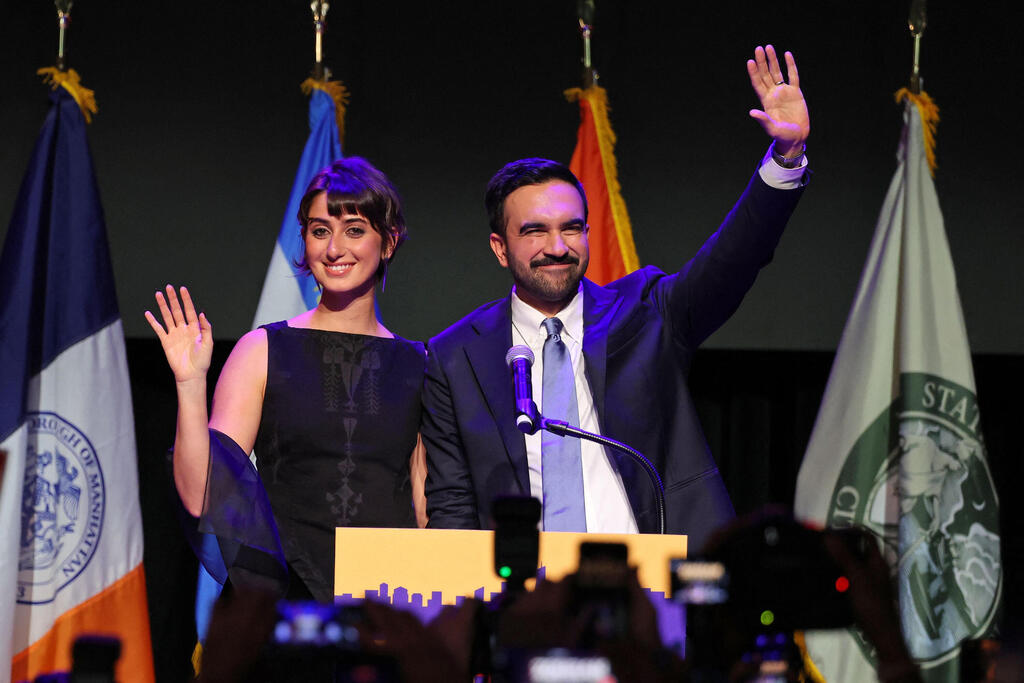
Zohran Mamdani after winning the New York mayoral election
(Photo: ANGELA WEISS/AFP)
Today’s American Jewish identity is no longer defined solely by traditional Reform or Conservative movements. It has become hybrid, fluid and soft — lacking clear boundaries or rooted commitments. What’s being lost is the moral backbone that once defined the Jewish people: shared destiny, communal belonging and a sense of responsibility toward the nation and the small state in the Middle East. What remains is a universalist spirit — pleasant, but hollow — devoid of Zionism, and certainly of any strong national connection.
It is no coincidence that David Ben-Gurion once said, “The Jews in America are not Zionists, for Zionists exist only in Israel.” While his statement drew harsh criticism at the time, it now seems almost prophetic. Throughout Jewish history, Hellenization has often preceded cultural — and sometimes national — collapse. It began with a desire “to be like everyone else,” and ended in lost identity, exile, assimilation and fragmentation. History, it seems, is repeating itself — not in ancient Greece, but in Manhattan.
In New York, the so-called “Big Apple,” identity has become a commodity. Anyone can be whatever they want, and Judaism is reduced to a cultural accessory — somewhere between spiritual sidekick and decorative tradition. When the city celebrates Halloween and Jews embrace it with the enthusiasm of a second Hanukkah, we should not be surprised when they one day vote for New York’s “new king” — someone who is anti-Israel, anti-Zionist and sometimes even flirts with antisemitism.
What began as a search for belonging ends in a loss of identity. What was presented as a vision of freedom becomes a trap of emptiness. And here in Jerusalem and Tel Aviv, where many still look at American Jewry with admiration, it is time to say clearly: assimilation is not just about intermarriage — it is a mindset. It begins with trying to please everyone and ends in forgetting who you are.
Perhaps it is time we stop imitating them — and instead remind our brothers and sisters in the Diaspora who we are, and who they are, before we wake up four years from now and find a Mamdani lookalike in the White House.
- Meir Suissa is an advertising executive and political strategist.