


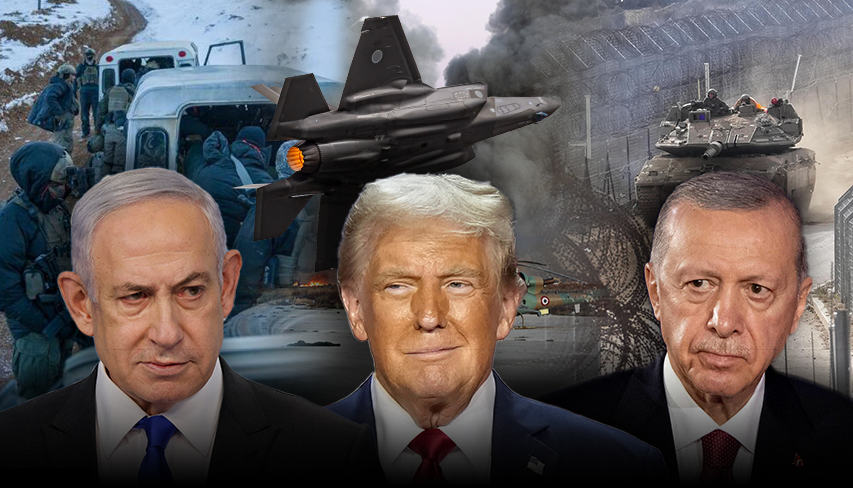
The sudden and ruthless manner in which the Trump administration turned its back on the Kurds in Syria—effectively giving a green light to President Ahmad al-Sharaa’s jihadist forces to invade their autonomous region in the country’s northeast and massacre them—has raised alarm within Israel’s security establishment.
The concern stems not only from what is seen as an immoral abandonment of an ally, and not only because something similar could one day happen to Israel, but also because the decision was made in Washington as a direct result of the influence wielded by Turkish President Recep Tayyip Erdogan over the U.S. president.
Gallery
(Photo: Haj Suleiman/Getty Images, IDF, Abdulaziz KETA, Marc Israel Sellem, AP/Alex Brandon/Matias Delacroix, Andrew Harnik/AFP, Shutterstock/Kumanomi)
Tom Barrack, Trump’s ambassador to Turkey and personal envoy to Syria, was the key facilitator and executor of this shameful move.
From an Israeli perspective, what matters even more is that, in parallel to the fighting in the Kurdish region, the White House has decided to withdraw all U.S. forces from Syria in the very near future. For those who may have forgotten: east of the Euphrates, American troops had been working effectively with the Syrian Democratic Forces—mostly Kurds with some Arab tribal fighters—against some 3,000 Islamic State terrorists waging terror and guerrilla warfare against local regimes and American interests in Syria and Iraq.
This is not the first time Trump has sought to pull U.S. forces out of Syria. It also happened during his first term as president, when Israel intervened and partially prevented the move. Currently, about 900 American troops remain in Syria, but this time, Trump appears determined to bring them home.
This was one of the main issues raised during the recent meeting between U.S. CENTCOM commander Admiral Brad Cooper and IDF Chief of Staff Eyal Zamir. The withdrawal of American troops from Syria marks a significant milestone in the U.S.’s official policy of reducing its military presence in key strategic areas across the Middle East.
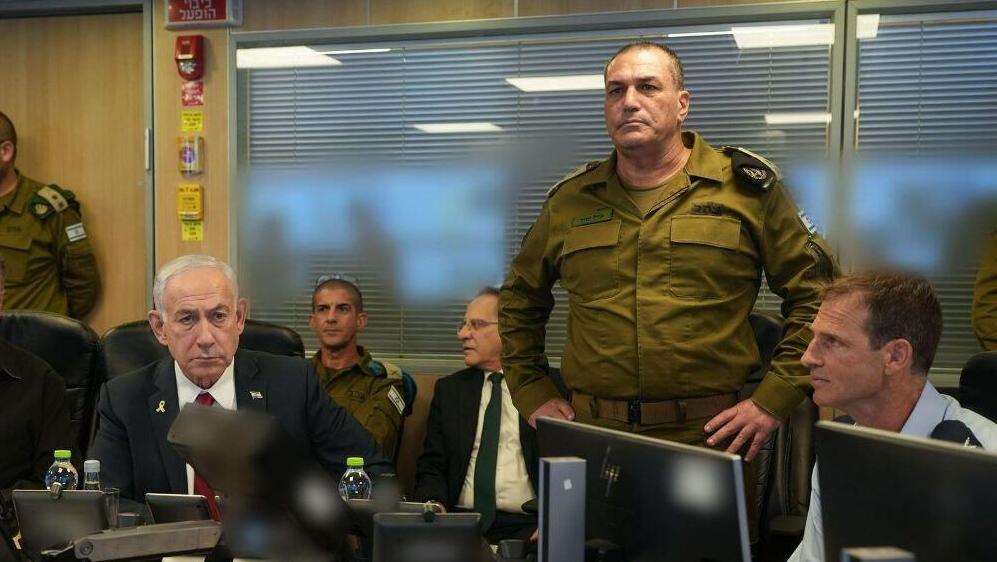
Prime Minister Benjamin Netanyahu and IDF Chief of Staff Eyal Zamir
(Photo: Defense Ministry)
The rationale behind this shift, as outlined in the Pentagon’s recently released National Defense Strategy document, is that America’s regional allies will assume a larger and more active role in defending their own interests against the hostile intentions of Iran and its proxies. The document highlights Israel as a model to follow—a country capable of defending itself with what it terms “limited assistance” from the United States.
Still, in Israel, there is growing concern that the drawdown of American forces erodes deterrence capabilities and restricts its operational freedom in the region, particularly in the air. More troubling, however, is that the vacuum left by the U.S. withdrawal threatens regional stability. This, in turn, poses risks to the Jordanian regime and creates space for hostile actors—from Turkey to the Shiite militias in Iraq—to move closer to Israel’s eastern and northern borders.
Israeli defense and policy officials are also troubled by the growing influence of Turkey and Qatar over the White House. This trend, they believe, stems from close personal ties and shared business interests between their leaders and Trump and his inner circle. As a result, the Israeli government and military have had to swallow a number of unwelcome security-related concessions Trump has imposed, particularly concerning Syria and Gaza.
Israeli intelligence officials note that while the Shiite axis has weakened, a new force is emerging opposite Israel: the Sunni axis, led by Qatar and Turkey, with the quiet involvement of Pakistan and possibly other regional states. All of them are aligned with the ideology of the Muslim Brotherhood. In the IDF, this bloc is referred to as the “Ikhwan Axis”—the Brotherhood Axis.
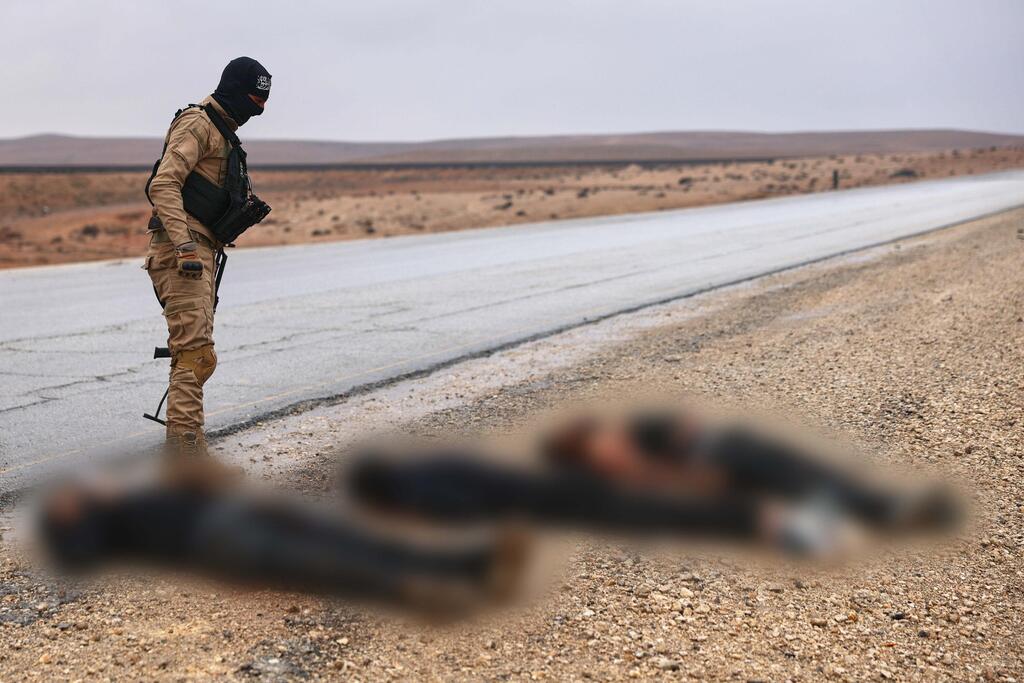
Syrian regime soldier stands over the bodies of Kurdish fighters in Tabqa, Raqqa province
(Photo: AP Photo/Ghaith Alsayed)
At this stage, it does not pose a direct and immediate threat to Israel, but the rhetoric of Turkey’s Erdogan and Qatar’s Emir Tamim bin Hamad Al-Thani is seen as a clear warning sign of its potential danger.
Turkey commands the second-largest army in NATO and continues to strengthen its military. While there is currently no indication that it may become a direct military adversary, Israel is working to block its entrenchment efforts in Syria and the Gaza Strip.
As for Qatar, it is expected to continue its campaign of influence and information warfare, which is severely damaging Israel’s image and international standing, particularly in the United States.
Concern in the Hashemite Kingdom
Several developments on the ground help explain the concerns of Israeli decision-makers regarding two key trends: the U.S. military withdrawal from the region and Trump’s close ties with leaders of the Muslim Brotherhood axis.
Currently, there are about 3,000 American military personnel in Iraq—mostly specialists and advisers—spread across several bases, including in the Kurdish autonomous region in the north. Under an agreement with the Iraqi government, the U.S. is set to withdraw most of them by the end of September. Afterward, American troops will remain almost exclusively in the Kurdish area of northern Iraq.
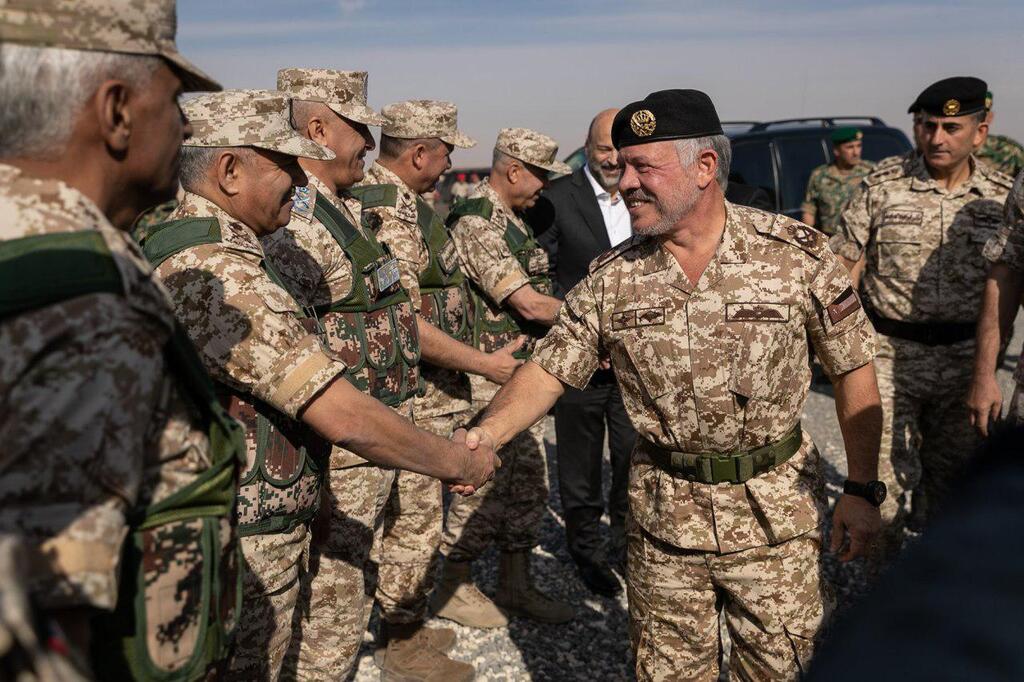
King Abdullah II of Jordan
As noted, around 900 U.S. troops are still stationed in Syria. Alongside Kurdish-led SDF fighters and with coalition air support, they successfully battled ISIS for eight years and played a decisive role in driving the group out of Syria and Iraq.
Now, as the White House moves to bring them home, the U.S. is pressuring the Kurds to comply with al-Sharaa’s demands to surrender their weapons, integrate into his army and live under his rule. The Kurds, however, fear such an arrangement—with good reason—since Sunni jihadists view them as infidels to be killed, as they did with the Druze and Alawites. The atrocities committed by regime forces in Kurdish areas in recent days have only reinforced these fears.
Another major concern involves some 9,000 ISIS detainees held by the Kurds east of the Euphrates who had not taken part in the group's ongoing guerrilla war in southeastern Syria and Iraq. Amid the recent fighting between Kurdish forces and the regime, some prisoners managed to escape. These are jihadists, no different from those serving in al-Sharaa’s military.
CENTCOM officials fear that, despite the regime’s pledge to act against ISIS, it may eventually release the remaining detainees, who would then resume attacks. Israeli officials are worried that at least some of these thousands could make their way to southern Syria and approach the Golan Heights border. What happens next is all too predictable.
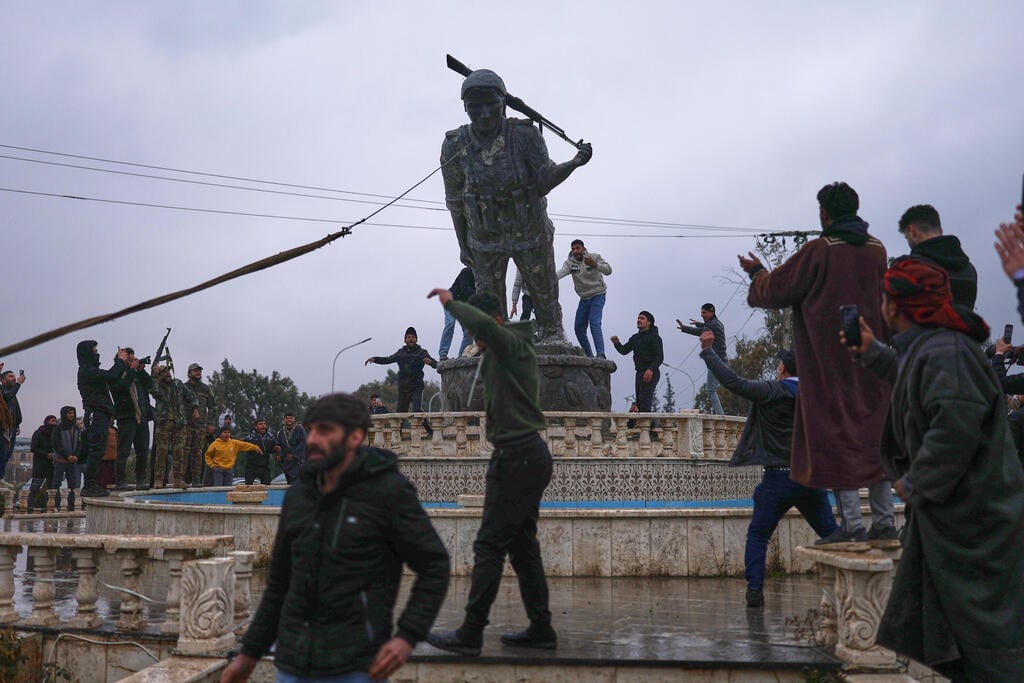
Syrian President al-Sharaa’s forces topple a statue of a Kurdish female fighter after capturing the city of Tabqa from Kurdish forces, Jan. 18.
(Photo: AP Photo/Ghaith Alsayed)
In the meantime, the Shiite-led Iraqi government has agreed, at Washington’s request, to take in ISIS detainees from Syria into its own prison facilities, recognizing that if it does not and those terrorists are freed, Iraqi civilians—especially Shiites—will be in danger. The U.S. began transferring ISIS prisoners from Syria to Iraqi-run detention camps last week, and the operation is still underway.
CENTCOM’s senior command is unhappy with the direction being set by the White House, noting that the order to pull American troops from Syria is restricting its ability to operate and gather intelligence in the Middle East.
While the U.S. still maintains a base with several hundred troops at al-Tanf on the Syria-Iraq border, it is possible that this outpost will also be shut down. Such a move would not only expose Syria and Iraq to renewed activity by jihadists—both Sunni and Shiite—but would also severely threaten the stability of the Jordanian regime.
ynet has learned that the Pentagon is also considering scaling back or even completely withdrawing from U.S. bases in Jordan. This prospect is causing significant concern in both Amman and Jerusalem, as it would leave the kingdom vulnerable to Iraqi Shiite militias entrenched along its border, and increase the threat to the monarchy from jihadist and Muslim Brotherhood elements operating inside Jordan and in southern Syria.
Concerns over Erdogan’s encroachment
But the main issue currently troubling Israeli defense officials is Turkey’s growing presence and military entrenchment in Syria. This neo-imperialist push, aimed at turning Syria into a satellite or client state that serves President Erdogan’s interests, is not only about reaping economic benefits from Saudi-funded reconstruction. It also seeks to give the Turkish military the ability to deploy radar systems, air defense batteries and forward bases near Israel, thus severely limiting its aerial freedom of action over Syria and Iraq.
That air freedom is among Israel’s most critical strategic assets in its efforts to counter Iran and other regional threats. The air corridors over Syria and Iraq have enabled Israeli Air Force missions deep into western, central and southern Iran. Maintaining this operational latitude is vital for preventing future force buildup and attack capabilities by hostile actors operating in Syria, Iraq and Lebanon.
Faced with this reality, Israel could soon confront a strategic dilemma: whether to act forcefully against Turkish entrenchment—even at the risk of direct military friction with a NATO member closely tied to Washington—or to refrain from action, at the cost of allowing serious erosion of a key strategic asset.
Security officials warn that this process will likely not happen overnight, but rather gradually—a “drip” of incremental Turkish moves, each one too small to justify a major Israeli response, but together forming a new reality within months or years in which Israeli aircraft no longer enjoy freedom of movement over Syria and Iraq.
Compounding this is the fact that under the Trump administration, Washington has shown far less willingness to engage militarily in the Middle East, focusing instead on China, Ukraine and domestic concerns. In such a scenario, Israel could find itself largely alone in defending its northern airspace autonomy.
This has led to the security establishment’s central recommendation to Israel’s political leadership: do not wait for the new reality to become permanent—take action now on three fronts. First, diplomatically with Washington: Prime Minister Netanyahu must leverage his direct influence on Trump and engage American Jewish organizations such as AIPAC to counterbalance the growing Turkish-Qatari influence in Congress.
Second, the IDF must reinforce border defenses with Syria and Jordan by all available means. Third, Israel must deepen its alliance with the United Arab Emirates and expand cooperation with Saudi Arabia and other moderate Sunni states.
If necessary, military action may also be required to establish clear red lines for Turkey and prevent it from turning Syria into a direct military sphere of influence. In any case, concern alone is not a strategy. The most urgent and strategic task now facing Israel is to recognize the emerging reality to its north and east, and to prepare for it swiftly and effectively.