

U.S. President Donald Trump’s declaration of this coming Saturday as “National Shabbat,” a gesture to the Jewish people ahead of America’s 250th Independence Day, stunned everyone — including Shabbat observers in Israel and the United States.
Who would have believed a presidential recommendation for a special Sabbath meant “to recognize the sacred Jewish tradition of setting aside time for rest, reflection and gratitude to God”? A tribute to the unique gift the people of Israel gave the world.
I only wish I could have basked in the reaction of my late Zaidy Mordechai, whom I never had the privilege of knowing. One of the forefathers of our family, he arrived in the United States in 1920 or 1921 with his pregnant wife, my late Bubbe Miriam. They were a young couple fleeing the harsh poverty of eastern Poland after World War I, joining my great-grandfather, who had managed to leave Poland for America before the war.
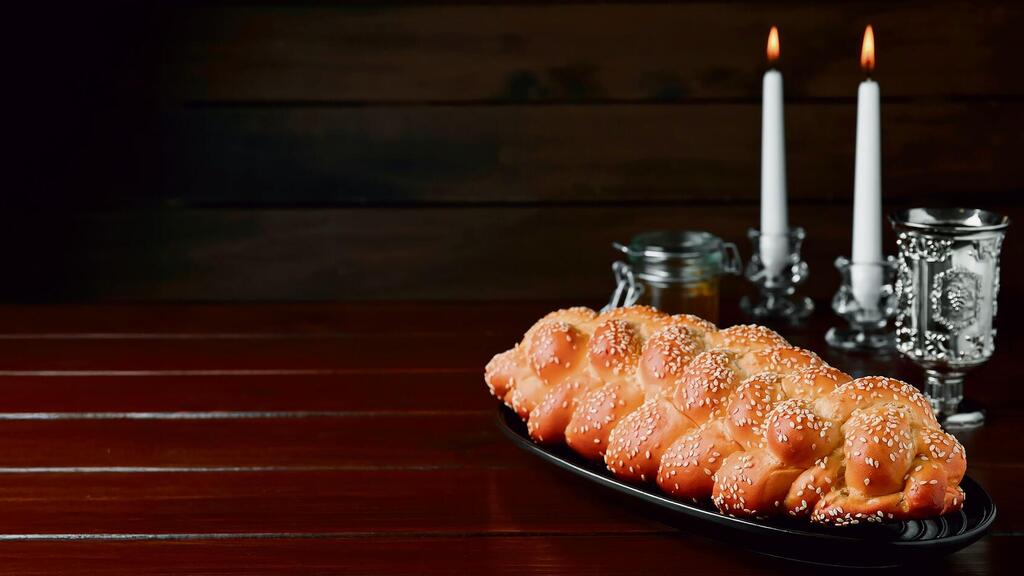
But the “goldene medina” — the golden land, where immigrants of that era imagined gold coins could be picked up from the pavement — did not welcome them kindly. For years, my grandfather had to look for a new job almost every Monday. When he returned to work after Shabbat and Sunday, he would discover he had been fired again because he refused to desecrate Shabbat and come to work.
Even when poverty cried out from the walls, as the home filled with children — five were born to him in America — he insisted on observing Shabbat. He welcomed it anew each week with love, trusting the Master of the Universe to provide his livelihood.
Years later, he opened a sweater factory so he would not be dependent on others. The factory began to prosper precisely after he refused at any price to deliver merchandise on Shabbat to a buyer for a major department store chain who urgently needed it.
“I saw your loyalty to the principles of your faith,” the chain’s representative told my grandfather when he returned on Monday, enlarged the order and became one of his most important clients.
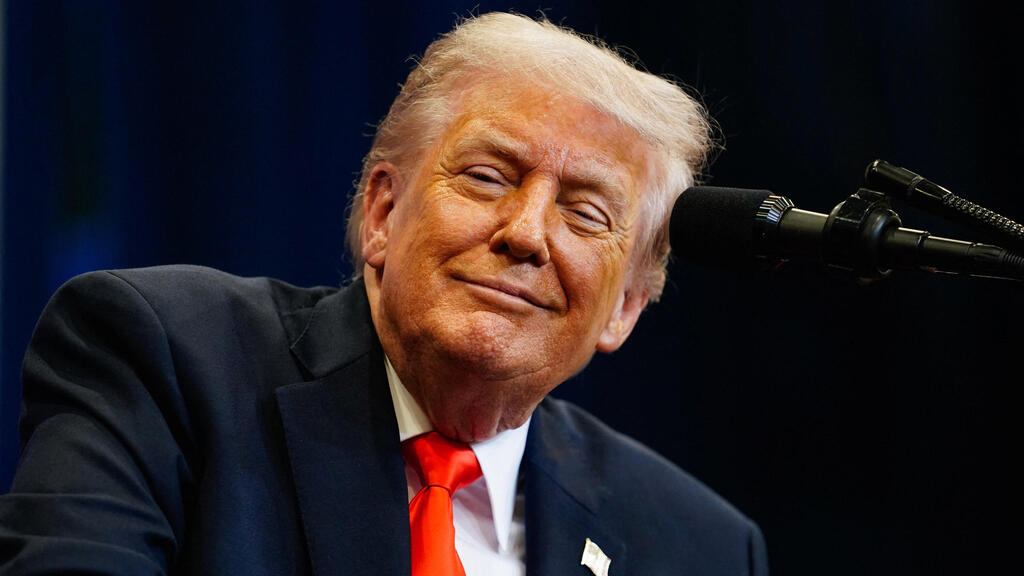
President Donald Trump declared a 'National Sabbath'
(Photo: Nathan Howard/Reuters)
And more than Zaidy kept Shabbat, Shabbat kept him. More than 99% of his more than 500 descendants living today in the United States and Israel observe Shabbat. All four of his sons studied in yeshiva — a rare educational path and a target of ridicule in America in the 1930s, ’40s and ’50s — as did the overwhelming majority of his descendants. More than 150 of Zaidy Mordechai’s male descendants in the fourth, fifth and sixth generations are today kollel scholars, lecturers, yeshiva students and cheder students in the United States and the Land of Israel, which he loved so deeply.
Zaidy Mordechai was among the minority of Jewish immigrants who came to America before World War II and refused to sacrifice Shabbat on the altar of money. The vast majority of immigrants could not withstand the difficult test and gave up Shabbat for the sake of earning a living. In New York of those days, then as now the largest Jewish center in America, even those who ostensibly remembered the traditions of their fathers’ homes would finish the Musaf prayer on Shabbat morning and go out, their prayer shawls folded, to their workplaces in factories and shops.
The law did not protect them. Only in 1964, when the U.S. Civil Rights Act was enacted and banned religious discrimination, was the interpretation of “religious accommodation in the workplace” born. U.S. courts and regulators then determined that in certain cases, employers must allow reasonable accommodations, such as not working on Shabbat. Until then, for decades, the overwhelming majority of immigrants had given up Shabbat for livelihood.
In the test of time, the minority won. A minority of “guardians of the seal.” This Shabbat, official America salutes them and pays them a debt. It also atones for the terrible wrongs done to the Jewish people before and during World War II: closing its gates and refraining from bombing the death camps, foremost among them Auschwitz, in order to jam the machinery of slaughter.
 Shoshana Chen
In a place of honor in our home are kept Zaidy Mordechai’s volumes of the Talmud. He died in old age after slipping on a wet step on a rainy Sukkot morning, on his way to the sukkah to study a page of Gemara.
I have no doubt that if only he could meet them, Zaidy would tell his descendants how proud he is of them — those who embrace the Gemara with love and persist in studying it with all their hearts.
If only he could rise and tell them and all of us, in his quiet and humble voice: Clinging to Shabbat observance and Torah study in every condition and every circumstance is not a matter of money. On the contrary. It demands devotion beyond money. And it creates the “guardians of the seal,” the guardians of the Jewish people’s continuity. And time will prove it.
Gut Shabbos, America. Shabbat shalom, Israel.