


Four months after the Trump administration unveiled its most ambitious postwar framework for Gaza, the civilian governance architecture at its center has effectively ceased to function.
The National Committee for the Administration of Gaza, the technocratic body tasked with replacing Hamas as the strip's administrative authority, remains stranded in Cairo, unable to enter the territory it was designed to govern.
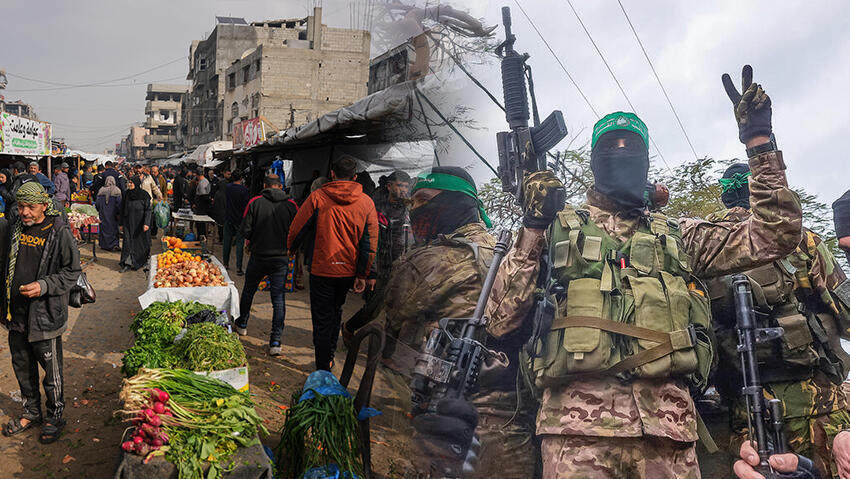
Senior committee members are threatening resignation. Every phase of the roadmap is frozen.
And the reason, stripped of diplomatic euphemism, is straightforward: Hamas is still there, still armed and still capable of vetoing any political arrangement it dislikes through the credible threat of violence.
Until that changes, no governance framework, however well-designed, has any prospect of taking hold.
The lesson of the past four months is not that the technocratic approach was wrong. It is that it was launched prematurely, before the precondition that makes it viable had been achieved: the physical elimination of Hamas as a military and governing force.
The framework and its flaw
The Board of Peace, launched by President Trump at the World Economic Forum in January 2026, represented a genuine departure from prior attempts to manage Gaza's postwar status.
Rather than deferring to the Palestinian Authority's discredited central leadership or tacitly accepting Hamas's continued administrative role, the plan designated a new body, the NCAG, headed by Dr. Ali Shaath, a Palestinian Authority technocrat with no factional ties and a credible professional record.
Shaath was, by design, a figure who could not be plausibly framed as a Hamas collaborator. The international architecture surrounding his committee was serious and well-resourced.
But the framework failed to account for the foundational problem that has derailed every postwar plan for Gaza since 2007: Hamas does not lose political power by losing elections or international recognition. It loses political power only when it loses the capacity to coerce.
As long as Hamas retains weapons, tunnel infrastructure, an intact command structure and the ability to threaten or kill anyone who cooperates with a rival authority, no civilian body can govern Gaza in any meaningful sense.
The NCAG can hold portfolios. It cannot hold territory, not against an organization that has demonstrated repeatedly and without ambiguity that it will use lethal force to preserve its monopoly on power.
Hamas is the obstacle
The Board of Peace's High Representative, Nickolay Mladenov, has identified Hamas's refusal to accept verified decommissioning as the primary reason Phase One has not proceeded.
He is correct.
Hamas has rejected every formulation of disarmament on offer, demanded parallel Israeli concessions it knew could not be met and used the resulting stalemate to maintain its armed presence in Gaza while the international community debates process.
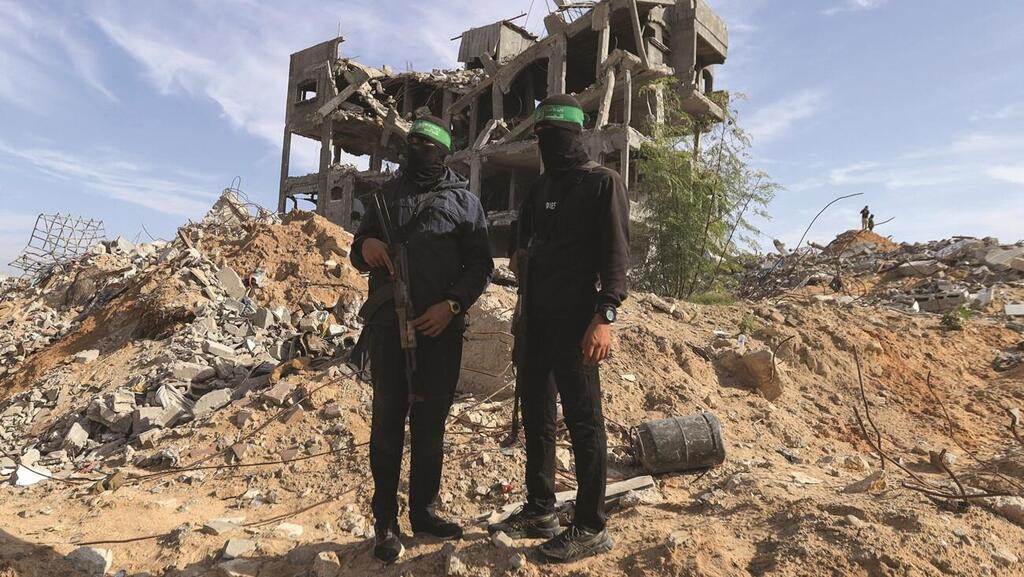
(Photo: Stringer/Reuters)
This is not negotiating behavior. It is delay as strategy, employed by an organization that understands, with complete clarity, that its survival as a political and military force depends on preventing any alternative governance structure from functioning long enough to acquire legitimacy.
Hamas is not a reluctant participant that needs better incentives.
It is an eliminationist terrorist organization, designated as such by the United States, the European Union and a broad coalition of democratic governments, whose founding charter calls for the destruction of Israel and whose October 7 assault constituted the largest massacre of Jewish civilians since the Holocaust.
The organization's opposition to the NCAG is not a policy disagreement. It is the predictable behavior of a movement that cannot survive in any environment where Palestinians have access to functional governance, economic normalization and peaceful civic life.
Hamas's political identity depends on permanent conflict. The NCAG, if successful, would destroy that identity.
Hamas therefore cannot permit the NCAG to succeed. It will use every tool available, including violence, intimidation and the deliberate obstruction of civilian services, to ensure that it does not.
Israel's warning is correct
Israeli officials have privately communicated to Washington their categorical objection to allowing the NCAG to assume operational control over a Gaza where Hamas retains armed capacity.
The concern, described as “Lebanonization,” reflects hard-won strategic knowledge that the international community has consistently refused to absorb.
The Lebanese precedent is not a cautionary analogy. It is a blueprint for catastrophic failure that played out over 30 years in plain sight.
Hezbollah built a military force capable of fighting the Israel Defense Forces to a standstill, accumulated a rocket arsenal larger than those of most European state militaries, launched a war in 2006 and eventually became the dominant political-military power in a country whose nominal government was internationally recognized throughout the entire process.
The civilian state did not constrain Hezbollah. It provided Hezbollah with diplomatic cover, international funding that indirectly subsidized its operating environment and a layer of institutional legitimacy that complicated any effort to confront it directly.
 Amine Ayoub
A Gaza in which the NCAG manages municipal services while Hamas retains its weapons and tunnel network is not a step toward normalization.
It is Lebanon in miniature, constructed with international funding and American diplomatic imprimatur, positioned on Israel's southwestern border.
Israel's refusal to accept this arrangement is not obstructionism. It is the application of rational strategic logic by a country that has already paid the price, in lives and strategic exposure, for tolerating armed parallel governance once before.
What must actually happen
The United States must recognize that the sequencing of the current framework is inverted.
Civilian governance cannot precede security; it must follow from it.
The NCAG has a legitimate and important role to play in Gaza's future. Shaath and his colleagues represent precisely the kind of Palestinian technocratic capacity that postwar reconstruction requires.
But that capacity can only be operationalized in an environment from which Hamas has been removed, not managed, not monitored and not phased out over a series of benchmarks.
Hamas must be eliminated as an armed force capable of coercing the population and vetoing political outcomes.
This means the Trump administration must give Israel the political support and military latitude to complete the operation that the ceasefire interrupted.
It means applying serious pressure on Qatar and Turkey to stop providing Hamas's political leadership with the sanctuary and resources that sustain the organization's negotiating posture.
And it means treating any framework that preserves Hamas's military capacity as a framework that will fail, regardless of how sophisticated its civilian governance components are.
Amine Ayoub is a fellow at the Middle East Forum and a policy analyst and writer based in Morocco. Follow him on X: @amineayoubx