


The gates of the Rafah crossing partially reopened—a move heralded by international diplomats as a crucial "field test" for the second phase of the U.S.-brokered Comprehensive Plan to End the Gaza Conflict.
The images of movement suggest a return to normalcy. However, the reopening of this specific gateway—famously described as Hamas’ "oxygen and rearmament pipeline"—is the most dangerous gamble of the post-October 7 era.
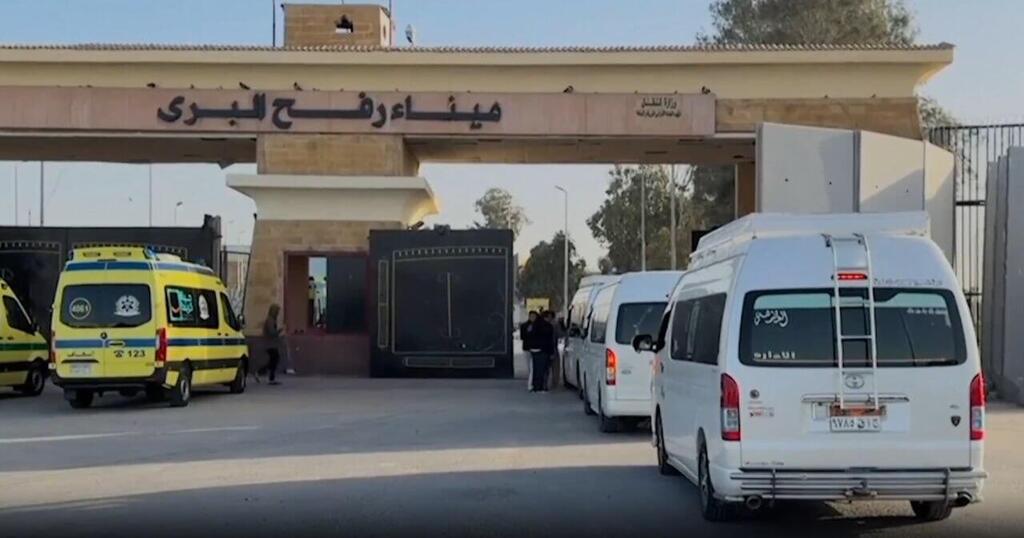
The current reopening is not a restoration of the pre-2024 status quo. Instead, it debuts a sophisticated, multi-layered security framework known as "Rafah 2." This system is designed to achieve a specific demographic and security objective: facilitating a "one-way flow" that encourages exit while making entry a rigorous, deterrent ordeal.
For Palestinians leaving Gaza, the process is defined by "Remote Control Sovereignty." There is no physical Israeli presence inside the terminal. Instead, high-definition facial recognition cameras and biometric sensors transmit live feeds to a Shin Bet command center. Israeli officers possess the capability to remotely lock electronic gates instantly if a "suspect" is identified, allowing for a seamless exit that satisfies international demands for Palestinian movement without the political friction of a direct military presence.
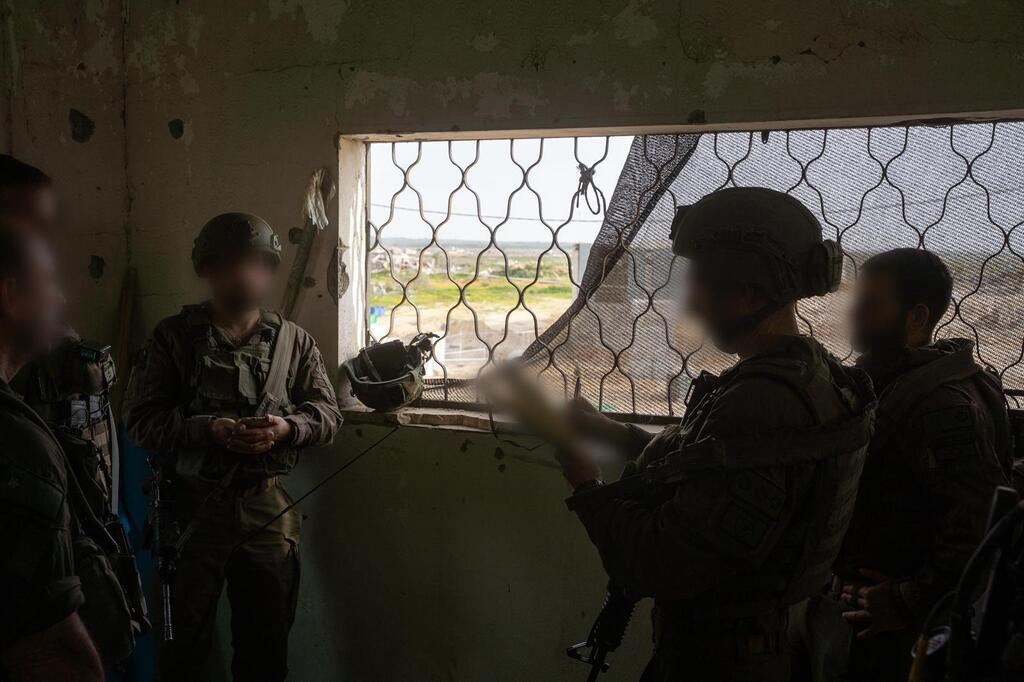
IDF troops at the secondary military installation at Rafah crossing
(Photo: IDF)
In contrast, the process for those entering Gaza is an invasive physical gauntlet. Returnees are funneled into a secondary military installation—the actual "Rafah 2" checkpoint—located near the main crossing. Here, the IDF conducts body searches, X-ray scanning and biometric verification. This dual-track system is a calculated security tool; it offers a "digital exit" but enforces a "military entry," ensuring that no hostile operatives or sensitive materiel can re-enter the enclave under the guise of civilian return.
The subterranean reality: 60% of the threat remains
The technical brilliance of "Rafah 2" must not obscure a sobering tactical reality. Despite 15 months of intensive operations, the subterranean threat is far from neutralized. As of late 2025, Defense Minister Israel Katz revealed that more than 60 percent of Hamas’ tunnel network remains undestroyed. These tunnels are not merely holes in the ground; they are multi-level strategic assets, some wide enough for commercial vehicles and descending three levels deep.
Since the IDF forces took operational control of the 14-kilometer Philadelphi Corridor in May 2024, they have discovered 184 tunnels, at least 10 of which connected directly to Egyptian territory. These tunnels were the lifeblood of the October 7 massacre, providing a constant flow of anti-tank missiles, explosives and Iranian technology. For decades, influential local families, such as the Astal and Sha’ir clans, operated these tunnels as a high-profit business powered by both money and ideology. Any withdrawal from the physical control of this corridor—even in exchange for a "Board of Peace" monitor—risks allowing these families to resume their work the moment the first shovel hits the sand.
The most critical vulnerability in the "Rafah 2" model is its necessary reliance on Egypt. History provides a harsh lesson: Cairo has been, at best, a silent partner in the rearming of Gaza. While President Abdel Fattah El-Sisi claims to play a de-escalating role, Hamas could not have become a strategic threat without the implicit approval of elements within the Egyptian military and political leadership.
The "Egyptian Elephant in the room" is not just the smuggling tunnels under Rafah, but Cairo’s own massive offensive military buildup. Egypt has clandestinely constructed as many as 12 major tunnels under the Suez Canal, all pointing toward Israel, and continues to designate Israel as the "enemy" in its large-scale military war games.
Despite a formal peace treaty, Egypt’s refusal to arrest the 250 smugglers whose names were provided by Israel suggests a strategic interest in maintaining a "simmering" conflict in Gaza. To entrust the security of Israel’s southern border to such a partner, even under the supervision of a "flimsy" European Union (EUBAM) mission, is a recipe for strategic paralysis.
The Board of Peace: transactionalism vs. national survival
The administrative shell overseeing this field test is the "Board of Peace" (BoP), chaired personally by Donald Trump. This body represents a radical departure from the failed UN-centric models of the past. By requiring a $1 billion financial commitment for permanent membership, the BoP has created a transactional coalition of stakeholders. Parallel to this, an International Stabilization Force (ISF) led by U.S. Major General Jasper Jeffers is tasked with "comprehensive demilitarization."
However, international forces historically fail when they lack clear enforcement authority. From Lebanon to the Sinai, multinational contingents have often become "fixed obstacles" that provide cover for terrorists rather than neutralizing them. A stabilization mission without an Israeli-approved command-and-control structure—and a hard Israeli veto over participating nations—will inevitably create a permanent security "gray zone."
The reopening of Rafah is a test of will. If the "Rafah 2" mechanism is breached, or if the "Remote Control" cameras fail to detect the next shipment of Iranian-made components, the burden of preventing the next October 7 will fall solely on the IDF.
- Amine Ayoub, a fellow at the Middle East Forum, is a policy analyst and writer based in Morocco.