

Israel stands at the threshold of a new reality. But is the world changing with us? Two years have passed since October 7. In those first days, it felt as if the entire world stood by our side. Landmarks across the globe were lit in blue and white, world leaders affirmed Israel’s right to defend itself, and the international community rallied behind a nation under attack, a people fighting for their very existence.
But that sense of moral clarity has long since faded. What began as an outpouring of solidarity has become a deeply polarized debate. In many parts of the world, it has even become acceptable, and sometimes even fashionable, to stand against Israel. We are facing one of the broadest and most complex assaults in our history, unfolding across media, politics, and civil society, and driven simultaneously by governments, institutions, and grassroots movements.
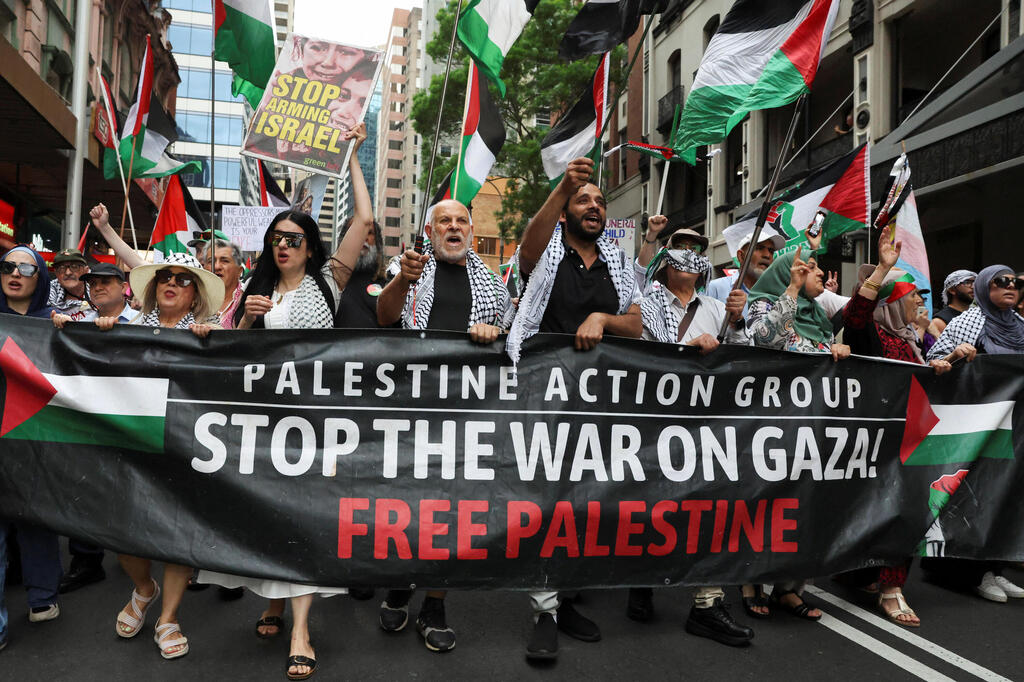
(Photo: REUTERS/Hollie Adams)
A younger generation, raised on social media soundbites and fed a steady diet of distorted narratives, has become the loudest voice in global discourse. Within this environment, antisemitism has resurfaced with alarming intensity. Too often, criticism of Israel serves as a convenient disguise for an age-old hatred, one that targets not our policies but our identity itself.
Now, as the fighting subsides and a hostage deal is in progress, Israel faces a different kind of battle. This one is not fought on the battlefield but in the arena of global perception. The military campaign may be drawing to a close, but the struggle for truth and legitimacy is only beginning. It is a long game that demands patience, persistence, and sustained effort.
The empathy and understanding that characterized the early days of the war have been replaced by fatigue and skepticism. The horrors of October 7 have been eclipsed by the images from Gaza, and much of the world has forgotten how this war began: the atrocities that ignited it, the civilians who were kidnapped and murdered, and Israel’s fundamental duty to protect its people. In the flood of information, our story has been drowned out, and when we fail to tell it, others tell it for us.
This is not a challenge that traditional Hasbara, or public diplomacy, can solve. We must return to the basics: to people, values, and identity. Rebuilding trust will take time. It requires a coherent national strategy, clear moral vision, and a unified voice from the people of Israel. The real loss we face cannot be measured in budgets or statistics, but in one haunting question: who still stands with us?
The fact that nearly 40% of American Jews now believe Israel committed genocide should set off alarm bells. This is not simply an image problem; it is a crisis of connection. The unity of the Jewish people itself is at risk.
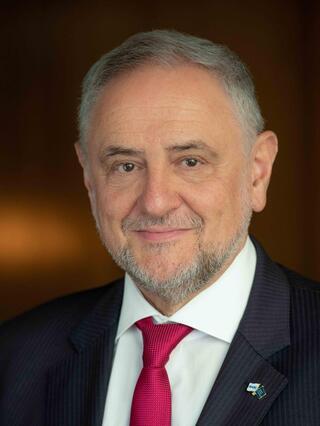 Robert SingerPhoto: Shahar Azran
To change course, Israel must invest in a new kind of diplomacy, one grounded in human connection and authentic dialogue. This happens not in press rooms but in classrooms and boardrooms: when Israeli students study abroad, when startups collaborate with international partners, when artists and filmmakers create across cultures, and when scientists and civil society organizations work together to address shared global challenges.
Israel’s greatest strength has always been its people - their creativity, empathy, and ability to build bridges even after trauma. Our innovators, educators, artists, and thinkers are the true ambassadors of today’s Israel.
Even if it feels as though we are losing the battle for global opinion, there is reason for hope. The world’s attention will inevitably shift to new crises, there is never a shortage of them, but how history remembers this moment depends on what we do next.
From now on, Israel will be judged not only by how it fought but by how it tells its story anew, not through slogans or talking points, but through people.
By Robert Singer is Chairman of the Center for Jewish Impact and former CEO of the World Jewish Congress (WJC) and World ORT.