


On October 10, Mahmoud Abbas issued a decree scheduling Palestinian presidential and legislative elections for September 11, 2027, scrapping a legislative vote set for November 28, 2026. His office blamed Israeli military operations, movement restrictions, settlement expansion and obstacles to voting in East Jerusalem and Gaza.
Israeli officials rejected the accusation that Israel was obstructing the vote. The delay does more than extend a two-decade electoral drought. It sharpens the question Israel cannot afford to leave unanswered: if Abbas leaves office before Palestinians renew their electoral mandate, will the institutions he has dominated transfer power cleanly, and will his successor command authority beyond the paperwork?
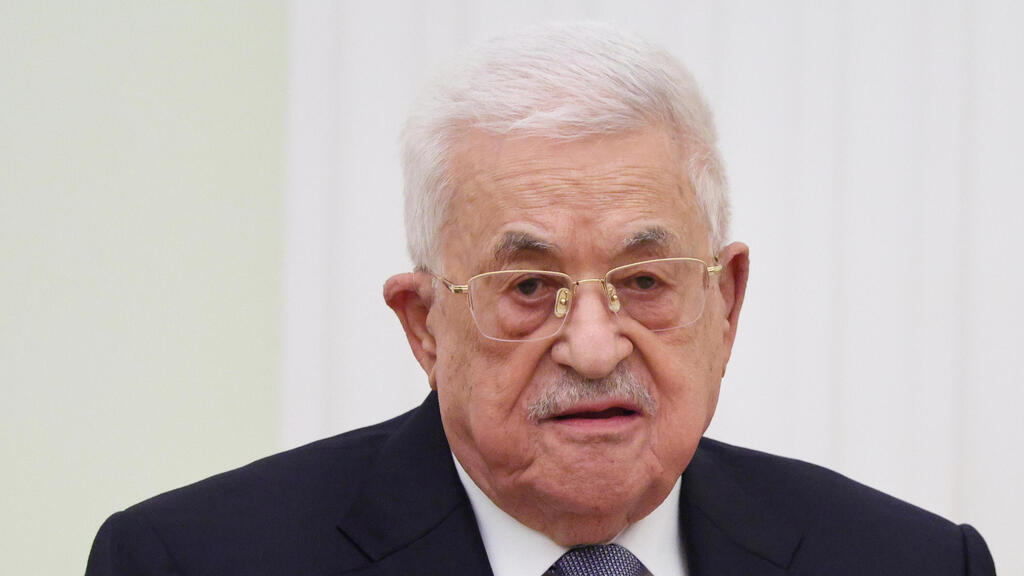
Mahmoud Abbas, born on November 15, 1935, won the Palestinian presidential election in January 2005 for a four-year term that expired in January 2009. No subsequent presidential election has renewed his electoral mandate. The latest postponement does not resolve that legitimacy deficit. Instead, it extends uncertainty over the leadership, administration, and security coordination that Israel relies on to manage risks in the West Bank. The Palestinian Authority continues to coordinate on security matters with Israeli agencies, but that relationship operates alongside a political system that has not held national elections in twenty years. When credible mechanisms for leadership renewal are absent, public frustration erodes confidence in formal institutions, opening space for rival networks to assert themselves.
The experience of 2006 remains an instructive warning for Israel. Hamas won the legislative election that year, and the violent confrontation in 2007 ended with Hamas establishing control over Gaza, dividing the political system between rival centers of power. The lesson is not that the exact same sequence must repeat itself in the West Bank, but that electoral competition, institutional rivalry, and disputes over armed authority become dangerous when political actors lack accepted rules for resolving them.
The post-Abbas transition will involve far more than simply naming a successor. Palestinian governance is spread across three distinct but overlapping bodies: the Palestinian Authority, the Palestine Liberation Organization, and Fatah, alongside independent factions whose interests do not always align. These bodies are not interchangeable. A figure who holds a senior title in one institution will still struggle to secure recognition, resources, or obedience across the others. The central challenge during a transition is whether any single leader can consolidate command over all three pillars without provoking open resistance from internal rivals or regional power brokers.
Hussein al-Sheikh now occupies the offices central to Abbas's succession arrangement. In April 2025, he became vice president of the State of Palestine and vice chairman of the Palestine Liberation Organization Executive Committee. In June 2026, he was elected Fatah vice chairman. These appointments strengthen his formal standing across the Palestinian political hierarchy, but they cannot guarantee acceptance by rival Fatah figures, other political factions, security commanders or local power brokers. His challenge is not simply to inherit a title. It is to turn that title into authority across institutions that have operated under competing interests for years.
The succession question already has a formal answer, at least on paper. In October 2025, Abbas issued a constitutional declaration stipulating that, if the Palestinian Authority presidency became vacant while the Legislative Council remained absent, the vice chairman of the PLO Executive Committee, who is also vice president of the State of Palestine, would assume the presidency temporarily for up to 90 days while elections were organized. Because al-Sheikh holds those offices, the declaration effectively places him first in line for an interim handover. But the mechanism is disputed. Article 37 of the Palestinian Basic Law identifies the speaker of the Legislative Council as the interim officeholder, and Palestinian legal critics argue that Abbas cannot override that provision through a unilateral declaration. The declaration allows one further extension by the Palestinian Central Council if force majeure prevents elections, but does not clearly define its duration. Israel must therefore assess not only who has the formal claim to the presidency, but whether competing political factions and security institutions would accept the transfer of power.
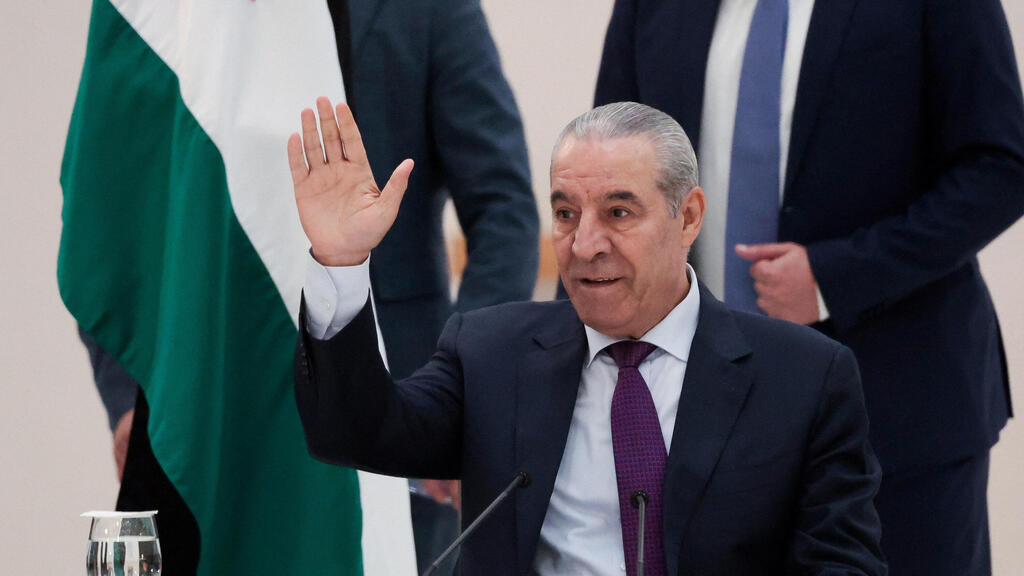
Hussein al-Sheikh
(Photo: REUTERS/Mohammed Torokman)
Fatah’s senior leadership has little incentive to risk genuine electoral competition. Two decades without national elections have allowed patronage networks, security appointments, and control of international funding channels to solidify around a narrow circle. Any successor who emerges from within that circle will inherit both the formal machinery and the same structural interest in limiting open contestation. The danger for Israel is not only that the next leader will lack popular legitimacy, but that the system itself is designed to prioritize internal political survival over public accountability.
That same preference for closed succession also weakens the central leadership's ability to project authority into the governorates. Jenin and Tulkarm illustrate why the condition of the West Bank cannot be measured by statements from Ramallah alone. Israeli operations, civilian displacement, and the persistence of local armed networks have complicated the security environment in both northern governorates. Local armed networks in Jenin and Tulkarm have demonstrated their ability to operate beyond Ramallah's effective control.
Beyond the major urban centers, the political landscape is defined by regional fragmentation rather than a single political binary. Local armed networks, influential families, municipal councils, and regional security commanders can shape events independently of decisions made in Ramallah. A weakened center will produce uneven local outcomes, not a uniform alternative authority. Israel must account for that regional fragmentation instead of relying on a single succession scenario or assuming a seamless transfer of administrative power.
Israel should evaluate a post-Abbas transition through three separate tests: who is formally designated to lead, who controls the administrative resources needed to keep institutions operating, and who can secure compliance across the territory. A successor will receive diplomatic recognition from foreign governments without necessarily commanding every security unit or municipal council. Conversely, established bureaucratic bodies will continue functioning even as public confidence in top officials erodes.
Control over state budgets, security payrolls, and international aid channels will become especially sensitive during a transition. During a contested transition, control over budget approvals, aid disbursements and security appointments could become a source of leverage, allowing rival factions to challenge the center without immediately declaring a break with it. International donors and regional governments have a clear interest in preventing institutional breakdown, but financial assistance alone cannot manufacture political legitimacy. External funding without transparent oversight risks entrenching patronage networks rather than strengthening governance. Future financial assistance must be tied directly to clear budgeting, independent audits, and strict safeguards against political misuse to ensure administrative continuity.
 Amine Ayoub
Security coordination remains a vital tool for reducing friction and preventing escalation across the West Bank, yet relying indefinitely on an administration without a renewed national electoral mandate carries growing strategic risks. When central political directives stall, field-level security coordination depends heavily on established command structures and institutional habit. Israeli intelligence must distinguish between politicized figures whose loyalties will shift during an internal struggle and professional local commanders who retain practical influence over their units on the ground. Maintaining functional, practical channels with pragmatic local officials will help preserve communication if decisions at the center become delayed, contested, or paralyzed by political infighting.
Israel cannot select Abbas’s successor, nor can it manufacture the legitimacy that only credible elections can provide. What it can do is treat institutional continuity as a measurable operational requirement rather than a political assumption. The concrete warning signs to monitor are disputes over security appointments, interruptions in public-sector salary payments, competing claims to institutional authority, and the inability of central officials to enforce decisions locally. September 11, 2027, is a date on a calendar. The decisive question is whether the titles that exist on that day still translate into authority on the ground. That distinction must shape Israeli planning now, while the system is still functioning, not after it begins to fracture.
- Amine Ayoub, a fellow at the Middle East Forum, is a policy analyst and writer based in Morocco. Follow him on X: @amineayoubx