


Ahmad al-Sharaa made headlines last Saturday when he explicitly ruled out military intervention in Lebanon, shelved territorial disputes with Beirut, and cited the humanitarian catastrophe at the two countries' border crossings, where more than 1.5 million displaced persons have gathered, as reason enough to keep Damascus out of its neighbor's unraveling.
Washington and Jerusalem should read this more carefully.
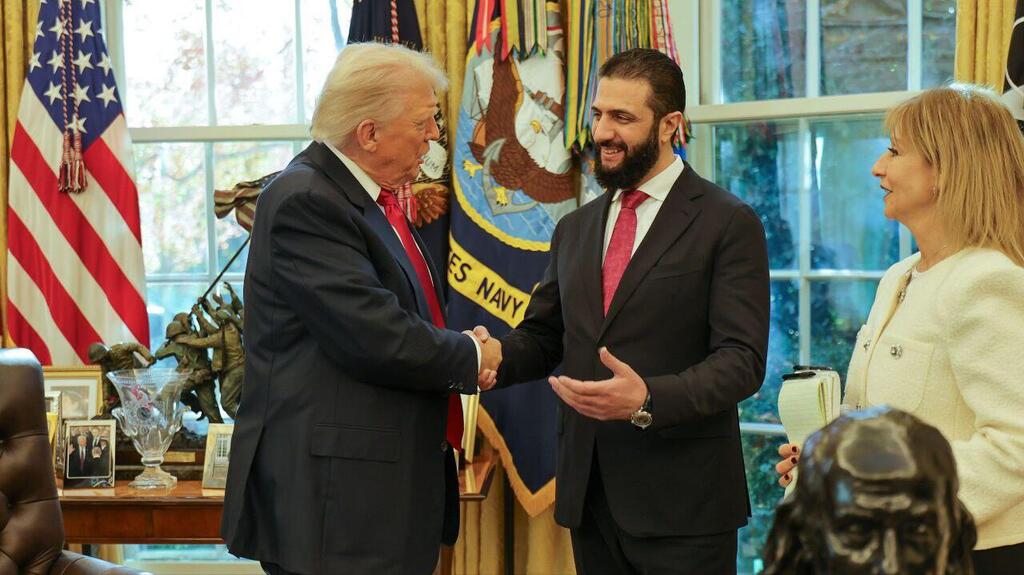
The restraint Sharaa has displayed toward Lebanon is real. The reasons for it have nothing to do with moderation or ideology, and everything to do with arithmetic and survival. Understanding the difference is essential for anyone calculating what Syria's new government actually represents for Israeli security and American strategic interests in the Levant.
Sharaa is Abu Mohammad al-Jolani. The suits are different and the public relations operation is more polished, but the biography is unchanged. He spent years commanding Hayat Tahrir al-Sham, formally designated as a terrorist organization by the United States, the European Union, and the United Nations. HTS grew directly out of Jabhat al-Nusra, al-Qaeda's Syrian franchise. Sharaa led that organization during some of its bloodiest years. His transformation from jihadist commander to the man now receiving Western diplomats in Damascus was not the product of ideological conversion. It was the product of strategic necessity: reaching Damascus required a rebrand, so he rebranded. The ideology that animated HTS throughout its operational years did not dissolve when Sharaa exchanged the battlefield for the presidential palace. It receded far enough to serve the transition.
Western capitals have largely accepted the performance. The more immediate calculation belongs to Jerusalem, which must determine whether Sharaa's Syria represents a genuine reduction in threat or simply a new danger in more presentable clothing.
The Lebanon announcement offers useful raw material for that calculation.
For roughly three decades, Damascus treated Lebanon not as a sovereign neighbor but as subordinate territory and a forward instrument of Syrian foreign policy. Assad stationed tens of thousands of troops there before a forced withdrawal, and even afterward managed Hezbollah's resupply chains, facilitated Iranian weapons transfers across Syrian territory, and used Lebanon as strategic depth against Israel. Sharaa's announcement is a genuine departure from that posture. The reasons for the departure are not rooted in goodwill.
Syria is functionally insolvent. The Assad regime left behind an economy that contracted by an estimated 85 percent during the civil war. Broad international sanctions remain in force. Reconstruction costs run into the hundreds of billions of dollars, well beyond anything Damascus can finance internally. Sharaa cannot access those resources without foreign investment, international loans, and restored diplomatic standing. Any military movement toward Lebanon would trigger immediate isolation and foreclose the international engagement his government depends on for survival. His restraint is arithmetic, not statesmanship.
Lebanon, meanwhile, offers Damascus nothing of strategic value at this moment. The country has not recovered from its 2019 financial collapse. Its political class remains incapable of producing functional governance. Hezbollah, having absorbed severe damage in last year's conflict with Israel, including the systematic elimination of its senior leadership and significant degradation of its weapons stockpiles, is in no condition to serve as the regional instrument Iran built it to be. The organization that once projected power across borders and provided Assad with critical battlefield support now absorbs resources rather than generating strategic leverage. Sharaa is walking away from a territorial dispute with a neighbor that currently represents a liability, not an asset, at minimal strategic cost.
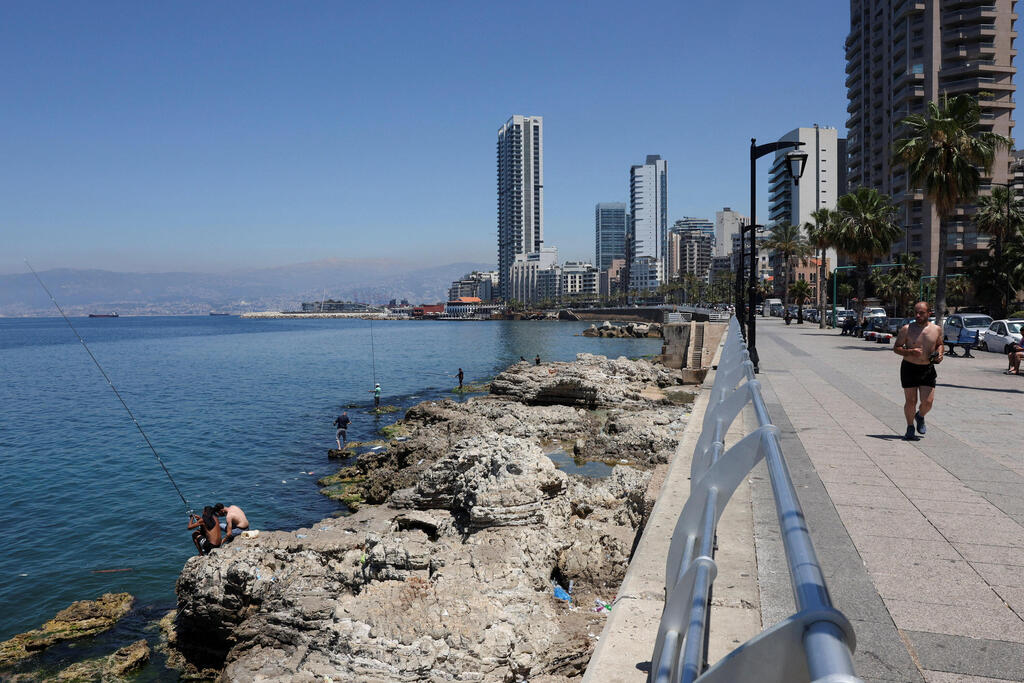
Beirut
(Photo: REUTERS/Mohamed Azakir)
The critical point is that this restraint is time-bound and tactical. Sharaa is managing a transition period, not completing an ideological one. The hardliners inside HTS who spent years operating under an explicitly jihadist framework did not become pluralists because their commander started giving carefully worded statements to foreign correspondents. The ideological pressure inside his movement has not dissipated. It is latent, and latency in Islamist movements has a well-documented record of resolving in one direction.
HTS's governing record in Idlib, the territory it controlled before seizing Damascus, offers a guide to long-term trajectories. That administration included restrictions on women's movement and civic freedom, arbitrary detention of political opponents, and the suppression of civil society. Since taking Damascus, Sharaa has made public commitments to Syria's Druze, Christian, Alawi, and Kurdish communities about inclusion and protection. Several of those commitments are already showing fracture lines. The Islamist instincts of the movement he leads keep surfacing beneath the diplomatic overhaul, and no amount of carefully managed press access changes the organizational culture underneath.
On Israel, Sharaa has been conspicuously and carefully silent. Silence from an Islamist-rooted government is not normalization. Sharaa has never publicly acknowledged Israel's legitimacy or right to exist. His worldview, which understands the Levant through a framework of political Islam, has not been renounced. It has been set aside because the current transitional context demands discretion.
Hezbollah retains deep community roots in Lebanon, maintains political representation in Beirut's government, and benefits from an Iranian strategic logic that demands the reconstruction of its primary regional proxy. Tehran has invested decades and billions into building Hezbollah as its most capable forward force, and it has no intention of writing off that investment because of a difficult operational period. The question is not whether Iran and Hezbollah will attempt a recovery, but through which corridors and with whose passive cooperation. Sharaa's current posture suggests he is not planning to actively enable that recovery in the near term. That is a modest signal, not a structural reassurance. Passive non-interference is not a guarantee, and Syrian border governance has never been airtight even under governments more committed to controlling it.
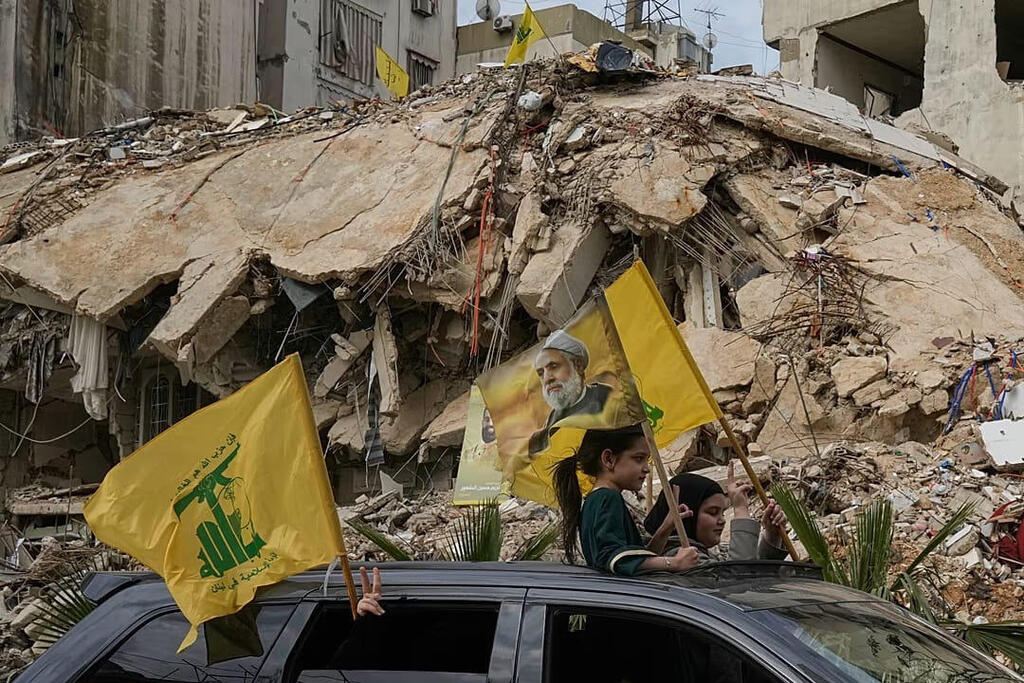
Refugees returning to the Dahieh
What Israel and Washington should extract from Saturday's announcement is a precise and limited conclusion: the immediate threat pathway running from Syria through Lebanon toward Israel's north is, for the moment, reduced. The structural threat is intact. A Syrian state governed by a movement with Islamist foundations, positioned on Israel's northern border and adjacent to the Golan Heights, represents a serious long-term security challenge regardless of how many measured speeches Sharaa delivers.
The appropriate policy response is not to dismiss the tactical reduction in pressure, but to refuse to mistake it for a strategic one. Washington should condition any reconstruction engagement on verifiable behavior, not public statements, and tie diplomatic normalization to concrete, monitored benchmarks: prevention of Hezbollah resupply through Syrian territory, measurable progress on pluralist governance, and genuine accountability to Sharaa's own stated commitments to Syria's minority communities. The United States should resist the institutional temptation to treat a new set of promising words from Damascus as a substitute for the harder work of holding a transitional Islamist government to account.
Sharaa is buying time. Washington and Jerusalem should use theirs more wisely than he is counting on them to.
Amine Ayoub, a fellow at the Middle East Forum, is a policy analyst and writer based in Morocco. Follow him on X: @amineayoubx