

The renewed round of strikes between the United States and Iran is sharpening the central contradiction in President Donald Trump’s policy. The United States has a clear military advantage, the blockade and sanctions are weighing heavily on Iran’s economy and the administration has shown it is prepared to use force again to prevent Tehran from rebuilding its capabilities in the Strait of Hormuz.
But the greater the pressure becomes, the more fundamental the question grows: What exactly does Trump want Iran to do for that pressure to stop?
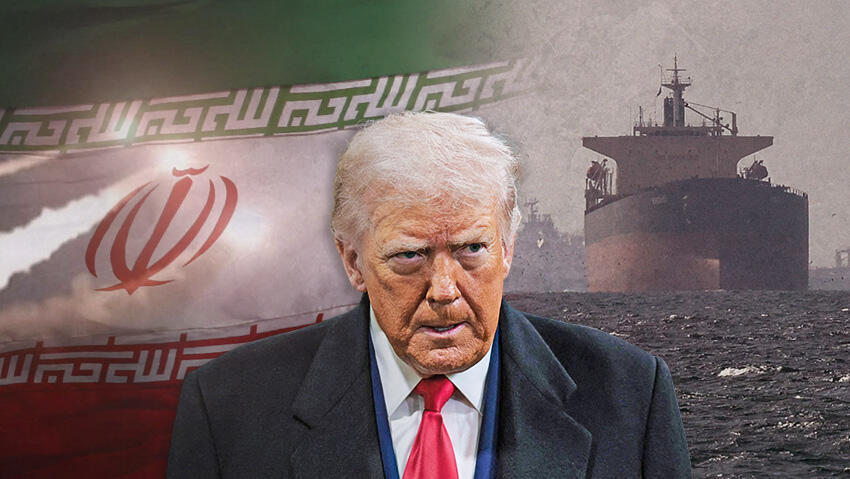
(Photo: Anna Moneymaker/AFP, Shutterstock, REUTERS/Stringer)
The strikes in recent days focused on systems Iran had tried to rebuild in the Hormuz area. Iran responded by firing at U.S. targets in the region, and Trump threatened further strikes. At the same time, he stressed that the renewed campaign was not expected to last long.
It would therefore not necessarily be accurate to describe the U.S. approach as a zigzag or the result of confusion in the White House. On the contrary, in the short term, there is fairly clear logic behind it. Administration officials have said they want to minimize the risk of escalation until the midterm elections in early November, while increasing economic pressure and allowing the military to replenish munitions depleted during the campaign. After the elections, the scope of military operations could also be reassessed. Trump denies that the elections are dictating his decisions, but it is clear that the political and economic cost of the war has become a significant consideration.
In other words, the administration has a concept for how to manage the coming weeks: prevent Iran from regaining control of Hormuz, respond militarily when necessary, continue targeting its sources of revenue, especially oil exports, while doing as much as possible to avoid a return to a broader war. The pressure is indeed substantial: Iranian oil exports, according to estimates published this week, have fallen from about 2 million barrels a day to roughly 240,000.
The tactical logic, then, is clear. But tactical logic is no substitute for strategy. The question is not only how Trump wants to manage the next two months, but where he wants that pressure to lead. And even if the administration is seeking to avoid escalation, there is no guarantee it will be able to control developments on the ground. A major attack on U.S. forces, shipping or countries in the region could force Trump to respond with significant force, even if he does not want to return to a broader war.
The problem is especially apparent after the administration effectively took the June memorandum of understanding off the table. Trump has already declared that the MOU is “over,” and the administration has shown no willingness to return to the terms set out in it. The prospect of an immediate resumption of talks also appears remote: Just last week, Trump said the United States was not holding talks with Iran, as Washington shifted its focus to the economic campaign.
A return to the June MOU?
It is understandable why Trump does not want to return to the June MOU. From his perspective, Iran violated the understandings, conditions on the ground have changed and the United States has since accumulated additional leverage. From his point of view, there is no reason to offer Tehran the same deal again. But that is precisely where the problem begins: Washington is clearly saying what is no longer acceptable to it, but it is not saying with the same clarity what would be.
And this is not merely a problem for those trying to interpret Trump’s policy from the outside. It also makes matters more difficult for decision-makers in Tehran. Iran knows very well what will happen if it continues to resist: The blockade will continue, sanctions will intensify, efforts to rebuild military capabilities will be attacked and it could suffer additional blows. What is far less clear is what will happen if it decides to compromise, and above all, what Iran would receive in return. As long as there are no clear answers, the administration is not offering Iran a new deal. In practice, the message to Tehran is: Keep paying the price until you are ready to compromise — and only then will it become clear on what terms and in exchange for what.
That ambiguity makes things especially difficult for those in Tehran who may favor an agreement. Iranian President Masoud Pezeshkian continues to signal a willingness to return to a diplomatic track, and the economic pressure is undoubtedly strengthening arguments in favor of compromise. But it is difficult to persuade the Iranian leadership to accept painful concessions when it does not know whether they will be sufficient or what it will receive in return. From the regime’s perspective, the risk is not only appearing to surrender to the United States, but making significant concessions without knowing whether they will actually bring the confrontation to an end.
This is also where the risk in the current policy lies. Trump apparently believes continued pressure will eventually cause Iran to blink. He may be right. Iran is in a difficult position, its capabilities have been eroded and the economic cost continues to mount. But pressure, however effective, cannot by itself substitute for a political objective. For it to become leverage in negotiations, the adversary must understand not only the price of refusing, but also what it must do and what it will receive if it agrees.
 Eldad Shavit
 Israel, too, needs to understand this. The tougher U.S. approach does not prove that Trump has adopted the goal of achieving a complete defeat of Iran. He continues to signal that he does not want a prolonged war and hopes the pressure will ultimately allow him to reach an agreement from a stronger position. But for that hope to become a strategy, the administration will have to do something it has so far avoided: spell out what the agreement it wants would look like.
Trump, then, currently has a fairly clear concept for how to apply pressure and manage the coming weeks. What he still lacks is a clear path to an endgame. And as long as Iran does not know exactly what is required of it and what it will receive in return, Washington is not only making it harder for Tehran to meet its demands; it may leave Iran with the conclusion that the only alternative being offered is surrender.
- Col. (res.) Eldad Shavit is a senior researcher in the U.S. program at the Institute for National Security Studies (INSS), a former head of the Mossad’s Research Division and a former assistant for assessment to the head of the IDF Military Intelligence Research Division.