


On September 18, 2026, Turkey’s Banking Regulation and Supervision Agency (BDDK) quietly revoked the operating license for the Istanbul main branch of Bank Mellat. The administrative decision, officially published in the government’s Official Gazette the following morning, formally terminated the licensed banking operations of one of Iran’s largest state-linked financial institutions on Turkish soil. The move was executed without press conferences, public fanfare, or official explanations. Yet for Israel, this quiet administrative action carries far greater strategic weight than the daily public rhetoric coming out of Ankara.
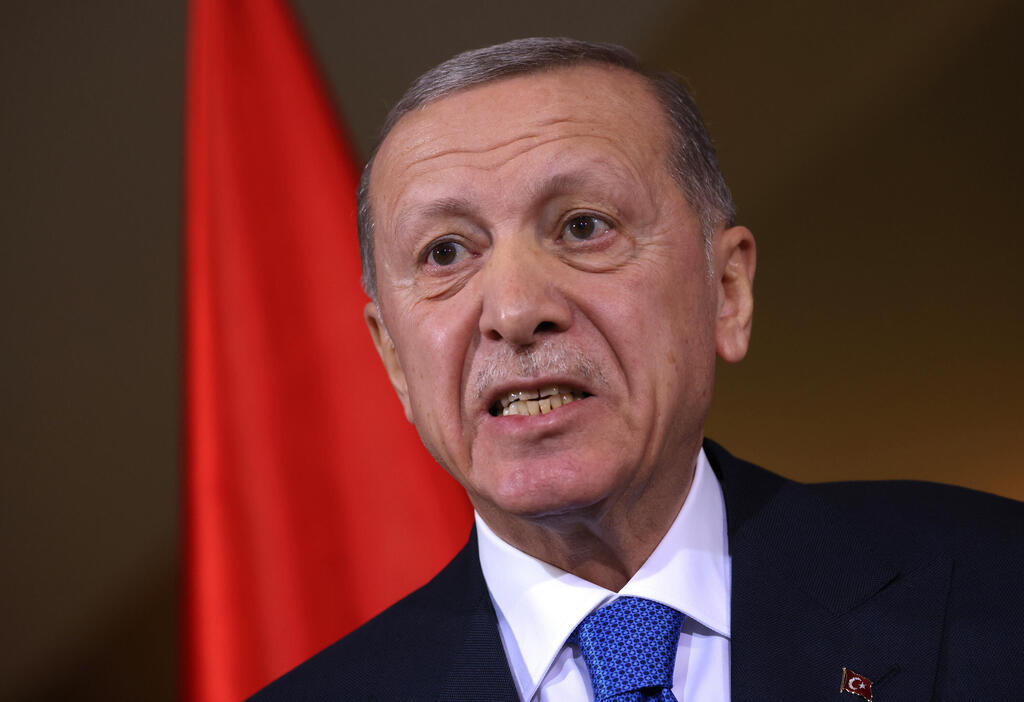
Turkish President Recep Tayyip Erdogan
(Photo: Sean Gallup/Getty Images)
The decision highlights a clear division between public posturing and regulatory action. For months, Turkish President Recep Tayyip Erdogan has used every public podium to project ideological defiance against Israel and the West. Addressing political rallies in Istanbul, he routinely delivers hostile speeches, provides open political support to Hamas, and portrays his government as a primary defender of radical regional movements. However, behind this wall of public hostility, Turkey’s financial regulators were quietly executing an administrative action that directly dismantles a key state-backed Iranian financial foothold inside a NATO member state.
A formal, licensed banking branch like Bank Mellat's Istanbul office provides Iranian state enterprises with operational capabilities that informal money transfer channels and hawala networks cannot match. A licensed branch allows Iranian state entities to issue standardized letters of credit, clear foreign currency transactions, access SWIFT messaging protocols, and maintain direct correspondent relationships with regional commercial banks. While Tehran can easily shift small capital sums through informal brokers, executing multi-million-dollar state trade contracts requires formal banking infrastructure. By shutting down Bank Mellat’s licensed operations, Turkish regulators have degraded Iran’s ability to conduct structured, large-scale commercial transactions through Anatolia.
Furthermore, this development provides Israel and its American allies with concrete evidence when engaging other third countries hosting Iranian financial facilities. States across the Gulf and Central Asia frequently argue that shutting down Iranian financial nodes carries excessive political and diplomatic costs. Turkey’s action demonstrates that even a regional power led by an ideologically hostile government will comply when the financial penalties of non-compliance become concrete. For Israeli officials coordinating with the United States Treasury, Ankara's move offers a clear lesson: targeted secondary sanctions pressure can effectively constrict Iran's global financial footprint without requiring formal political alignment from the host country.
The administrative action against Bank Mellat did not occur in isolation. It followed a rapidly expanding campaign by Washington to raise the systemic cost for foreign financial centers enabling Iranian state trade. On September 4, 2026, the U.S. Treasury imposed sanctions on the Turkish institution Golden Global Bank alongside two affiliated entities, citing alleged financial services provided to Iranian networks linked to the Islamic Revolutionary Guard Corps (IRGC). Ten days later, on September 14, Washington targeted Russia’s VTB Bank as part of the same enforcement push, explicitly warning international financial institutions that maintaining correspondent ties with designated Iranian entities posed an existential threat to their access to the American financial system.
To grasp the full strategic weight of closing Bank Mellat’s Istanbul operations, one must view it within the long history of Iranian financial activity inside Turkey. Following decades of international sanctions targeting Tehran over its nuclear program and regional proxy network, Iran developed intricate financial mechanisms to preserve access to foreign currency and international trade routes. Turkey, sharing a long land border and extensive bilateral trade ties with Iran, has served as a vital transit zone and financial clearinghouse for Iranian commercial enterprises since the early 1980s.
Bank Mellat itself was no recent addition to Istanbul’s financial district. The state-linked lender established its presence in Turkey in 1982, eventually expanding to operate branch offices in Istanbul, Ankara, and Izmir. Over four decades, these offices served as primary conduits for financing bilateral energy purchases and handling commercial settlements. However, the bank’s deep integration into Tehran’s state apparatus made it a frequent target of international enforcement. European Union documentation identifies the Iranian government as Bank Mellat’s largest shareholder, maintaining strict sanctions against the institution for providing financial services to Iran’s nuclear and defense sectors.
The extreme dangers of hosting Iranian financial operations remain seared into the memory of Turkish regulators following the Halkbank scandal. In that episode, Turkey’s state-owned Halkbank became entangled in a massive federal prosecution in the United States over an alleged multi-billion-dollar scheme designed to help Tehran evade American sanctions. The long legal battle, which was finally resolved in early 2026, inflicted immense reputational damage on Turkey’s financial sector and served as an enduring institutional lesson for Turkish bank supervisors regarding the catastrophic costs of defying United States financial mandates.
Recent geopolitical shifts across the Middle East made formal Turkish banking access even more vital for Tehran. As Houthi maritime attacks and heightened security risks in the Red Sea disrupted ocean freight routes, Iranian commercial enterprises increasingly shifted their export traffic toward overland land corridors running through Anatolia toward European and Mediterranean markets. Turkey became an indispensable land bridge for Iranian trade. By revoking Bank Mellat’s operating license, Turkish regulators did not erase Iranian trade entirely, but they removed a primary formal financial pipeline at the exact moment when Tehran relied most heavily on northern trade routes.
The operational consequences for Iranian state enterprises will be immediate and severe. Without a licensed branch in Istanbul, Iranian exporters and state importers lose direct trade financing mechanisms. Securing letters of credit and clearing foreign exchange through Turkish commercial banks now requires navigating complex, multi-tiered arrangements with third-party intermediaries. Informal money transfer networks typically charge steep fees, often taking haircuts between 5 and 15 percent per transaction, while introducing significant settlement delays and counterparty default risks. Moreover, forcing Iranian state trade into informal channels renders those financial flows far more vulnerable to international intelligence tracking and signal surveillance.
 Amine Ayoub
Ankara’s willingness to sacrifice Iranian banking access reflects the delicate macroeconomic recovery currently underway inside Turkey. Following years of volatile monetary policies, currency depreciation, and runaway inflation, Turkey’s economic leadership, led by Finance Minister Mehmet Simsek and Central Bank Governor Fatih Karahan, has spent the past year executing a strict stabilization program. The Central Bank of the Republic of Turkey has maintained its benchmark policy rate at 37 percent, successfully rebuilding gross foreign exchange reserves to 184 billion dollars by early September 2026, while annual inflation slowed toward 31 percent.
This fragile economic stabilization effort depends entirely on maintaining uninterrupted access to Western capital markets, securing foreign portfolio inflows, and preserving correspondent banking ties with major international lenders. Turkish economic officials understand that their financial system cannot survive a confrontation with the U.S. Treasury. A single secondary sanctioning event targeting a major Turkish commercial bank could trigger immediate capital flight, destabilize the lira, spike sovereign borrowing costs, and derail the government's disinflation program.
This episode also highlights the deep structural rivalry that continues to define relations between Ankara and Tehran beneath their tactical diplomatic cooperation. While Turkey and Iran occasionally align on specific regional issues, they remain historical competitors fighting for influence across Syria, Iraq, and the South Caucasus. Turkish national security officials view Tehran's expanding network of Shia militias with deep skepticism, particularly in northern Iraq and northwestern Syria, while Iran actively opposes Turkey’s strategic ambitions in the Zangezur corridor linking Azerbaijan. When American economic pressure raises the cost of hosting Iranian state facilities, Ankara feels little ideological loyalty to Tehran and unhesitatingly prioritizes its own sovereign interests.
For Israel and its strategic partners, the policy takeaway is clear: sustained, targeted secondary sanctions enforcement remains an effective tool for constricting Iran’s regional posture. The closure of Bank Mellat's Istanbul branch will not single-handedly collapse Tehran's economy, but it systematically raises the cost of Iranian state operations abroad. By proving that even hostile regional governments will yield when the financial price of compliance is lower than the penalty of defiance, Ankara has demonstrated that relentless economic pressure remains a vital instrument in containing the Iranian threat.
- Amine Ayoub, a fellow at the Middle East Forum, is a policy analyst and writer based in Morocco. Follow him on X: @amineayoubx