

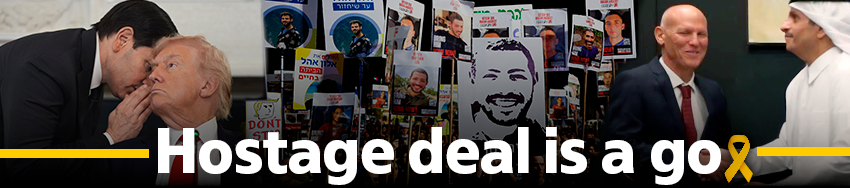

In the end, the U.S. mediation team did its job to the finish: both sides can go home saying they got what they wanted, both can claim “I won,” and neither got everything it demanded. Credit for that must go to President Donald Trump’s team — Jared Kushner, Steve Witkoff and all who worked under them.
Prime Minister Benjamin Netanyahu’s government did succeed in securing what until recently would have seemed impossible: the release of all the living hostages and some of the bodies of murdered hostages without a full Israeli withdrawal from the Gaza Strip. The Israel Defense Forces will continue to control roughly 53% of the Strip, including a substantial buffer intended to prevent Hamas militants from reaching the border.
On the other hand, Hamas won a halt to the fighting and probably won international guarantees that Israel will find politically difficult to violate — namely a promise not to attack the Strip again while talks continue on the remaining stages of what has been called the Trump deal, a process that can be expected to last a long time. Hamas will also receive international assistance to the Strip and will be able to consolidate its hold on the territory, including its governing authority.
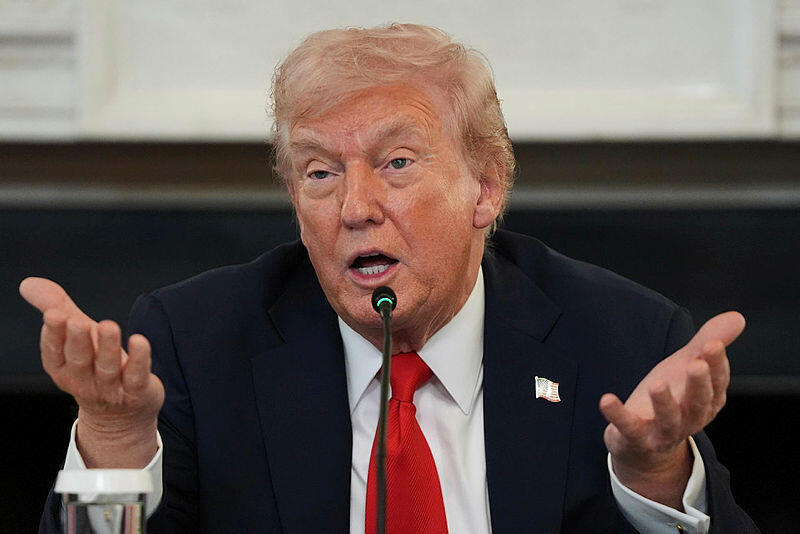
US President Donald Trump
(Photo: Evan Vucci, AP)
The big question is what Israel will do if Hamas moves quickly to rebuild its military capabilities while a comprehensive agreement remains absent.
Hamas above all gained international recognition it never had and diplomatic victories that are felt around the world — such as increased international isolation of Israel and renewed recognition of the Palestinian issue. One can only hope a long-term cease-fire will allow Israel to emerge from the international isolation it entered as a result of an upsurge in antisemitism and anti-Israel sentiment on the one hand and failed Israeli policy on the other.
The major shift in the American stance — Trump’s decision to compel Netanyahu to stop the war — seems to have been prompted by Israel’s strike on senior Hamas figures in Qatar. While the organization’s leadership was gathered in Doha to consider the latest U.S. proposal, Israel tried to eliminate senior Hamas officials there. That appears to have set off alarm bells among some members of the American team, who for a range of reasons, including economic ones, view Qatar as an ally rather than merely the patron of the Muslim Brotherhood, Al Jazeera and Hamas. From there came Washington’s heavy pressure and a peace plan that was never likely to be implemented in full.
And from here we can begin to speak about what Israel will not get. Hamas is not willing to disarm now or in the near future — not until “a Palestinian state is established.” Hamas will not be destroyed or eradicated, and the all-out victory Netanyahu once promised remains an empty slogan. The organization also refuses to accept the presence of an outside governing body that is not Palestinian. Conversely, Hamas will not get control of the entire Strip nor all the high-profile prisoners it demanded be freed. It is not yet clear which of those prisoners will be released, but it can be assumed that this issue will not prevent the cease-fire.
To bring about the strategic change in Gaza that Israel wanted would require the introduction of an alternative governing force to replace Hamas. Some Arab states have already agreed to participate in such a force alongside a presence from the Palestinian Authority. Only with a sufficiently credible threat from a coalition of Arab states, the United States and Israel — that refusal would lead to renewed war and the destruction of what remains of Gaza — could such a force hope to disarm Hamas.
If Israel continues to reject Palestinian Authority involvement and insists that Hamas’ disarmament will happen miraculously, preparations for the next round of fighting should be underway. At least then, and that is some consolation, Palestinian terror groups would not hold live hostages.
One more point: as it stands, Hamas says it cannot now locate the bodies of nine of the dead hostages. That means nine missing persons whose burial places are unknown, nine families left without remains and with an immeasurable void in their lives. Israel must continue to press the mediators in the months ahead to make Hamas find those bodies; it can be assumed Hamas could do so, if not within 72 hours. The family of Hadar Goldin has been waiting for the return of his body for 11 years. Eight more families must not be made to endure the hell that family has lived through.