

Israel’s government early Friday approved a long-awaited deal with Hamas for the release of hostages, setting into motion a ceasefire in the Gaza Strip and marking what Prime Minister Benjamin Netanyahu called “a decisive development” in Israel’s war against the terror group.
According to the Prime Minister’s Office, the first phase of the agreement was signed Thursday morning in Egypt, and at 1:20 a.m. Friday the government gave its final authorization. The decision capped an intense evening of closed-door deliberations, diplomatic pressure and political debate over the release of imprisoned terrorists in exchange for Israeli captives.

The security cabinet convened behind schedule Thursday, and the full government meeting — initially slated for 6 p.m. — began only at 10:15 p.m. Netanyahu was absent at the start, meeting with U.S. envoys Steve Witkoff and Jared Kushner, who had flown in from Egypt after participating in final talks in Sharm el-Sheikh.
The delay was due to disagreements over the list of terrorists to be released under the exchange. According to sources, the Israeli negotiating team spent hours finalizing names to meet U.S. and Egyptian timetables.
When Netanyahu returned from his meeting with Witkoff and Kushner, the two Americans — both senior advisers to President Donald Trump — were invited to join the government session, an unusual move reflecting the deal’s diplomatic weight. After roughly 30 minutes inside, applause was heard from the cabinet room. Moments later, Netanyahu, Witkoff and Kushner emerged, signaling that the government had reached consensus.
The security cabinet did not vote; the final approval came from the full government. Minutes later, the ceasefire went into effect across the Gaza Strip.
Reports from Gaza around that time said several people were killed or missing in an Israeli airstrike in Gaza City aimed at eliminating two Hamas terrorists. The IDF did not immediately comment.
Netanyahu: 'A decisive development'
At the government meeting, Netanyahu hailed the decision as “a decisive moment” and credited Trump and his envoys for helping to bring it about.
“For two years we have fought to achieve our war goals,” he said. “One of our central aims is to bring back all the hostages — and we are about to do that. We could not have reached this point without the extraordinary assistance of the president and his team. They worked tirelessly with Ron Dermer and our staff. These efforts, combined with the courage of our soldiers who entered Gaza, created military and diplomatic pressure that isolated Hamas. I believe that is what brought us to this point.”
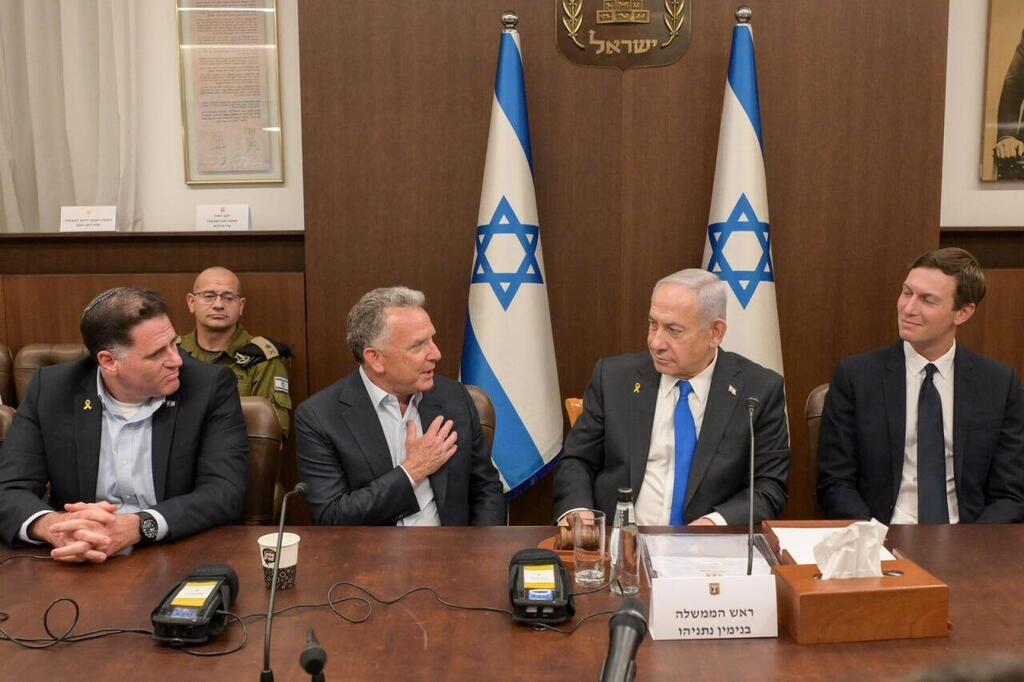
(Photo: GPO)
Witkoff replied that the “hard work truly belonged to the prime minister,” saying Trump “believes Netanyahu made very tough decisions that others would not have made.” He added, “We are here today because Hamas had no choice. The pressure was enormous, and Israel’s army advanced significantly on the ground. That led to this agreement.”
Ministers debate the price
During the security cabinet meeting that preceded the vote, ministers expressed both support and deep misgivings over the prisoner releases.
Shas party leader Aryeh Deri called the deal “a major achievement,” saying Israelis have “short memories” about how far the country has come. IDF Chief of Staff Lt. Gen. Eyal Zamir praised the military’s gains, telling ministers, “We are world champions at being sour. This is a major achievement.”
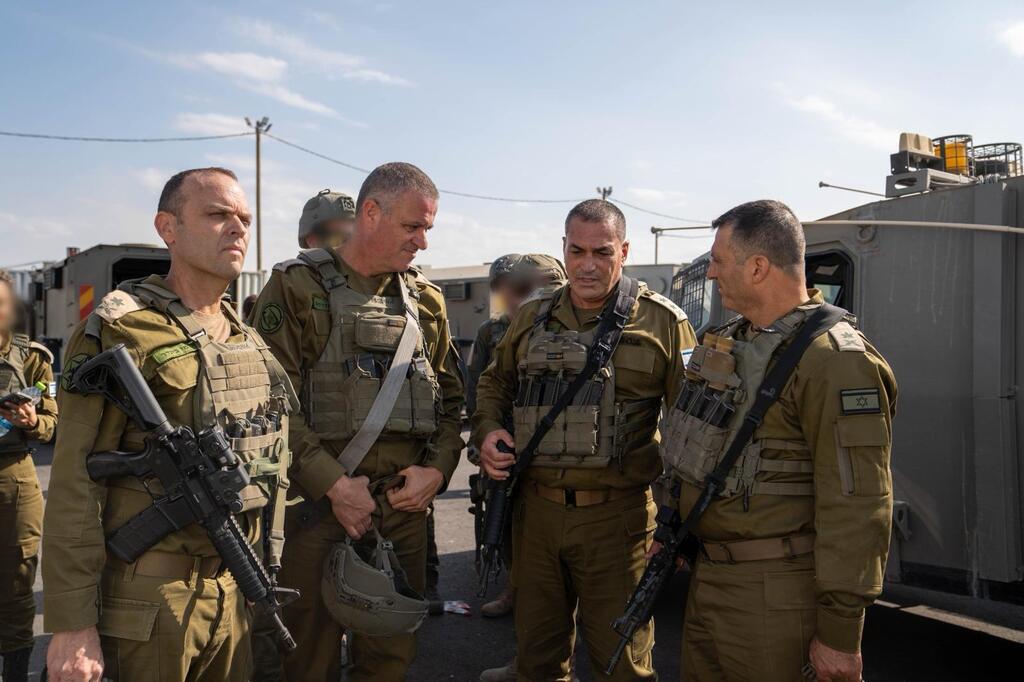
(Photo: IDF)
Agriculture Minister Avi Dichter said that “until two months ago, no one here could imagine reaching such a deal.” But other ministers objected to the inclusion of convicted terrorists. The deputy head of the Shin Bet, who returned earlier that day from the negotiations in Sharm el-Sheikh, told ministers, “It’s hard for me too to accept releasing terrorists, but this is the price we must pay. We have to swallow it.”
National Security Minister Itamar Ben-Gvir objected sharply. “We remember the release of Sinwar and the damage caused by freeing murderous terrorists,” he said.
Sharp exchange with U.S. envoys
Ben-Gvir later turned to the U.S. envoys, telling them, “You would never release them in the United States. I appreciate your hard work and your help for Israel, but let’s be honest — you would not support such a deal. You cannot make peace with Hamas; they want to kill us.”
Witkoff responded with a personal story about losing his son to a drug overdose, saying he had ultimately forgiven the family of the dealer after seeing their remorse. “That’s the difference,” Ben-Gvir replied. “Those who murdered us on Oct. 7 do not ask for forgiveness.”

(Photo: Knesset)
Kushner told ministers Hamas was “isolated worldwide and deterred.” Ben-Gvir responded, “Would you make peace with Hitler? Hamas is Hitler.” Kushner replied, “We made a deal that isolates Hamas and encourages Arab countries to seek peace. The agreement preserves Israel’s security. If force is needed, we will use force. It can go the easy way or the hard way.”
Ceasefire begins; hostages expected to return within 72 hours
After Trump announced the deal and the end of hostilities, the ceasefire in Gaza took immediate effect. Israeli officials said all 48 hostages — 20 living and 28 deceased — are expected to be returned within 72 hours. However, intelligence assessments suggest Hamas may not be able to locate all the deceased hostages, and some bodies may not be transferred within that time frame.
Ministers from Religious Zionism and Otzma Yehudit opposed the agreement, except for Ofir Sofer of Religious Zionism, but the vote passed by a wide majority. Ben-Gvir voted against but did not threaten to resign.
In Israel, a giant billboard honoring Trump was raised following the announcement.
Terms of the deal
Under the government’s decision, 250 terrorists serving life sentences and 1,700 Gaza residents detained after the Oct. 7 massacre who were not involved in the attack will be released, along with 22 minors from Gaza.
According to the official decision, “Within 72 hours from completion of IDF preparations, 20 living Israeli hostages and 28 deceased hostages will be released from Gaza to Israel, including four deceased who are not Israeli. All living and deceased hostages will be transferred to Israeli security forces.”
Israel will also transfer to Gaza the bodies of 360 terrorists, at a ratio of 15 terrorists for each Israeli deceased hostage. If Hamas returns fewer bodies, Israel will adjust the number accordingly. All releases will occur only after the hostages are returned.
The decision further stipulates that any terrorist convicted of murder or producing weapons used in murder, or who dispatched attackers causing deaths, will be released only if deported to Gaza or abroad and permanently barred from returning to Israel or the West Bank. Gaza residents not involved in the Oct. 7 massacre will be returned to the strip.
Deportations and foreign role
The terrorists will be deported either to Gaza or to foreign countries willing to accept them. Negotiations with several countries have begun, with Turkey and Qatar expected to absorb most of the released prisoners. In previous exchanges, some were sent to Egypt, Turkey and Malaysia.
Turkish President Recep Tayyip Erdogan announced that Ankara will join an international “task force for Gaza” to oversee the ceasefire and monitor implementation of the deal. Officials said the task force, created during the Sharm el-Sheikh talks, will operate along three lines: humanitarian aid, locating and recovering bodies, and supervising the ceasefire.
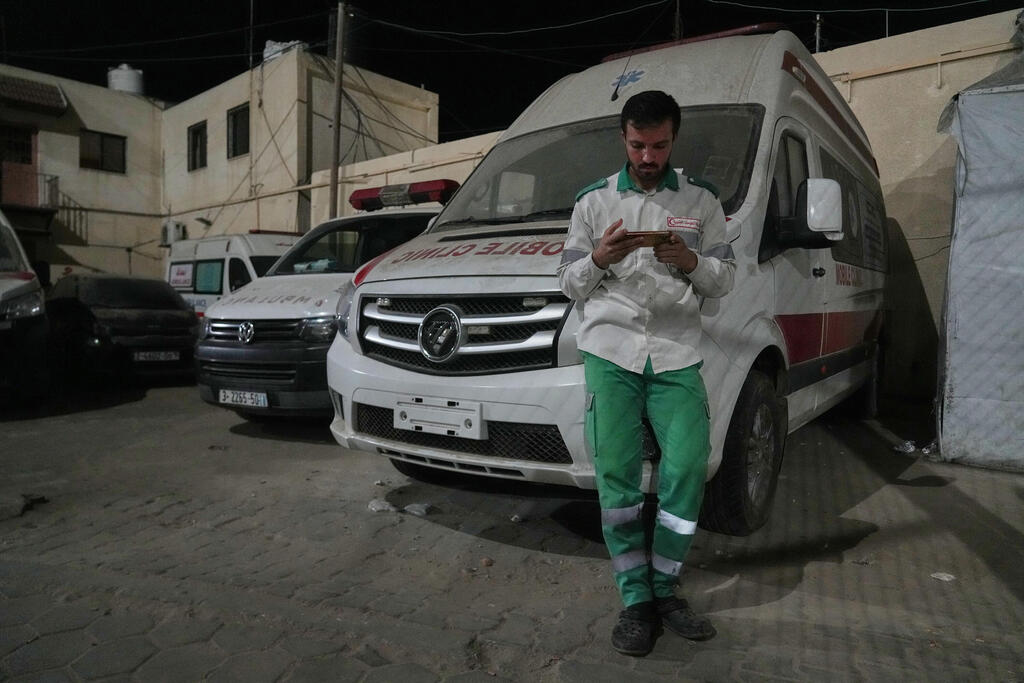
(Photo: AP Photo/Abdel Kareem Hana)
Foreign Minister Gideon Sa’ar told Fox News that “Israel has no intention of renewing the war. Part of the commitment is the disarmament of Hamas, but first there will be an immediate ceasefire once the decision is approved. After the hostages are freed, I believe this will lead to the end of the war.” Sa’ar said Hamas must fulfill its own obligations and added he expects the coalition to remain intact. “That would be the responsible thing, but in any case there are elections next year,” he said.
Five-day implementation plan
An Egyptian source told Asharq al-Awsat that the implementation of the agreement will take five days. On Friday, alongside Israel’s approval, lists of prisoners and the “map of the first-phase withdrawal” are to be published. On Sunday, terror groups in Gaza are expected to prepare for the release of living hostages and the transfer of the deceased. Trump is scheduled to visit Israel on Monday, when the prisoner releases are to begin, crossings will reopen, humanitarian aid will start flowing, and talks will open on the next phase of the agreement.
Hamas pledged to return the bodies of hostages whose locations it knows but said it cannot confirm the whereabouts of nine of the 28 deceased. A multinational task force — including Israel, the United States, Egypt, Turkey and Qatar — will work to locate and recover those bodies during and after the first 72 hours.
Security preparations and high-level coordination
Before the cabinet and government meetings, Defense Minister Israel Katz held a security assessment with Chief of Staff Zamir, Deputy Chief of Staff Maj. Gen. Tamir Yadai, Military Intelligence head Maj. Gen. Shlomi Binder, Operations Directorate head Maj. Gen. Itzik Cohen and other senior officers. Katz’s office said he instructed the IDF “to respond with great force to any threat or Hamas attack against our forces before the government decision and until implementation of the agreement.”
Earlier in the day, Witkoff and Kushner met with President Isaac Herzog, who hosted them in his sukkah at the President’s Residence in Jerusalem. Herzog discussed the details of the deal to bring home the hostages and end the war, expressing “deep appreciation” to Trump, Kushner and Witkoff for what he called their “historic contribution to Israel’s security, to the welfare of its citizens and, above all, to bringing the hostages home and helping open a new era for the Middle East.”
Ben-Gvir’s red lines and opposition
Despite the government’s approval, ministers from Religious Zionism and Otzma Yehudit continued to oppose the agreement. On Thursday night, Ben-Gvir gave Netanyahu a list of senior terrorists he said must not be freed, including Fatah leader Marwan Barghouti. The Prime Minister’s Office confirmed Barghouti would not be released. Ben-Gvir also demanded that freed terrorists be deported and not allowed to return to Israel, a condition that was accepted and added to the final plan.
“Our hearts are filled with joy that all the hostages are expected to return home — the living to their families and rehabilitation, and the deceased for burial,” Ben-Gvir said before the meeting. “But alongside this joy, we must not ignore the price: releasing thousands of terrorists, including 250 murderers. This is an unbearable price. Experience shows these terrorists return to terrorism and to their craft of murdering Jews. Therefore, I and the ministers of Otzma Yehudit cannot support a deal that releases these murderous terrorists.”
Ben-Gvir warned that if Hamas rule remains in place, his party will leave the coalition. “Under no circumstances will I be part of a government that allows Hamas to continue ruling Gaza,” he said. “If Hamas rule is not dismantled, or if we are told it is while it continues under another guise, Otzma Yehudit will dismantle the government.”
First published: 00:34, 10.10.25