

On April 29 of this year, U.S. President Donald Trump sat in the Oval Office, surrounded by reporters, and described in his colorful language just how bleak he believed Iran’s situation had become.
Trump summed it up this way: “Now they have to cry uncle. That’s all they have to do…”
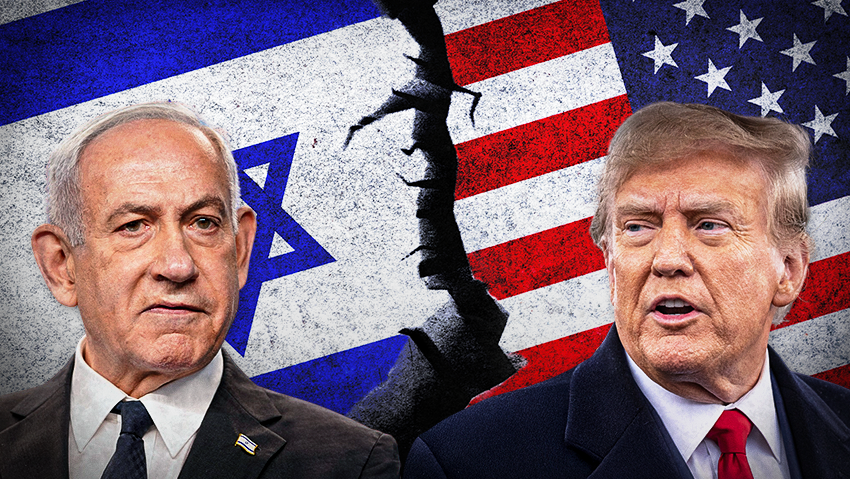
(Photo: lev radin/shutterstock, REUTERS/Nathan Howard, KAWANT HAJU/AFP, shutterstock)
It can be assumed that the Iranian regime has enough linguists who understand the subtleties of American idiom, and that they made sure to explain to their leadership the precise meaning of that very American phrase, “cry uncle.” But if such a report was delivered, it apparently was not enough to push Tehran’s leaders to recalculate their course. If anything, the stream of statements coming from the White House in recent months seems only to have strengthened the ayatollahs’ belief that whoever barks in Washington does not bite in the Middle East.
There are different explanations for the origin of that phrase, which developed in American speech centuries ago, but every child in New York or Texas knows what it means. When two boys fight and one manages to lock one of his opponent’s joints in a way that threatens physical harm, the boy who has lost hope of escaping the hold can utter the word of surrender that will spare him the pain. A similar technique is familiar in combat sports: when one fighter pins his opponent to the mat with overwhelming force, the trapped side taps the referee to signal surrender.
But the Iranian regime was not prepared to signal defeat. Quite the opposite: its arrogance only grew as the blows against it intensified. Instead of crying “uncle,” they continued shouting “death to America.” Instead of easing their own pain, they placed their faith in their ability to inflict far greater pain on their neighbors and attackers.
Iran refused to bow to U.S. dictates not only because it assessed that there is a limit to America’s, and the world’s, tolerance for pressure, but first and foremost because of its devotion to a Shiite faith that recoils from the idea of surrender, except for tactical and temporary surrender. That ancient zealotry has shown its strength over the past year as well, and it would be an illusion to believe that Iran will in the future submit to demands it rejected without hesitation even when military pressure on it was at its peak, when a naval siege paralyzed its oil exports and exacted enormous costs, and when the threat of a devastating strike on national and economic infrastructure vital to its survival hovered over its head.
Exactly one year after Israel struck Iran, in June 2025, Iran is making clear that it is not deterred, not defeated and not raising its hands. Israel’s response must be harsh and painful. The United States must understand that there is no avoiding such a move. If there is indeed close coordination with the Trump administration, this is its moment of truth.