


The geopolitical map of the Middle East is no longer confined to the traditional borders of the Levant or the Persian Gulf. For years, the strategic community has watched Tehran weave a "ring of fire" around Israel, stretching from the bunkers of Southern Lebanon to the mountainous hideouts of Yemen.
However, a seismic shift is occurring that demands the immediate attention of both the U.S. and Israel. The Iranian Revolutionary Guard Corps (IRGC) has successfully leapfrogged across the African continent, finding a willing proxy in the windswept camps of the Tindouf region.
Gallery
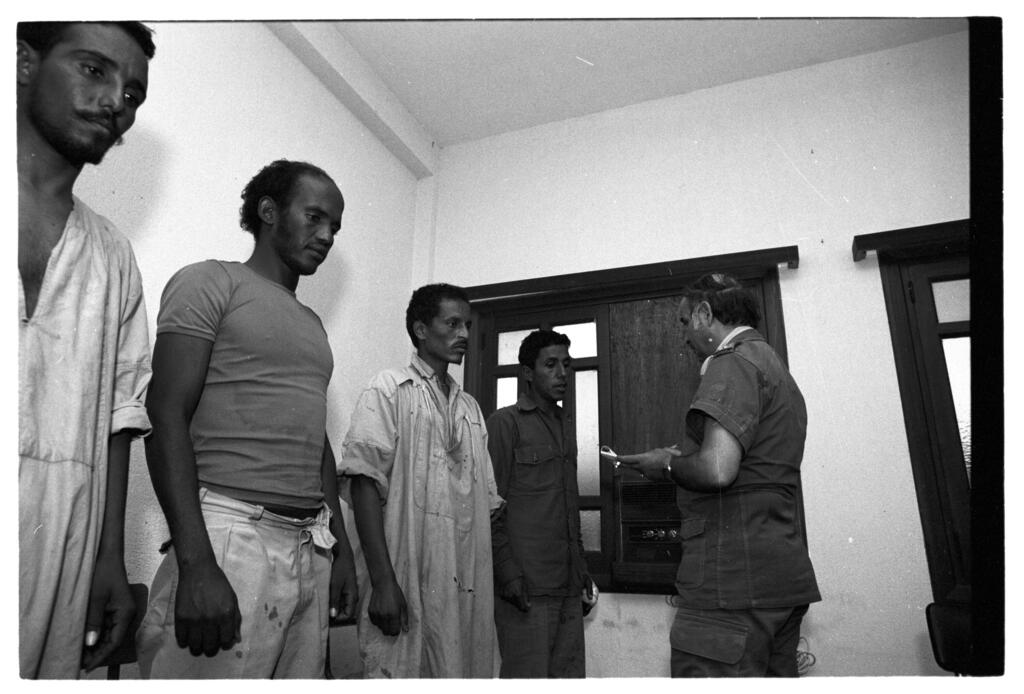
Moroccan soldiers interrogate captured Polisario fighters in the Sahara on Nov. 9, 1979
(Photo: David Rubinger)
The recent legislative push in the United States Congress, spearheaded by Senator Ted Cruz and his colleagues, to designate the Polisario Front as a foreign terrorist organization is not merely a diplomatic nod to Morocco; it is a late-stage recognition of a burgeoning Iranian outpost on the doorstep of the Atlantic Ocean.
To understand why the Polisario Front is now being viewed through the lens of global counter-terrorism, one must look past the decades-old territorial dispute in the Western Sahara and focus on the hardware and instructors appearing in the desert.
The Iranian strategy has always been one of "franchising" instability. In Lebanon, they built Hezbollah; in Yemen, they transformed a local insurgency into the Houthis, a group now capable of holding global maritime trade hostage.
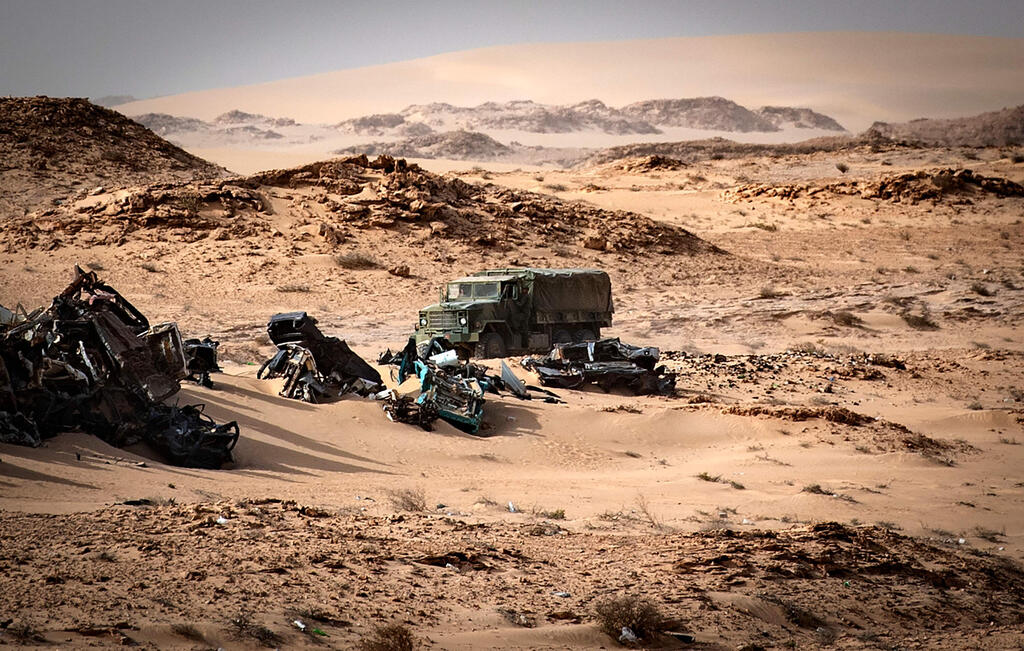
File photo from Guerguerat in Western Sahara after Morocco’s 2020 military intervention to clear a Polisario-linked blockade, an episode that helped unravel the decades-old ceasefire
(Photo: AFP)
The evidence suggests that Tehran is currently applying the same blueprint to the Polisario. The reports of IRGC-provided drones, HM-16 mortars and surface-to-air missiles flowing into the hands of Polisario fighters represent a qualitative escalation that transforms a regional friction point into a frontline of the "Axis of Resistance."
The bridge for this expansion is, unsurprisingly, Hezbollah. Since at least 2018, when Morocco took the decisive step of severing diplomatic ties with Tehran, the intelligence has been clear: Hezbollah operatives have been providing urban warfare training and technical expertise to Polisario cadres.
This is not a matter of ideological alignment—the Polisario’s roots are ostensibly Marxist-Leninist—but rather a marriage of convenience. For Tehran, the Maghreb represents the "soft underbelly" of Europe and a strategic vantage point to harass Western interests far from the Strait of Hormuz. By empowering a proxy in North Africa, Iran gains leverage over the Mediterranean’s western entrance and creates a permanent distraction for Morocco, a key Western ally and a signatory of the Abraham Accords.
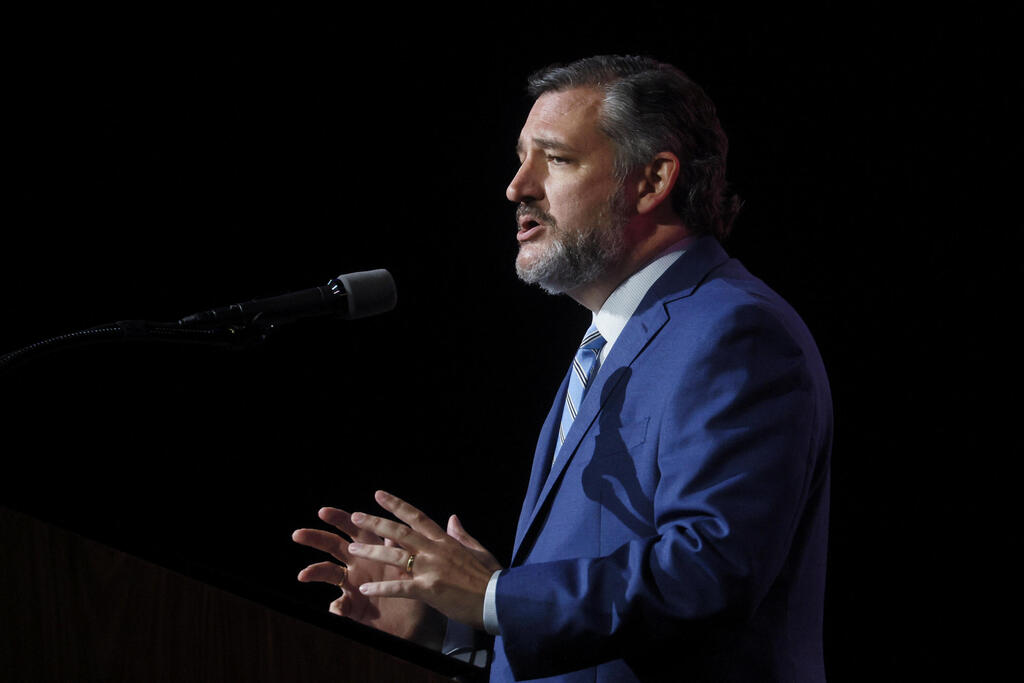
US Senator Ted Cruz
(Photo: Reuters)
The "Houthi-fication" of the Polisario, as Senator Cruz aptly described it, carries devastating implications for regional stability. The Sahel and North Africa are already grappling with a vacuum of authority and the rise of jihadist movements. Into this chaos, Iran has injected a state-sponsored militia model that thrives on the erosion of national borders. If the Polisario is allowed to continue its transition into an Iranian-aligned proxy, the world may soon face a scenario where Iranian-made suicide drones are launched from the Sahara to strike Atlantic shipping lanes or civilian infrastructure in neighboring states.
Furthermore, the collapse of the Assad regime in Syria has inadvertently pulled back the curtain on this secretive alliance. Syria long served as a logistical and diplomatic conduit between the IRGC and the Polisario. With that link frayed, the desperation of both the Iranian regime and its North African clients has become more apparent. Tehran needs new arenas to demonstrate its reach as its traditional strongholds in the Levant face unprecedented pressure.
Conversely, the Polisario, sensing its traditional support bases are shifting or stagnating, has found in Iran a patron willing to provide the high-tech weaponry necessary to sustain a "gray zone" war against a much more powerful Moroccan military.
 Amine Ayoub
The proposed American legislation—which mandates annual reports on the Polisario’s military cooperation with Iran and Hezbollah—is a necessary tool for financial and strategic containment. By applying the sanctions of Executive Order 13224, the U.S. can begin to dismantle the financial networks that allow Iranian money to flow into the Tindouf camps. This is not just about supporting the territorial integrity of a North African kingdom; it is about preventing the establishment of an "Atlantic Hezbollah."
For the international community, the choice is becoming stark: address the Iranian presence in the Sahara now through diplomatic and economic pressure, or face a far more costly military reality later when the desert sands are fully weaponized by the IRGC.
- Amine Ayoub, a fellow at the Middle East Forum, is a policy analyst and writer based in Morocco.
First published: 21:46, 03.15.26