


On October 17, an explosion tore through an ammunition depot at a Popular Mobilization Forces facility in eastern Baghdad. The PMF reported five personnel with minor injuries, while security and medical sources cited by Reuters reported one death and four wounded. On October 18, the PMF said preliminary forensic findings indicated an internal malfunction, with no indication of an external attack, while noting that the investigation remained open. Six days later, the Saudi newspaper Asharq Al-Awsat reported that Baghdad suspected airstrikes had targeted two militia facilities holding Chinese-manufactured portable air-defense systems allegedly transferred from Iran. Iraqi officials acknowledged that the government lacked conclusive evidence identifying those responsible, and the alleged transfer into Iraq could not be independently verified. The available reporting has not established whether the October 17 explosion was connected to either of the alleged strikes.
This discrepancy reflects the persistent ambiguity of the regional shadow war, where depot accidents, intelligence leaks, and competing political narratives routinely intersect. The report gained traction because it followed Reuters reporting on July 29 that Iran had signed an agreement to acquire 300 to 400 Chinese-made QW-12 and FN-16 systems, according to sources familiar with the deal. Beijing denied the report, and delivery remained unconfirmed. Even so, the convergence of these accounts raises a legitimate operational question for Israel. The issue is not whether the blast was an attack or an accident. The question is how the potential introduction of modern shoulder-fired missiles into Iraq would affect Israeli freedom of action in airspace that could become relevant to future operations against Iran.
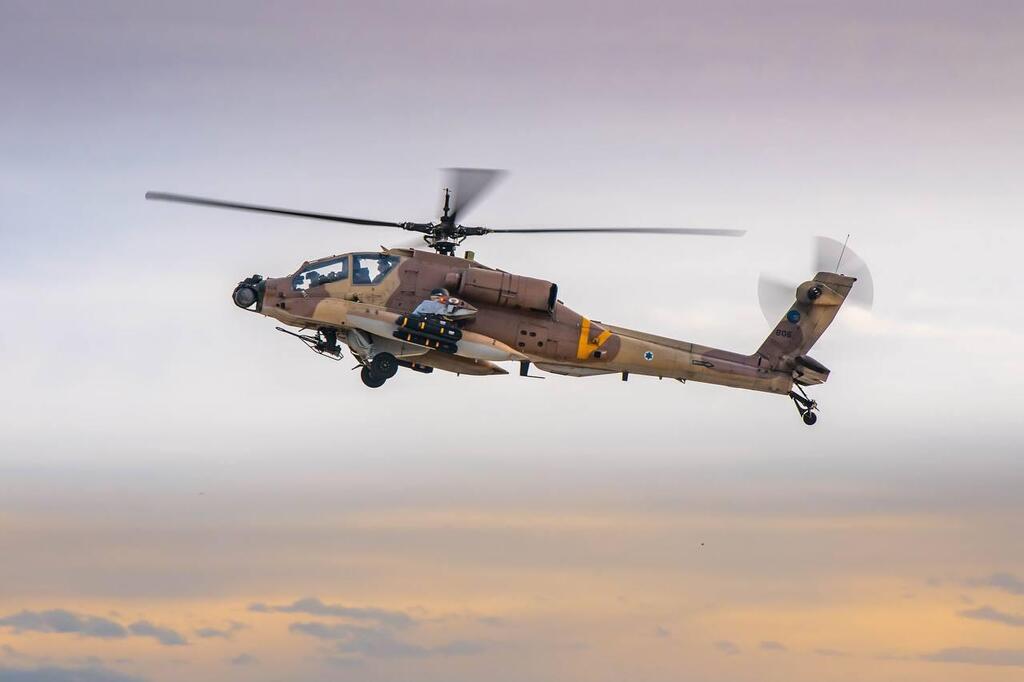
An Israel attack helicopter
(Photo: IDF)
Evaluating that scenario requires separating rhetorical alarm from aerodynamic reality. Portable air-defense systems in militia hands would not eliminate Israeli air superiority or prevent long-range strike operations against strategic targets. At cruising altitudes above thirty thousand feet, Israeli strike fighters operate well beyond the QW-12's published engagement ceiling of roughly four thousand meters. Although the models allegedly transferred to Iraq have not been independently identified, MANPADS of this class principally threaten lower-flying aircraft rather than high-altitude strike formations.
The genuine operational friction created by portable missiles begins with combat search and rescue. If a combat aircraft suffers serious mechanical trouble, a bird strike, or battle damage over central or western Iraq, its crew may have to eject. Recovery could then require transport helicopters to enter hostile territory at low altitude, approach the aircrew's position, and potentially hover or land briefly. The exact profile would depend on the circumstances, but prolonged exposure near an extraction site could increase the danger posed by concealed air-defense teams.
At low altitude, the threat depends not only on missile range but also on resistance to aircraft countermeasures. Flares can defeat older seekers, but cannot guarantee protection against modern guidance. Chinese descriptions of the QW-12 claim improved jamming resistance, although its combat performance against Israeli countermeasure suites remains unverified. Because these missiles use passive infrared guidance, radar-warning receivers alone generally cannot detect their launch. Warning instead depends on suitable missile-approach detection systems or visual detection, after which available countermeasures may help disrupt an incoming missile. Reaction time can be extremely short at typical engagement distances, making low-altitude helicopter operations demanding in hostile territory. Transport helicopters attempting an extraction face severe danger if a concealed militia team fires an advanced missile from an unexpected position.
The second operational area facing potential constraints is unmanned aerial reconnaissance, though technical parameters require qualification. Modern Israeli strategic drones are not inherently trapped within range of shoulder-fired weapons. IAI lists the Heron TP Eitan as capable of operating up to 45,000 feet, while Elbit gives the Hermes 900 Kochav a service ceiling of 30,000 feet. Near maximum ceilings, both platforms fly comfortably above the four-thousand-meter engagement boundary of the QW-12. However, a maximum service ceiling does not mean every mission occurs at peak altitude. Specific target-identification requirements, lower-altitude collection profiles, transit climb and descent, and operations by smaller tactical drones can introduce exposure to lower flight envelopes. That dynamic compels mission planners to balance sensor resolution against platform vulnerability.
This tactical hazard is reinforced by the realities of Iraqi security governance. While the Popular Mobilization Forces are legally part of the Iraqi state and draw salaries from the national treasury, their command hierarchy remains fragmented. Key factions like Kataib Hezbollah and Harakat al-Nujaba maintain direct ties to Tehran, acting independently of civilian oversight in Baghdad. When advanced weapons enter faction networks, Baghdad cannot guarantee control over storage or transfer. The Iraqi government may lack the enforcement capacity and political leverage to consistently inspect militia stockpiles, verify weapons inventories, or control clandestine border crossings. Israel must assess actual custody relationships rather than rely on official assurances from Baghdad.
This dynamic unfolds against the backdrop of an evolving international military posture. Following the conclusion of the United States-led mission in Iraq on September 30, U.S. forces and equipment completed their departure from Erbil Air Base, marking the end of the Operation Inherent Resolve mission in Iraq. This transition does not mean Western intelligence coverage has disappeared. The coalition task force remains operational from Jordan, U.S. forces continue operations in Syria, and Washington maintains targeted intelligence sharing with Iraqi partners. Nevertheless, the withdrawal transfers primary responsibility for Iraq's security to Iraqi institutions and changes the regional monitoring environment. The extent to which this transition affects intelligence collection and early warning remains uncertain, but Iranian logistics networks could seek to exploit any resulting gaps.
The Chinese dimension of these weapons also warrants some analytical restraint. Even if investigators discover Chinese serial numbers in an Iraqi depot, the presence of Chinese equipment is not proof of official Chinese government authorization. The international arms trade includes secondary transfers and illicit diversion through regional intermediaries. Iran has spent decades building covert networks to acquire guidance components and portable weapons across global markets. While Beijing formally rejects reports of sales to sensitive actors, hardware circulation through complex supply chains remains an established reality. Distinguishing between Chinese state policy and illicit proliferation is critical for accurate threat assessment.
 Amine Ayoub
Israel does not face a simple choice between preemptive strikes and inaction. The immediate priority is an intelligence surge, cross-referencing satellite surveillance, electronic signals, and allied intelligence reporting to determine whether advanced portable systems entered Iraq. Meanwhile, the airforce can revise routes and altitude profiles where mission requirements permit and assess whether selected platforms would benefit from directed infrared countermeasures. Diplomatic engagement with Washington and quiet pressure on Baghdad can also raise costs for Iraqi officials who overlook militia weapons stockpiles.
The central danger is not that Chinese-made portable missiles will paralyze the Israeli Air Force or prevent long-range operations against Iran. It is that they could incrementally raise the cost of surveillance missions and expose rescue helicopters to deadly ambush in hostile territory. Israel's record throughout the Campaign Between the Wars shows a clear pattern: confirm the presence, custody, and location of consequential weapons before deciding on interdiction. In 2016, Netanyahu publicly acknowledged dozens of strikes against weapons transfers to Hezbollah, establishing an important precedent for how Israel must respond when adversaries seek to acquire advanced air defense capabilities.
Iraq presents a fundamentally different calculation for Israel. Striking weapons depots in sovereign Iraqi territory carries substantial political risk: destabilizing Baghdad's fragile government, complicating critical U.S.-Israeli coordination, and potentially triggering broader regional escalation. These costs are not theoretical—they are precisely what Tehran has likely calculated when weighing whether to transfer such weapons systems. The decision to interdict is therefore not automatic, regardless of what evidence might emerge.
Israel must first establish what weapons actually exist, where they are positioned, and who ultimately controls them. Only then can decision-makers properly weigh military necessity against political consequence. That demanding analysis requires rigorous intelligence collection and methodical verification, not alarmist reaction to unverified headlines or anonymous leaks. The operational stakes are genuine and serious. But so is the obligation to confirm facts before committing to action that carries consequences far beyond the immediate tactical problem.
- Amine Ayoub, a fellow at the Middle East Forum, is a policy analyst and writer based in Morocco. Follow him on X: @amineayoubx