

For decades, Israel’s northern border and Lebanon’s southern frontier have lived with the same uneasy reality: long stretches of calm that can end overnight. What looks like stability is often just a pause. Communities in northern Israel and towns in southern Lebanon have learned to organize their lives around that uncertainty, not as an exception but as a constant.
I write as someone from southern Lebanon, an area that has absorbed the physical and psychological costs of this conflict for generations. For those who live closest to the border, geopolitics is not theoretical. It shows up in stalled development, limited opportunities and the quiet knowledge that calm can collapse without warning. Seen from there, the case for a different future is not abstract. It is urgent.
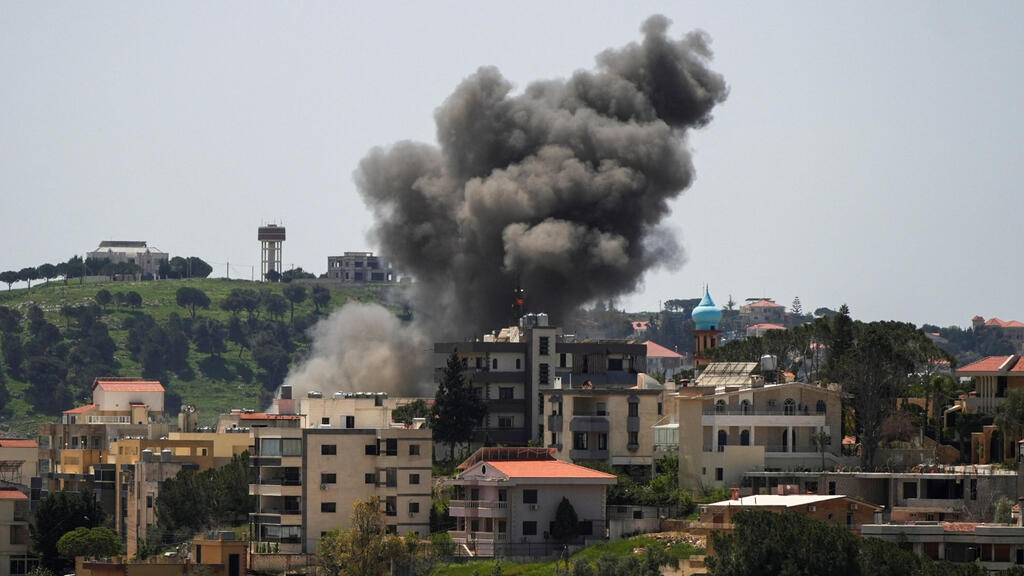
IDF strikes in Nabatieh, southern Lebanon
(Photo: REUTERS/Stringer)
Peace between Israel and Lebanon is often dismissed as unrealistic. In fact, the opposite is true. Continuing down the current path is what carries the greatest risk. A serious move toward peace is not naïve idealism; it is a strategic and moral necessity that has been delayed for too long.
History offers a useful reminder here. Conflict has dominated recent decades, but it is not the only framework through which relations between this region and the Levant can be understood. Ancient accounts describe how Hiram, the King of Tyre, sent materials and builders to Jerusalem for the construction of the Temple. His relationship with King Solomon was not sentimental or symbolic. It was practical, based on mutual benefit and respect. History does not tell us what to do today, but it does challenge the idea that hostility is the only possible relationship.
The reality of the present conflict is, of course, complicated. It is shaped by regional power struggles, Lebanon’s internal weakness, unresolved disputes and the presence of armed groups operating outside full state control. None of this is easily resolved. But complexity cannot be allowed to become an excuse for standing still. In other parts of the world, conflicts just as entrenched have shifted when societies accepted that managing tension forever is not a strategy.
Along the Israel–Lebanon border, escalation has not been inevitable. On several occasions, informal restraint, fragile and imperfect, has prevented a slide into full scale war. These moments matter. They show that violence is a choice, not a law of nature. If restraint can hold during crises, it can be strengthened through more deliberate political and civilian arrangements.
The human cost of the status quo is visible on both sides of the border. Families live with the knowledge that a single incident can undo years of relative calm. Economic life remains cautious, investment limited, planning short term. Children practice emergency drills more often than they make long term plans. This may be familiar, but familiarity does not make it acceptable.
Israel and Lebanon do not have to remain locked in a pattern of managed hostility. Beyond official diplomacy, something quieter is already happening. At the level of individuals, a form of normalization is emerging. People on both sides are discovering how much they share values, concerns and aspirations, and in some cases, forming real friendships that cross borders and political narratives. These connections rarely make headlines, but they reflect a genuine and widespread desire to move beyond inherited fear.
Recognizing civilian interests, security, dignity and the ability to live normal lives, can reduce risk and open space for cooperation from the ground up. This is not about rewriting history or asking societies to abandon their narratives. It is about acknowledging that many people, on both sides, are ready to stop transmitting trauma to the next generation.
From a security standpoint, permanent tension offers no long term advantage. Deterrence alone is brittle. It works until it doesn’t, and when it fails, the costs are severe. More durable security rests on restraint, accountability and stronger state responsibility. Conditions that limit the influence of actors who benefit from instability.
The regional environment makes this moment harder, but also more possible. The Middle East is changing in ways few predicted. Diplomatic paths once considered impossible are now part of reality, reminding us that political futures are not fixed. Even long frozen conflicts can move when fatalism is replaced by intention.
Israel and Lebanon do not have to be exceptions. Even without immediate state level normalization, incremental improvements in stability, communication and civilian engagement can reshape expectations and lower the risk of confrontation.
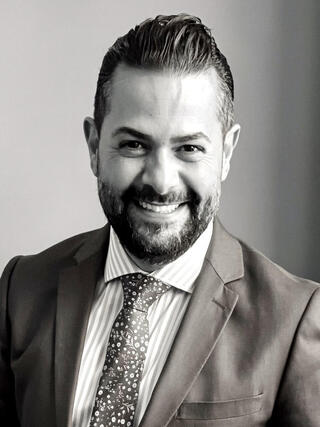 Mostafa Geha
 The absence of war should not be mistaken for peace. The current situation remains fragile, exposed to miscalculation and regional shocks. Without a forward looking vision, each year increases the chance that the next escalation will be worse than the last.
So the question is not whether peace is simple. It is not. The real question is whether continuing as we are is acceptable. It is not.
Peace between Lebanon and Israel requires vision rather than reaction and responsibility rather than rhetoric. Preventing the next war is not weakness. It is judgment. History shows that cooperation in this region is possible, and that those who shape public thought, particularly intellectuals and opinion makers on both sides, carry a special responsibility in turning that possibility into reality. At the most basic level, peace begins not only with declarations, but with people willing to shake hands, recognize one another’s humanity, and choose to build a better future together. Our task now is to ensure that future generations do not learn that lesson only after another round of destruction.
First published: 15:05, 04.28.26