

In recent months, Israel has been facing a security challenge unlike anything in its modern history. As the country absorbed direct missile strikes from Iran, I found myself thinking not only about the immediate threat, but about something larger: what it will actually take to ensure the strength of Israel’s long-term future.
I have spent more than 30 years as an engineering researcher, and I often tell students and colleagues something that sometimes surprises them: engineering is the modern Zionism. I don’t say this as a rhetorical flourish. Israel’s primary national resource—the engine behind its economic strength, its defense capabilities, its drive to build and its global reputation—is the technical knowledge and ingenuity of its people. For the past two decades, that has been increasingly true. Right now, it is more obvious than ever.
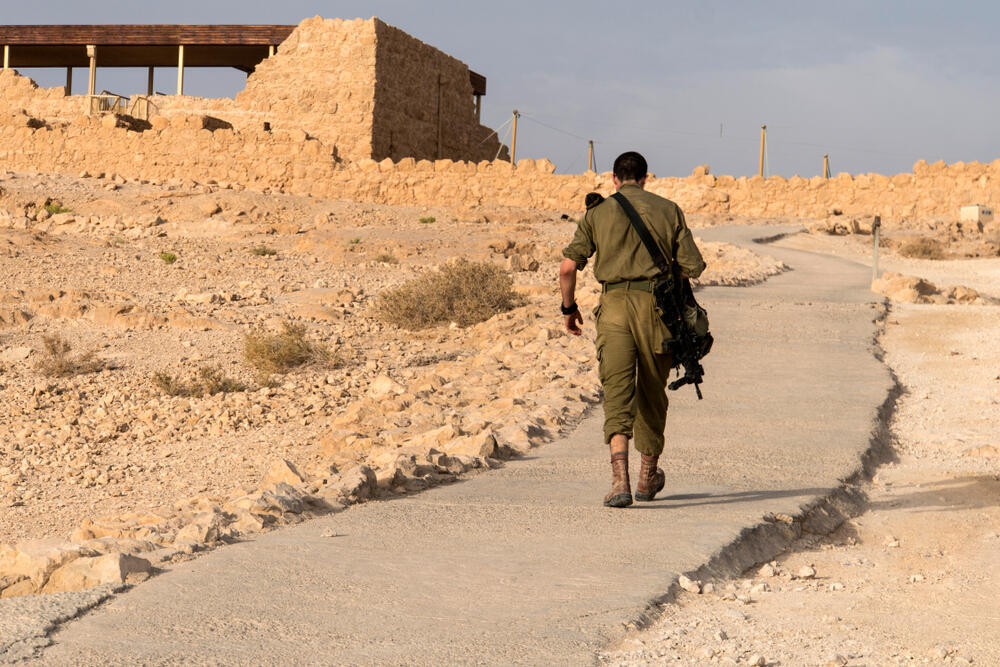
At Afeka Academic College of Engineering in Tel Aviv, nearly 600 students are currently serving in active reserve duty, the security forces and standing military service. These are young men and women who were studying electrical engineering, software engineering and mechanical engineering just weeks ago. Many are carrying both burdens at once, sitting for exams between deployments, attending lectures remotely from bases. We hold their place, as they are holding ours, and we support them. It is what we consider our basic obligation.
The question of how to support soldiers when they return is one we have had to learn from painful experience. Over the past year, Afeka lost two students who had come back from extended service in Gaza and were struggling with wounds that don't appear on any scan. After those losses, we sat down with their families and friends and asked what might have helped. The answer was consistent and modest: a quiet place, somewhere apart from the noise of campus life, where a returning soldier could sit undisturbed, listen to music, decompress.
We are now building that space, which we’re calling a Quiet Tent—a place to sit undisturbed, process and decompress. It is also a place with personal support and workshops for body and mind, for those who need more than quiet.
The students we are supporting today are also the ones who have been operating the systems that have carried us through this war. Iran’s attacks on Israel were not only a military event; they were a stress test of the entire Israeli system. The interception technologies, the intelligence architecture, the communications networks and Israel’s offensive and defensive capabilities alike were all designed, built, maintained and operated by engineers. Every layer of Israel’s response rests on applied engineering knowledge. And that knowledge begins in classrooms.

(Photo: Shutterstock)
At Afeka, roughly 40 graduation projects are conducted in direct collaboration with IDF units each year. Students are working on real operational challenges—some brought to us by IDF units and defense organizations seeking engineering solutions, others drawn from the students’ own experience in the field, not hypothetical case studies. Some of the technologies developed through these projects have already been deployed in operational settings. The connection between our campus and the country's defense is not symbolic. It is concrete and ongoing.
The broader economic picture reinforces the same argument. Israel’s high-tech sector contributes close to one-fifth of the country's GDP and accounts for more than half of its exports. For years before this war, Israel was reporting an annual shortfall of 13,000 to 20,000 engineers and programmers. That gap was already a structural vulnerability in peacetime. In wartime, when the economy cannot slow down and innovation cannot pause, it becomes more acute. The pipeline of future engineers is not a downstream concern; it is a national security issue.
This is why Afeka is continuing to build, literally, even as this conflict unfolds. Construction on our new campus in the Yad Eliyahu neighborhood of southeastern Tel Aviv is already underway. We broke ground on the first floor, and we are continuing, because we are not willing to put the future on hold.
Leading an institution like Afeka, during a period like the present, involves calculations that most university presidents never encounter: how many students have been called up since yesterday, how many have returned and need support, how many are studying under conditions that would test anyone’s concentration.
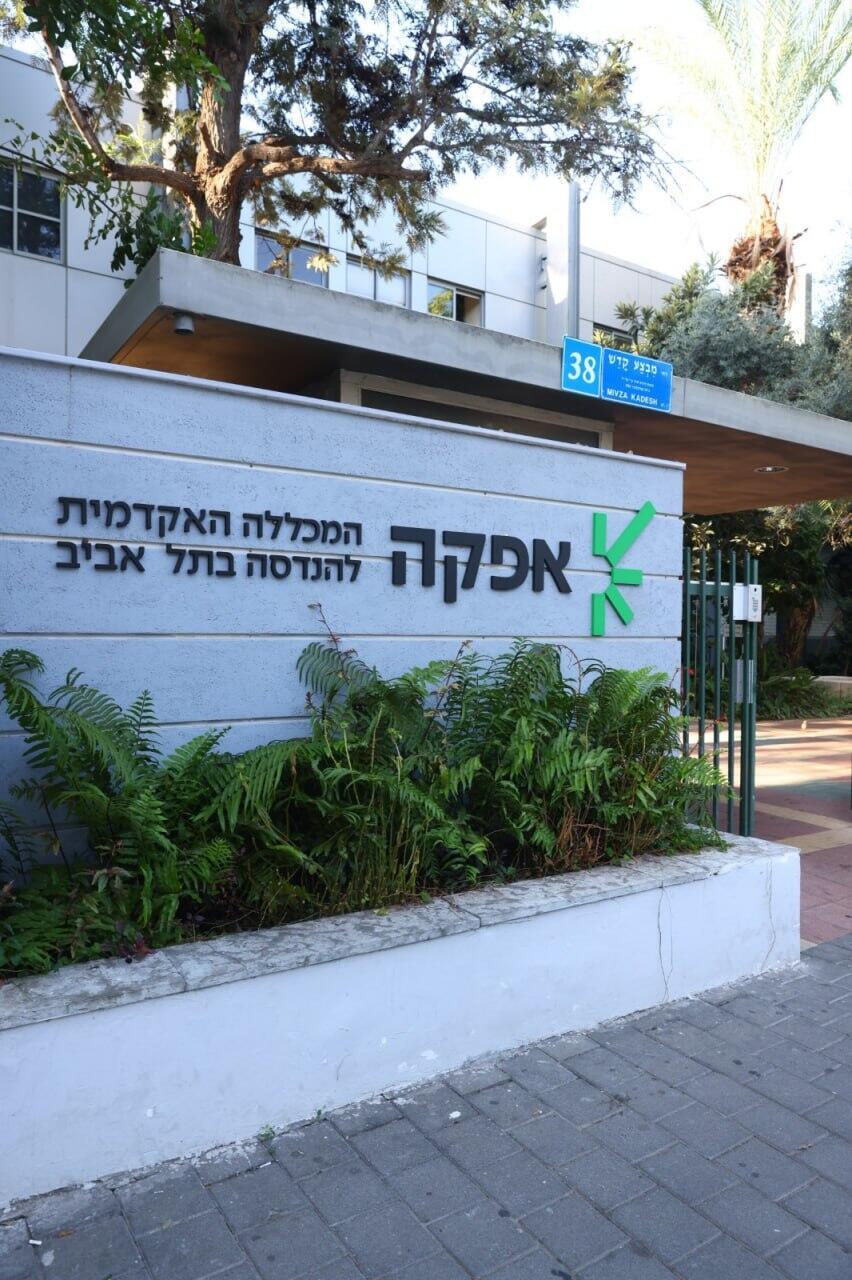
Afeka Academic College of Engineering in Tel Aviv
(Photo: Courtesy of Afeka Academic College)
The engineers who will design Israel’s next generation of defense technologies, who will drive its medical innovation and AI development and energy transition, are sitting in our classrooms right now when they are not serving. I consider it a genuine privilege to work alongside young people who carry all of this responsibility with such seriousness and resolve.
The early Zionists, and especially Israel’s first prime minister, David Ben-Gurion, understood that building a state required more than ideology. It required engineers, builders, people who could translate vision into functioning infrastructure. That generation built ports, roads, water systems and universities in conditions that must have seemed, at times, equally impossible; we are not so different from them.
The work of securing and advancing Israel flows from the same source it always has: educated, determined young people bringing technical knowledge to bear on the country’s most pressing problems. We are training those people, and we intend to keep building the institution that will produce the engineers who carry Israel forward, through this war and beyond it.
- Prof. Yossi Rosenwaks is president of Afeka Academic College of Engineering in Tel Aviv.