


Last Saturday, Somalia's government signed fifteen international maritime treaties in a single ceremony. This marked the largest legal overhaul of the country's waters since independence in 1960. The announcement faded quickly from international headlines. It should not fade from the Israeli security conversation.
What Somalia signed connects directly to the Iranian supply chain that keeps Houthi missile crews operational. Whether the signature produces real results depends on questions Somalia has failed to answer for 65 years.
Gallery
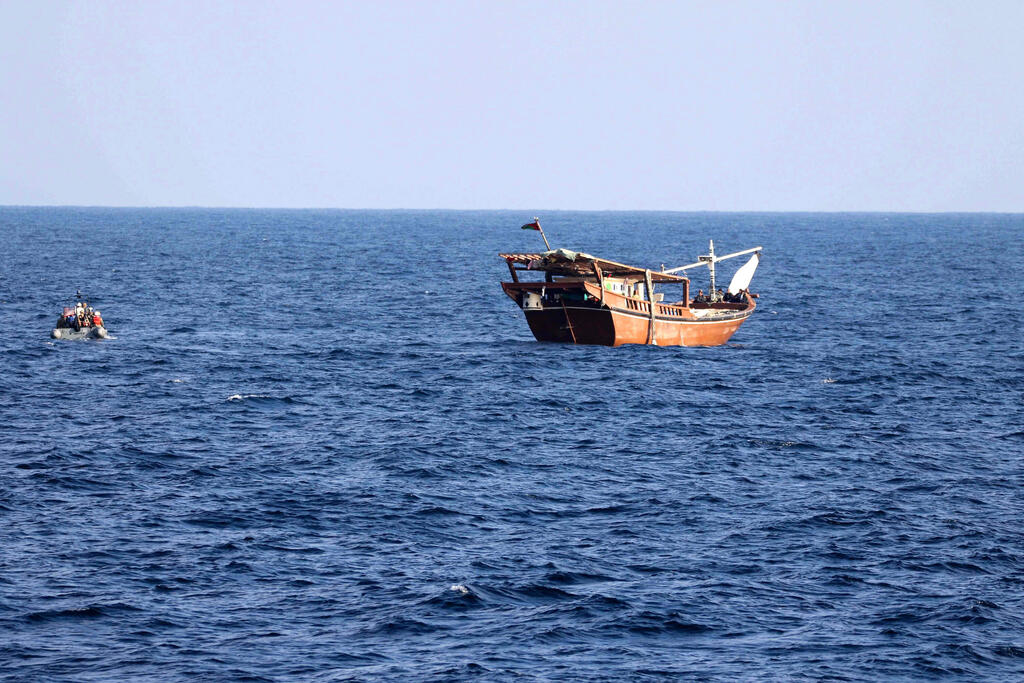
A fishing boat in the Gulf of Oman where the US seized more than 2,000 AK-47 rifles from Iran bound for Yemen’s Houthi rebels, January 2023
(Photo: AFP)
The pipeline Iran built through Somalia
For over two years, American, British and allied navies have conducted a sustained interdiction campaign against Iran's primary weapons corridor. This route runs from Bandar Abbas to the Houthi-controlled port of Saleef on Yemen's Red Sea coast. The campaign has succeeded.
Tehran has responded as it always does when direct routes face pressure. It disperses. It adapts. It finds softer terrain. The Horn of Africa, with its thousands of miles of coastline that answer to no coherent government, became the obvious alternative. Somalia, with Africa's longest coastline and a position directly astride the Gulf of Aden, sits at the center of that overflow.
American forces have intercepted Iranian weapons dhows operating near the Somali coast. These vessels carried components for medium-range ballistic missiles and cruise missiles destined for Houthi arsenals. Crew testimony from at least one seized vessel confirmed Iran's Revolutionary Guard runs weapons to the Houthis through three separate maritime corridors. One of these corridors cuts directly through Somali waters before the cargo reaches Yemen.
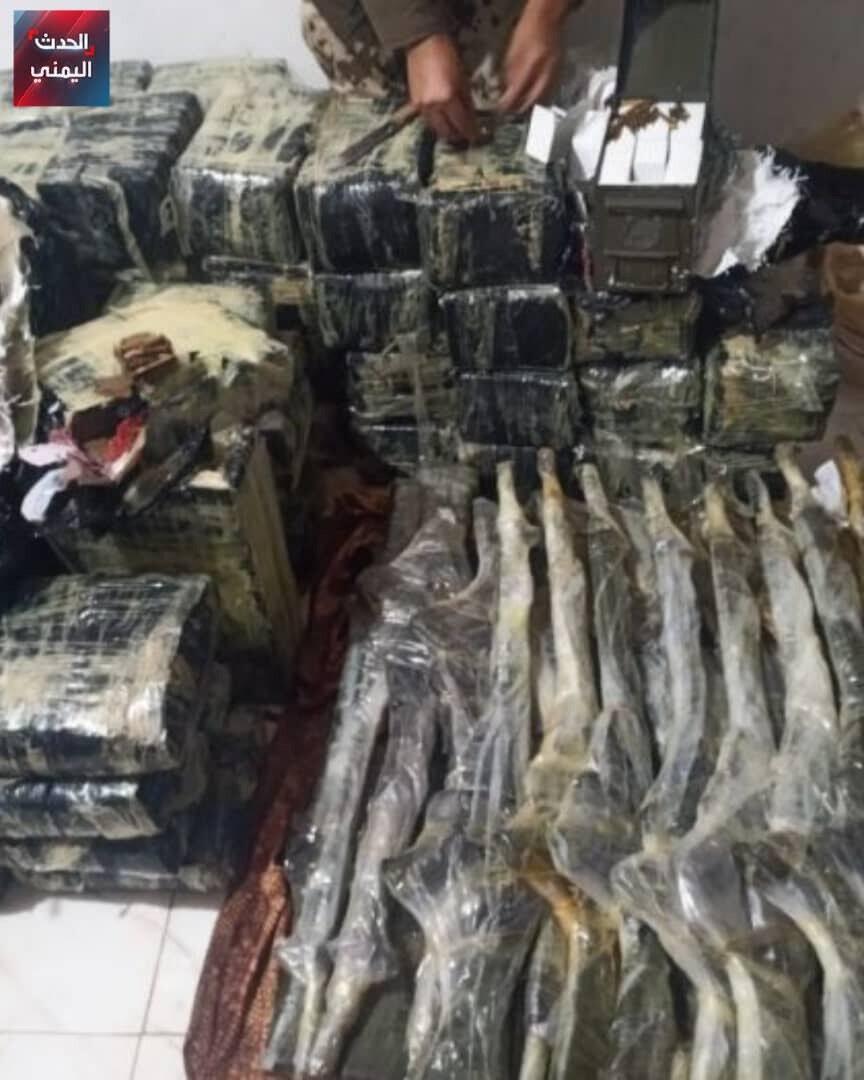
Weapons and ammunition seized by the Yemeni coast guard en route to the Houthis, December 2023
The first corridor runs straight from Bandar Abbas to Saleef. Allied navies watch this route most closely and achieve the heaviest interdictions there. The second swings south along Somalia's coast before doubling back toward Yemen. The third disguises weapons shipments as commercial freight bound for Djibouti, where cargo quietly changes hands. Compress the first route enough, and the smugglers press harder on the other two. Somalia's coast has absorbed that overflow for years.
Independent researchers tracking Iranian weapons flows have documented hundreds of arms inside Somalia. These carry serial numbers traceable to the same Iranian shipments feeding the Houthi war machine. Not all of that hardware continued north toward Yemen. Some diverted to al-Shabaab, the al-Qaeda affiliate operating across East Africa. Iran's pipeline not only arms the militia firing at Tel Aviv. It bleeds into regional jihadist networks. Somalia's ungoverned coast has functioned for years as an open transit corridor for anyone willing to run with their transponder switched off.
What the signature provides
The treaty package is not symbolic. Its most consequential element is the 2005 Convention for the Suppression of Unlawful Acts Against the Safety of Maritime Navigation. That convention is the instrument nations use to board, search and prosecute vessels suspected of smuggling weapons or supporting terrorism at sea. Somalia had never ratified it. Now it has.
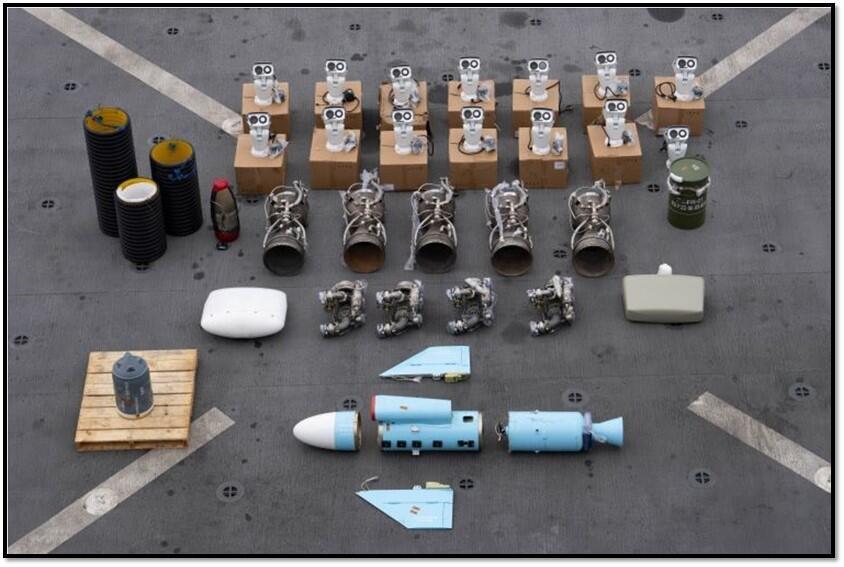
US Central Command intercepts Iranian weapons bound for the Houthis in Yemen’s Red Sea corridor, January 2024
(Photo: USCENTCOM)
Ratification gives Mogadishu legal standing to invite foreign naval inspection, accept allied operational cooperation and prosecute smugglers under a framework the rest of the maritime world already uses. Allied navies, including American and British warships already operating in these waters, can now work alongside a legal partner instead of around a legal vacuum. Mogadishu gains the diplomatic standing to request Western naval assistance without appearing to surrender sovereignty. The architecture of enforcement shifts in ways that are operationally meaningful.
For Israel, the calculation is straightforward. Every missile component seized off a Somali beach before it reaches a Houthi launch crew is a component that Iron Dome and Arrow batteries never have to intercept over Tel Aviv, Ashkelon or Be'er Sheva.
The war against Houthi aggression has always operated on two fronts. The first is the one Israelis track on their phones: the alerts, the intercepts, the impact reports. The second runs in dark water, out of sight. The entire campaign depends on whether Tehran can resupply its proxy faster than allied navies can cut that supply. Somalia just added a legal instrument to that second front that did not exist last week. That is worth registering.
Why Israel cannot afford to trust the paper
Israelis have earned the right to be clear-eyed about paper promises from governments that cannot project authority beyond their own capital. Somalia is not a reliable partner in any serious operational sense. It is a state in designation only and a mosaic of clan militias, warlord territories and active jihadist insurgency in practice. Al-Shabaab controls substantial stretches of the very coastline these treaties are intended to police. The government itself has acknowledged it has gone decades without effective oversight of its own waters.
 Amine Ayoub
A ratification ceremony does not put a patrol vessel in the water. It does not move the clan leadership that has spent years accommodating Iranian dhow captains. It does not make al-Shabaab hostile to a weapons flow that has also armed its own fighters. The same organization that has attacked regional forces for years and periodically strikes targets inside Mogadishu itself does not become a counterterrorism asset because a government it does not recognize signed a maritime convention.
Sixty-five years of Somali governance offer a consistent record. Commitments are made. Enforcement capacity never develops. The networks operating in the gaps adapt faster than legal frameworks do. The structural concern is also ideological. Somalia's political landscape is shaped by Islamic jurisprudence and clan loyalties whose priorities do not naturally align with Israeli security interests. Treating this signature as a strategic shift because it satisfies the requirements of maritime law would be an error Israel cannot afford to make.
The honest accounting
The treaties create real tools. Allied navies gain cleaner legal authority to operate where they previously had to work around a legal void. Western governments gain grounds to press Mogadishu on enforcement in ways they previously lacked. For the campaign to sever the Houthi supply chain, those are genuine gains. They are also preconditions, not results.
The question that determines whether last Saturday mattered is whether foreign navies follow through with the patrols this framework enables, whether Washington presses the opening rather than files it, and whether Mogadishu develops any real capacity to make the paper mean something in the water.
The Houthis continue to threaten Israeli cities and international shipping. Iran shows no sign of abandoning its proxy strategy. Legal tools matter, but only when backed by persistent action at sea and on shore. Somalia's move is a step forward. It is not victory. Vigilance and follow-through will decide if it becomes one.
- Amine Ayoub, a fellow at the Middle East Forum, is a policy analyst and writer based in Morocco. Follow him on X: @amineayoubx