

Since its founding on September 11, 2001, the Jewish Museum Berlin has proved controversial. Though it draws over 700,000 visitors annually, it is funded by German authorities and has no institutional ties to Jewish bodies in Germany.
Originally a bridge between Jewish history in Germany and visitors — especially school groups — the museum gradually relegated the Holocaust and Nazi persecution to a marginal place. Israel is treated as just another point in the Jewish diaspora narrative, not necessarily as the ancestral homeland.
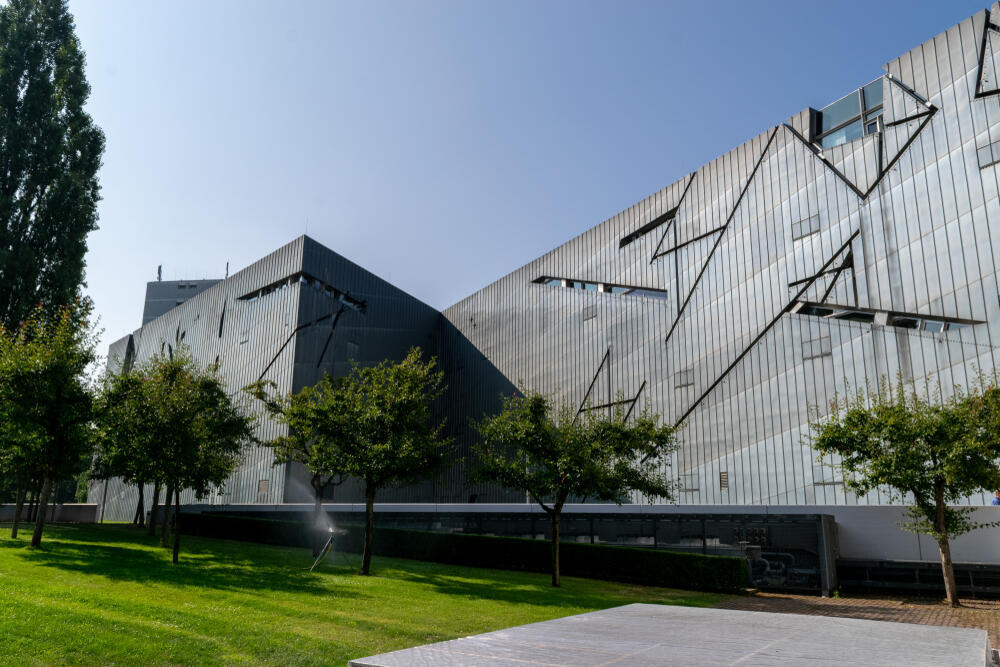
Jewish Museum Berlin
(Photo: Diego Gorzalczany Shutterstock)
In 2013, the museum staged “Jews in a Box,” where a Jewish person sat in a transparent plastic box and answered visitors’ questions — a display that drew sharp criticism. The museum also invited American-Jewish scholar Judith Butler — known for her support of BDS — to discuss “Does Zionism Belong to Judaism?” Butler later referred to the October massacres as “resistance,” not terror.
The shift deepened under director Peter Schäfer (from late 2014), who steered the museum further from Jewish community oversight and toward an explicitly anti-Israel and anti-Jewish posture, critics say. A Jerusalem-themed exhibit downplayed Jerusalem’s Jewish significance and depicted Israeli expansionism as violence. The museum hosted an official Iranian delegation and praised the show’s narrative. One Jewish journalist dubbed it “another pro‑Palestinian institution in Berlin” and “an anti‑Jewish museum.” A speaker affiliated with BDS was invited to lecture on the effects of occupation on LGBTQ lives in Palestinian territories; the talk was canceled after backlash.
In 2019, Schäfer resigned after the museum’s official Twitter account retweeted criticism of a German parliamentary decision labeling BDS antisemitic — sparking protests from Jewish staff, some of whom resigned, lamenting the museum’s politicization.
Under Dutch director Hetty Berg, the Jewish Museum Berlin had entered a period of relative calm, focusing on art exhibitions and steering clear of controversy. But that changed after October 7, when far-left, anti-Israel Israeli activists returned to the streets — and to the museum itself.
By October 8, Israelis were already taking part in pro-Palestinian demonstrations in Berlin’s immigrant neighborhoods. These activists have become familiar faces, often described as “useful Jews” at rallies where anti-Israel slogans are frequently heard.
Udi Raz, a museum tour guide, appeared after the Hamas massacre wearing a watermelon-themed kippah — a known symbol of Palestinian solidarity — and led tours in which he described Israel as an apartheid state to German students unfamiliar with the conflict. He was later dismissed.
In late September, a pro-Palestinian protest drew 100,000 people in Berlin. Attendees chanted slogans calling for the destruction of Israel and praised Hamas leader Yahya Sinwar. Three museum guides — two of them Israeli — participated. In private messages, they described the protest as “wonderful” and expressed regret that more colleagues hadn’t joined.
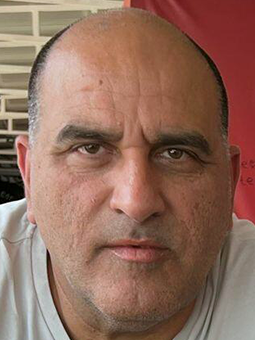 Zeev Avrahami
When contacted, one guide denied both working at the museum and attending the protest. Another insisted on her right to participate, claiming the demonstration was “less violent” — a claim the reporter disputes based on firsthand observation. Both stood by their decision to attend and threatened legal action if named.
Asked whether it was ethically acceptable for guides at a Jewish museum to attend protests calling for Israel’s destruction, the museum responded with a general statement: guides are freelancers, the museum opposes antisemitism, and it does not control what guides do outside official duties. When asked if the same answer would apply had the guides joined a neo-Nazi rally, the museum repeated its statement.