

A “revolutionary moment” describes a rare point in time when several processes converge into a perfect storm that shakes or topples an existing order. Such a moment may have unfolded in Iran late last week, on the night between Wednesday and Thursday.
After days in which millions of protesters flooded the streets, breaking the barrier of fear of the regime, and after the authorities responded with a mass killing, there was hope in the air of American intervention. Many believed such a move could deal a dramatic blow to the regime and usher in historic change in Iran.
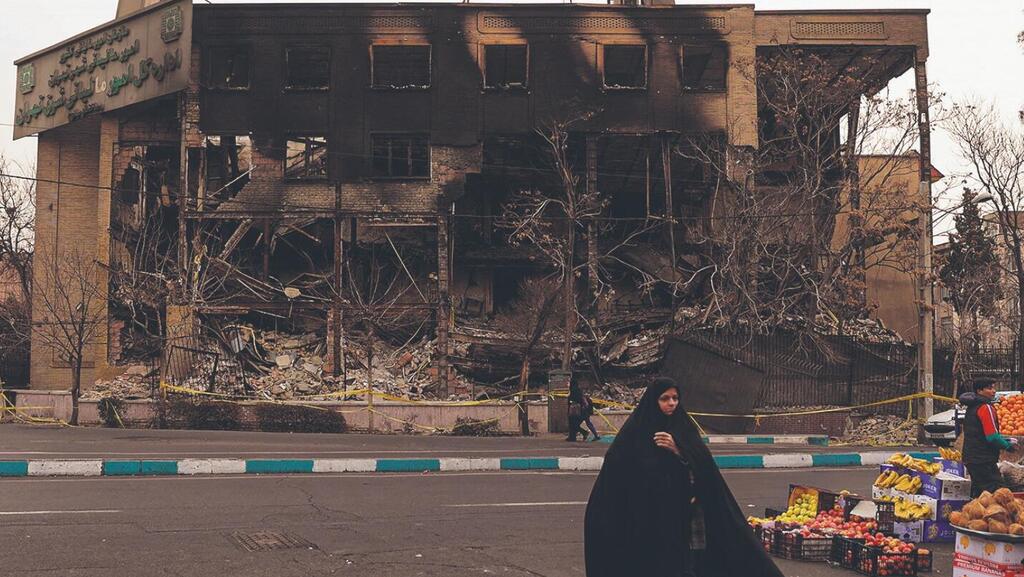
But the “help on the way” promised by President Donald Trump never arrived, and the revolutionary moment appears to have passed. One claim is that Prime Minister Benjamin Netanyahu blocked an American strike after warning Trump that Israel’s air defenses were unprepared for a broad conflict in which Israel itself would be attacked. More decisive, however, were likely Trump’s close allies in Qatar and Turkey, and possibly Saudi Arabia behind the scenes, who publicly argued that an attack would destabilize the region, invoking concepts Trump understands well, such as oil market shocks and a global economic crisis.
Thus ended, though not conclusively, three dramatic weeks unlike anything the Islamic Republic has faced since its founding.
The protest movement was drowned in blood. Estimates range from 5,000 to 30,000 killed, an unprecedented figure since the 1979 revolution. The regime restored some deterrence through extreme brutality and a campaign to hunt down protesters. Still, it is clear the genie cannot be put back in the bottle.
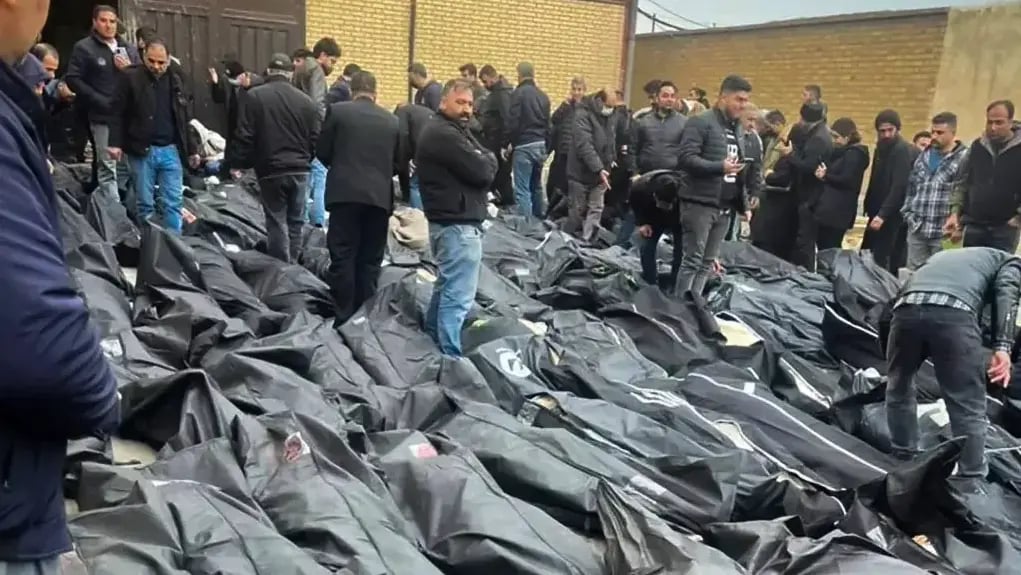
Body bags of slain Iranians
The anger of younger generations, who did not experience the revolution and feel no loyalty to the Islamic regime, has only intensified. They are acutely aware of the freedoms of the outside world and feel suffocated by Iran’s Islamic code. That rage is now mixed with a desire for revenge and a new boldness, reflected in the fact that hundreds of regime personnel were likely killed during the latest unrest.
The regime survives, for now
At this stage, the regime appears to have survived. There were no signs of fractures or paralysis within the armed forces, the kind that led to the collapse of the shah’s rule. To make an example, Iranian authorities this week publicized the name of Javid Khalas, an Iranian soldier who refused to fire on protesters and was sentenced to death. The case is meant to test Trump’s claim that the regime has canceled 800 similar death sentences under U.S. pressure.
Still, the regime understands that the threat to its survival is real. It also knows it cannot address the deep economic distress that fueled the protests, much of it rooted in international sanctions. A genuine solution would require economic rehabilitation and structural reforms, including curbing the regime’s grip on the economy, an outcome that currently appears unlikely.
“This conduct could push Iran toward civil war,” said Farzin Nadimi, an associate fellow at the Washington Institute, in a conversation this week. “The protest wave erased what little legitimacy the regime still had. We could see a process of ‘North Koreanization,’ meaning harsher domestic repression, alongside a push toward nuclear weapons as a survival tool amid growing internal and external threats.”
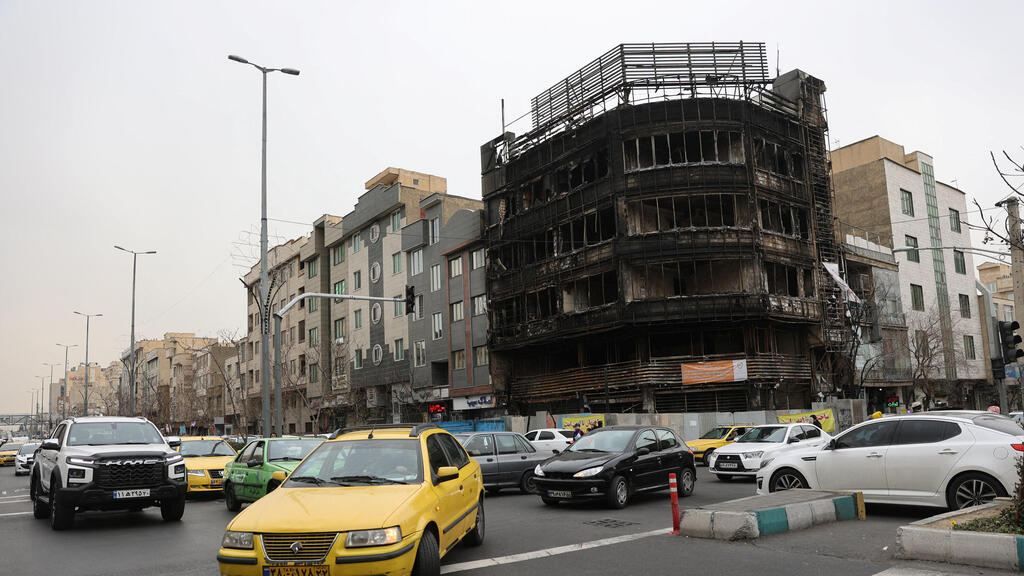
A burnt bank in Tehran
(Photo: Majid Asgaripour/WANA (West Asia News Agency) via Reuters)
Nadimi noted that figures within the establishment, including President Masoud Pezeshkian, Hassan Rouhani and Mohammad Javad Zarif, want to prevent escalation and distance the aging supreme leader from power. “But it is likely the Revolutionary Guards will block such ideas and further entrench their dominance at the top,” he said.
A similar view was expressed by Reichman University researcher Dr. Meir Javedanfar. “Khamenei was the one who mentored Assad in committing war crimes against his own people in Syria. He is now applying the same lesson in Iran,” Javedanfar said. “Iranians are disappointed Trump did not come to their aid, but they still harbor hope it may happen soon.”
He added that some of the protest movement could evolve into armed underground groups targeting the regime, echoing the organizations that fueled the 1979 revolution. “This scenario is deeply embedded in the regime’s thinking,” he said.
Between repression and reform
Alongside the expectation of further hardening at the top, there is also a more optimistic assessment, or hope, that the regime may attempt to ease internal tensions or gradually change course.
“Even if the regime weathered this wave, Iran will not return to what it was,” said Lebanese researcher Sam Menassa. “Pragmatic elements may grow stronger, understanding the need for painful concessions, especially to ease sanctions. This could lead to national reconciliation or a government representing broader segments of society.”
Menassa stressed that the regime has reached its end point, but not necessarily through immediate collapse. Instead, Iran may be entering a long and painful process of transformation, similar to the Tiananmen Square precedent, where trauma eventually gave rise to reforms, primarily economic, that stabilized the country.
The American factor
A critical question concerns the United States, whose moves are difficult to predict under Trump, even as he signals a desire for a “quick decision.” It remains unclear whether Trump fully grasps the difference between a clean decapitation-style operation, such as in Venezuela, and confronting a fanatical ideological regime.
Even if the ayatollahs represent a minority in a country of 93 million people, they remain powerful. Defeating them would likely require a ground operation, something Washington may neither be able nor willing to pursue.
As with Hamas, ideology must be understood as a core source of the Iranian regime’s resilience. “This regime survived severe blows in the past because it built a state within a state, centered on the clerical establishment and the Revolutionary Guards,” said Iraqi researcher Dr. Muthanna Abdullah. “Even if voices within the system call for change, they will likely be silenced, as before.”
Reports of U.S. force buildups in the region keep the possibility of a near-term strike alive. Yet even if Iran suffers heavy blows, including the killing of Khamenei or damage to strategic facilities, the regime may not collapse. Such an attack could instead trigger a prolonged confrontation in which Tehran, while badly hit, could still harm U.S. assets, shake global oil markets and attempt to strike Israel, possibly in an effort to ignite a broader jihadist war.
Iran is entering a period of instability and uncertainty of unknown duration, defined by three questions: if, how and when the United States will intervene; how the regime will respond to internal unrest; and whether, and when, protests will resume, and whether this time they will overcome the gaps of organization, leadership and agenda.
For Israel, the situation demands close monitoring of emerging threats while also exercising restraint and avoiding interference in internal regional arenas. History has shown that such involvement tends to produce more harm than benefit.
Dr. Michael Milshtein heads the Forum for Palestinian Studies at the Dayan Center, Tel Aviv University