

As many as 30,000 people may have been killed on the streets of Iran in just two days — January 8–9, two senior Iranian health officials told TIME. The officials described their numbers as a dramatic jump compared with previously known figures. "So many people were slaughtered by Iranian security services on that Thursday and Friday, it overwhelmed the state’s capacity to dispose of the dead." according tot he report. "Stocks of body bags were exhausted, the officials said, and eighteen-wheel semi-trailers replaced ambulances"
Amid mounting revelations about the scale of the violence, Iran’s national security commander, Ahmad Reza Radan, declared Sunday morning: “We stood for the Islamic Revolution unto death.” He once again blamed external forces for the deaths, saying, “The enemy’s goal was to create distance between the people and the system through killing and chaos, but with the vigilance of the people and the dedication of the security forces, it failed to achieve its objective.”
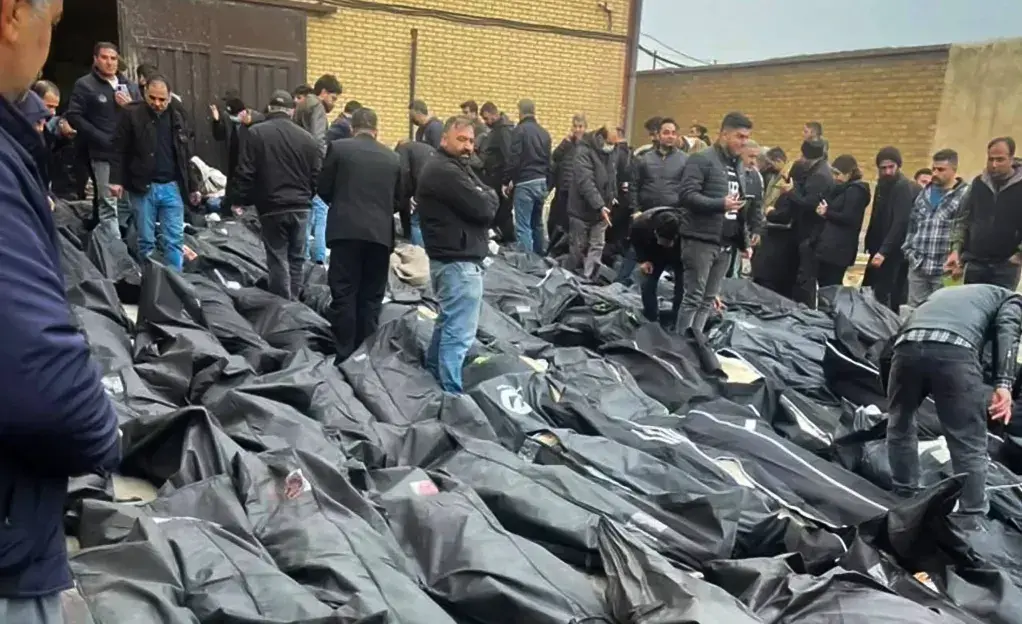
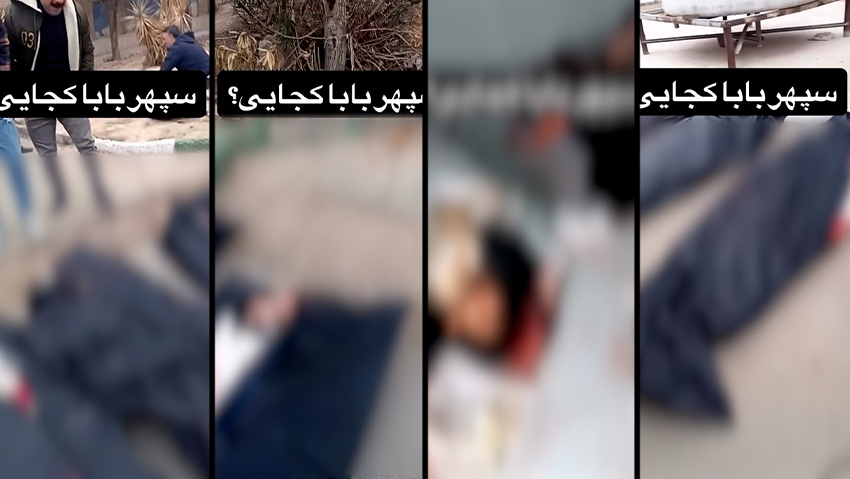
Searching for relatives among bodies of killed protesters
The regime’s internal death count — not officially disclosed — is far higher than the 3,117 fatalities reported by Iranian authorities on January 21. But a figure of 30,000 deaths is also far above estimates provided by opposition or aid organizations. A U.S. human rights group confirmed only 5,459 names of the deceased Saturday and is reviewing 17,031 additional death cases. TIME noted it was unable to independently verify these figures.
The health ministry’s count for those two days, TIME reported, roughly aligns with figures reported by doctors and emergency crews. That secret tally of hospital‑registered deaths stood at 30,304 as of Friday, according to Dr. Amir Parasta, a German‑Iranian ophthalmologist who compiled a report based on the data.
Parasta said the latest number does not include deaths that occurred in military hospitals, where bodies were taken directly to morgues, nor cases in areas that have not yet been surveyed. “We are getting closer to reality,” Parasta said. “But I guess the real figures are still way higher.”
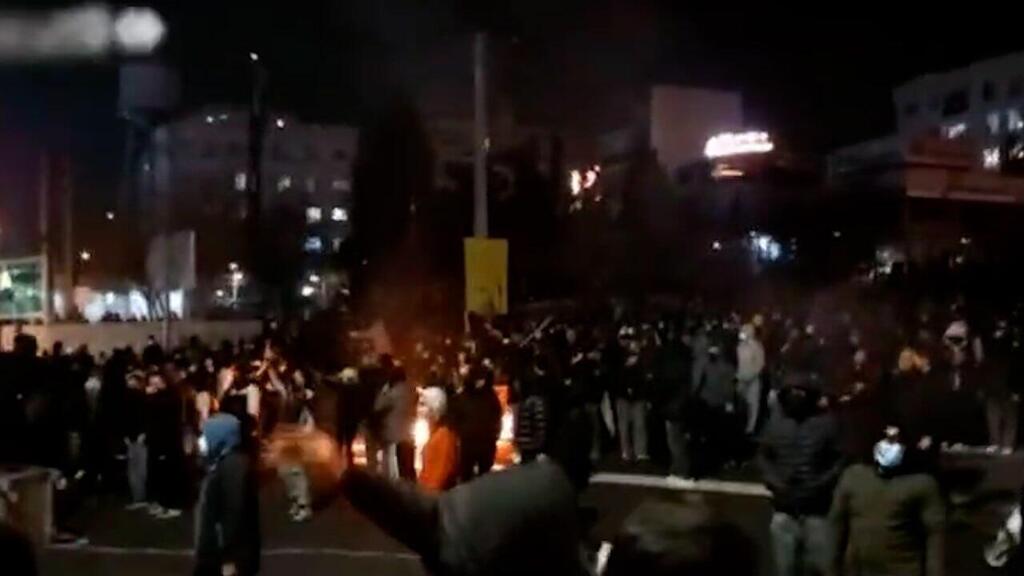
Video of protests in Tehran published on a channel affiliated with the regime
TIME spoke with researchers seeking historical comparators for a possible massacre of 30,000 people in 48 hours, noting that the closest precedent may be the Babi Yar massacre near Kyiv on September 29–30, 1942, when 33,771 Jews were executed by shooting.
The protests in Iran began on December 28 and intensified over days until the regime brutally suppressed them. Meanwhile, U.S. President Donald Trump promised that “help is on the way,” but assistance has not yet materialized. The internet was shut off, yet Iranians reported millions in the streets, and eyewitnesses told TIME that snipers were positioned on rooftops and mounted machine guns on trucks opened fire on demonstrators. On Friday, January 9, a spokesman for the Revolutionary Guards warned on state television anyone who dared to take to the streets: “If a bullet hits you, don’t complain.”
Even now, the true scale of the atrocities remains shrouded in uncertainty. Periodically, footage from Iran manages to break through the internet blackout, offering glimpses of what is happening. A new 12‑minute, 14‑second video circulated just two days ago, showing a father walking through streets, highways, and compounds piled with bodies in black bags, with shocked and screaming civilians around them, searching for his son. But counting the dead is made even harder because authorities have also cut internal communications networks.
Iran: Father searches for his son's body after he was murdered by the Iranian regime during a protest


On that same Friday, Sahba Rashtian, 23, an animation artist, joined friends in the streets of Isfahan in central Iran. "Before anyone started chanting," a friend told TIME, "Sahba was seen collapsed on the ground. Her sister noticed blood on her hand.” Sahba died on an operating table at a nearby hospital.
“She always joked about her beautiful name,” her friend said. “She’d laugh and say, ‘Sahba means wine, and I am forbidden in the Islamic Republic.’” At her funeral, the friend said, a religious ceremony was banned, and her father told mourners, “Congratulations, my daughter became a martyr on the path to freedom.”
Against the backdrop of these fragments of information gradually emerging, Yousef Pezeshkian, son of Iran’s president, wrote an unusual statement regarding the internet shutdown Saturday night on social media, which has been circulated in Arab media: “Publishing videos is something we will have to deal with sooner or later. Keeping the internet shut will create dissatisfaction and widen the gap between the people and the government. This means those who were not and are not dissatisfied will be added to the list of the dissatisfied. It’s possible that the security and law enforcement forces made mistakes, and they must be corrected.”