

The killing of additional senior figures in the Iranian regime — foremost among them Secretary of the Supreme National Security Council Ali Larijani and Basij commander Gholam Reza Soleimani — marks another stage in Israel’s ongoing effort to undermine the stability of the Iranian regime.
The elimination of the national security council secretary may be particularly significant, given Larijani’s status as one of Iran’s most veteran politicians. He served as speaker of the Majles (parliament) from 2012 to 2020, and previously held a series of key roles, including secretary of the Supreme National Security Council, chief nuclear negotiator, head of state broadcasting and minister of culture and Islamic guidance.
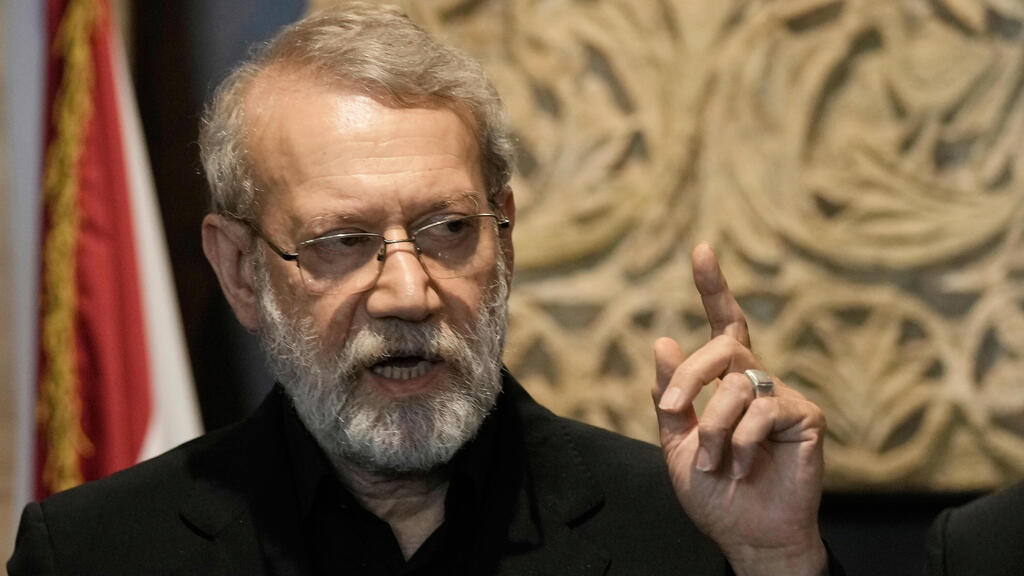
Ali Larijani
(Photo: AP Photo/Bilal Hussein, File)
He was considered a conservative who, like other conservative politicians — including former President Hassan Rouhani — recognized the need to adapt revolutionary ideology to changing circumstances and contemporary realities. During his tenure as speaker, he backed Rouhani’s policies, drawing criticism from more radical factions. His candidacy in the 2021 and 2024 presidential elections was disqualified by the Guardian Council. Even so, his involvement in state affairs increased even before his reappointment as national security council secretary in August 2025. In late 2024, he was sent as a special envoy of Supreme Leader Ali Khamenei to Lebanon and Syria (before the fall of the Assad regime), and later visited Moscow, where he met Russian President Vladimir Putin.
Larijani’s return to the top ranks of government in the summer of 2025, following the 12-day war in June of that year, reflected Khamenei’s desire to integrate experienced, veteran politicians into Tehran’s decision-making circle. This inclination intensified after Israel eliminated parts of Iran’s senior military leadership in the opening strike of that conflict. Since then, Larijani resumed a central role in Iran’s leadership and reaffirmed his commitment to the Islamic Republic’s core strategic doctrines, drawing lessons from the war.
In an extensive interview with Khamenei’s official website, he addressed the need to improve military capabilities. He said Iran had possessed sufficient capabilities to force its enemies into a ceasefire, but stressed the need to strengthen the country’s military and security capacities and correct shortcomings exposed during the war. He added that Iran is carefully and objectively examining where failures occurred and intends to address them and bolster its capabilities, given the assessment that the war is not over and that Tehran must be prepared for a possible violation of the ceasefire and a renewal of hostilities. He cited deficiencies in air defense as an example, while emphasizing the need to further reinforce areas of strength, particularly in missile capabilities and other domains.
Given his extensive political and military experience, Larijani was widely seen over the past year as Iran’s No. 2 figure after Khamenei. It is therefore unsurprising that following the leader’s assassination at the outset of the current war, Larijani effectively became the leading figure in Tehran’s political leadership. Even the appointment of Mojtaba Khamenei as his father’s successor was not expected to undermine his standing — nor that of other senior figures, including Revolutionary Guard commander Ahmad Vahidi and Majles speaker Mohammad Bagher Ghalibaf. His removal is therefore likely to create a significant gap in the Iranian leadership’s ability — especially after Khamenei’s killing — to maintain continuity and effectively manage state affairs.
Potential risk
At the same time, Larijani’s removal carries risks. Despite being a product of the Islamic Revolution and fully committed to the Islamic Republic’s core principles, his positions were generally considered more pragmatic than those of more radical figures in the leadership, such as Revolutionary Guard commander Ahmad Vahidi. Moreover, the loss of one of Tehran’s most prominent political figures could further strengthen the position of the Revolutionary Guard, which has already been bolstered by Mojtaba’s close ties to the organization.
Absent a significant shift in the balance of power as the conflict continues, the growing influence of the Revolutionary Guard could reinforce more hardline approaches in Tehran’s decision-making — including on issues related to Iran’s nuclear doctrine, its missile program and its regional ambitions.
The killing of Basij commander Soleimani adds to the cumulative damage inflicted on Iran’s internal security apparatus, alongside continued strikes on Basij headquarters and bases across the country, as well as checkpoints used by the organization, particularly in Tehran. Targeting the Basij’s senior command could undermine its command and control structure. This, in turn, may affect the balance of power between the regime and its supporters and the protest movement, should protests resume after the war.
In sum, it is doubtful that continued airstrikes, including targeted assassinations, can collapse the Islamic Republic or bring about regime change. However, the ongoing elimination of senior political and security figures could deepen cracks within Iran’s leadership and its command-and-control structure, thereby increasing the likelihood of broader destabilization.
Dr. Raz Zimmt is director of the Iran and the Shiite Axis Program at the Institute for National Security Studies (INSS).