


My daughter Maayan was just 1 year and 4 months old when Hezbollah joined the Oct. 7 attack. Within a short time, alongside the words “Daddy” and “Mommy,” she also learned to say “mamad” — the Hebrew acronym for a fortified safe room in Israeli homes — and “boom.” Her eyes spoke in countless shades of fear and confusion.
Soon she will celebrate her fourth birthday, and once again Hezbollah has opened a war. But this time she already understands that there is a “monster” beyond the mountain, and that the flashes in the sky are not really fireworks.
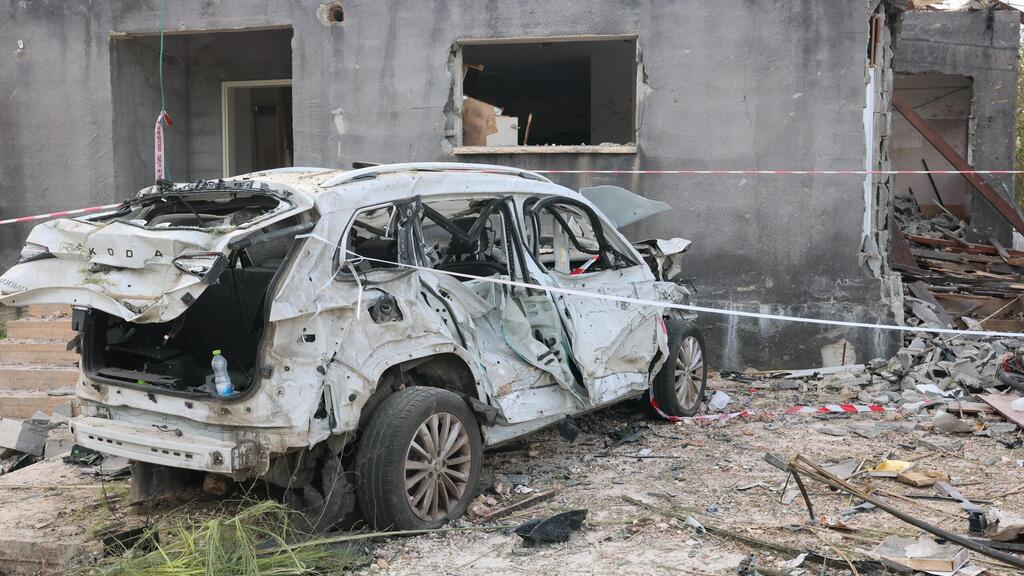
Yesterday, after another sleepless night of sirens and barrages, she asked, “Daddy, is the war over?”
The truth is I have nothing to tell a child who misses her friends from preschool while her country continues to stumble inside a dangerous concept and hide the reality from us.
When the skies trembled late Wednesday night from Hezbollah’s extensive rocket fire — which northern municipal leaders warned about while the Israeli military denied it and described the situation as “routine wartime activity” — our stomachs turned once again. It was not only the familiar sound of interceptor missiles or the terrifying whine of drones. It was the bitter realization that everything sold to us over the past 15 months under the headline “ceasefire” was nothing more than self-deception.
While Israel’s military General Staff counted the assassinations of field commanders and the destruction of terrorist infrastructure, and officials in Jerusalem spoke about “a battered and hunted Hezbollah,” the fundamentalist terror group — tied to Iran’s arteries and to the heart of the Lebanese street — was rebuilding. It reconstructed its anti-tank missile arrays, refilled warehouses with precision missiles and prepared the ground for the moment it would once again set the pace.
And while we took pride in the successes of the Israeli military, while communities in the Galilee waited for long-delayed reconstruction, the enemy across the fence had already completed its own rebuilding and set out on a renewed offensive.
We have one army. We and our relatives and friends serve in it — and we expect from it, from the rest of the security branches and from the government’s ministerial cabinet, not boasts but action.
We no longer want to hear that this is “the best security situation we have ever had.” We do not want to read headlines about a “crushing blow to Hezbollah” while we run to safe rooms in our pajamas.
Our bitter experience teaches that since 1982, the state of Israel has developed a dangerous expertise: entering war without the intention of achieving a decisive victory. Slogging through the Lebanese mud only to produce “victory images” of mushroom clouds above Shiite villages, while the real strategy is simply to buy time until the next diplomatic agreement — one that will be trampled within days.
That is how all our recent wars have looked: delivering painful blows, winning explosive headlines in the news and ultimately losing our security the day after.
There are nights after which it becomes clear that everything must change. It happened after the night of the Iranian drone attack. It happened after the horrific massacre in Majdal Shams, a Druze town in the Golan Heights. And it happened on the night between Wednesday and Thursday.
When hundreds of rockets and drones swept across the skies of the north, we once again understood their true power. If the government intends to soon send the Israeli military into Lebanon only to “muddle through” and withdraw, it would be better to leave the armored personnel carriers in storage.
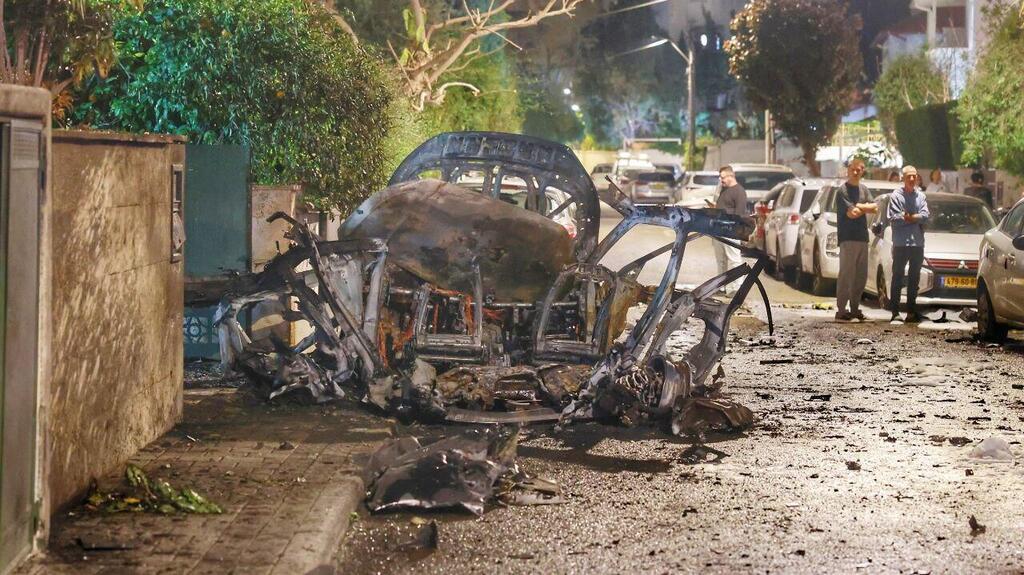
Impact site in Rishon LeZion
(Photo: Dana Kopel)
Residents of the confrontation line — communities along the Israel-Lebanon border — who returned here a year ago out of principle, even though life in central Israel is far quieter and more comfortable, did not do so in order to become cannon fodder in the next round.
On Wednesday night, when television screens broadcast “business as usual” and the military spokesman calmly announced that there was no change in public safety guidelines, the crisis of trust only deepened. In the community of Geder, the siren sometimes comes only as a report of the explosion that has already happened.
Trust in the country’s major national systems has been stretched to the breaking point, and they have failed once again.
The government must now understand: without creating a real, physical and decisive security zone beyond the border, reconstruction efforts are pointless. No one will return to live in homes that face Hezbollah’s anti-tank missile launchers.
We demand what is happening in Gaza — moving the battlefield to the enemy’s side and defeating threats before they endanger our forces.
That means a Yellow Line in the north: a real buffer zone, free of threats, up to the Litani River. An empty area under full Israeli military security control, with no civilian population serving as cover for militants and no observation posts from which an anti-tank missile can be fired straight into a kibbutz kitchen.
Twenty-six years of diplomatic attempts and U.N. resolutions such as 1701 have failed because they relied on words rather than on realities on the ground.
The Galilee cannot continue to serve as Israel’s security zone.
On Thursday night, when another drone exploded near the northern city of Kiryat Shmona, we were reminded once again of a simple truth: Those who do not defeat the enemy on its own territory will continue counting rockets inside their own homes.
Without a Yellow Line at the Litani, the revival of Israel’s north will remain only on the paper of government decisions.