

The Israeli-American war against Iran’s axis of evil is not just a military confrontation. It may be the conflict that finally erases the map drawn by Britain and France in 1916.
We are watching, in real time, the collapse of the Sykes-Picot agreements and a return to the Middle East’s authentic structure — a mosaic of tribes, clans and local emirates.
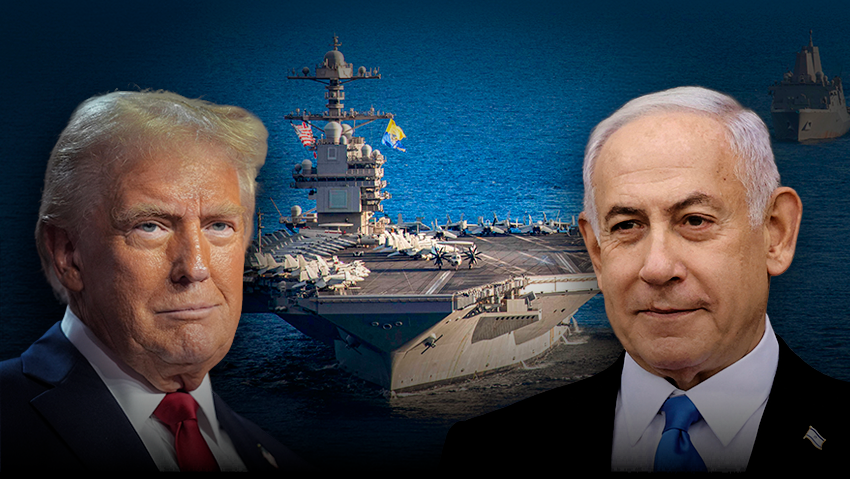
(Photo: Maxwell Orlosky / US DEPARTMENT OF DEFENSE / AFP, REUTERS / Kevin Lamarque, AP Photo / Evan Vucci)
Khamenei, in his “justified” paranoia, understood something the West could not or would not grasp: the Shiite empire he built was artificial and fragile.
The moment the military strength of Iran’s proxies began to crack, ideology alone could no longer hold territory. Without the boot of the Revolutionary Guard in Beirut, Damascus and Sanaa, the Shiite axis reverts to its historical position — a persecuted and weakened minority in a hostile Sunni sea.
The Islamic Revolution, which sought to export Shiism as a dominant regional force, chose the wrong enemy — the Jews — and in doing so may have sealed its own fate.
The inevitable finale is already visible on the horizon. If regime change in Tehran is completed, we could find ourselves at the opening of a historic peace conference — Sykes-Picot 2026.
Here lies the fascinating paradox: Israel has effectively become the contractor for the Sunni world.
The moderate Arab states, which quietly dream of dismantling the Shiite crescent but fear acting openly, received their objective on a silver platter. Yet this victory comes at a price for the old order. The Arab and Muslim states that present themselves as Western-style nation-states may lose relevance to a model in which tribe and clan once again become the true governing units.
Within this chaos, only one group holds an asset no one else in the region possesses: the Kurds.
They have a coherent national story, contiguous territory and iron determination. They are the only actors in the emerging Middle East not dependent on extreme religious ideology or arbitrary colonial borders. They may be the ones to generate the real breakthrough toward regime change in Iran and Syria.
If that transformation occurs, it will not be European diplomats with rulers and fountain pens redrawing the map. It will be Americans and Israelis assembling a new reality that acknowledges the dismantling of old structures and their reconstruction. Lebanon and Syria will likely be the first laboratories.
 Meir Swissa
In short, it is time to update the atlases. The space between Tehran and the Mediterranean may become a collection of new, smaller — and perhaps more stable — states built on tribal identity.
And Hamas? It will probably remain a disturbing background noise — a bleeding wound that refuses to heal — but it will not be part of the new order.
Hamas belongs to the collapsing old framework that tried to impose rigid religious doctrine on a changing reality. As the region reshapes itself around interests, nations and clans, Hamas will remain a bitter remnant of a bygone era — also stripped of the financial lifeline that once sustained it.