

As U.S.President Donald Trump and members of his proposed “Board of Peace” discuss pledging billions of dollars for relief and reconstruction in the Gaza Strip, recent public opinion surveys reveal a troubling reality: many Palestinians remain deeply worried about corruption within their own political system.
These findings should raise serious concerns for the Trump administration and other international donors preparing to invest vast sums in Gaza’s recovery. The message from many Palestinians themselves is clear: there is little trust that their leaders will manage such funds responsibly.
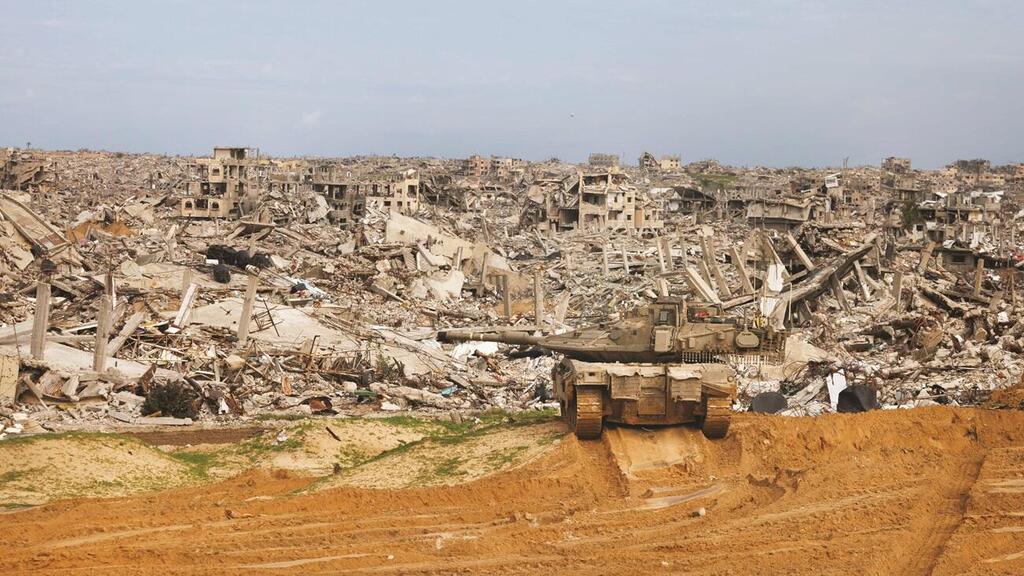
According to surveys conducted by the Coalition for Integrity and Accountability, a Palestinian civil society group dedicated to promoting transparency and fighting corruption, 57% of Gaza residents believe corruption will either remain the same or worsen following the war launched by Hamas on October 7, 2023.
The polls also found that 90% of Palestinians consider existing anti-corruption efforts insufficient, whether carried out by Palestinian Authority institutions or by Hamas in Gaza. Respondents cited weak transparency in public institutions, a lack of political will to hold corrupt figures accountable, ineffective penalties and the absence of leadership that sets an example in protecting public resources. In addition, 61% said corruption increased in 2025, and many expect it to rise further in 2026.
These results are consistent with earlier findings by the Palestinian Center for Policy and Survey Research, whose polls have repeatedly shown that more than 80% of Palestinians in the Gaza Strip and the West Bank believe corruption exists within Palestinian Authority institutions.
The issue becomes particularly significant as the Palestinian Authority is expected to play a central role in the future governance of Gaza. Recently, Nickolay Mladenov, high representative for the proposed “Board of Peace,” announced the creation of a Palestinian Authority liaison office to coordinate with the board’s work in Gaza. Meanwhile, the newly formed National Committee for the Administration of Gaza, presented as a body of independent technocrats, reportedly includes many figures affiliated with Fatah, the ruling faction of the Palestinian Authority.
Under the leadership of Mahmoud Abbas, many Palestinians believe corruption has expanded rather than diminished. Practices such as wasta, a system of nepotism and favoritism, along with the misuse of public funds and the enrichment of political elites, have fueled widespread public frustration, especially as ordinary citizens face economic hardship. Such dissatisfaction was a key factor in Hamas’s victory in the 2006 Palestinian legislative election, when the group campaigned on promises of clean governance and reform.
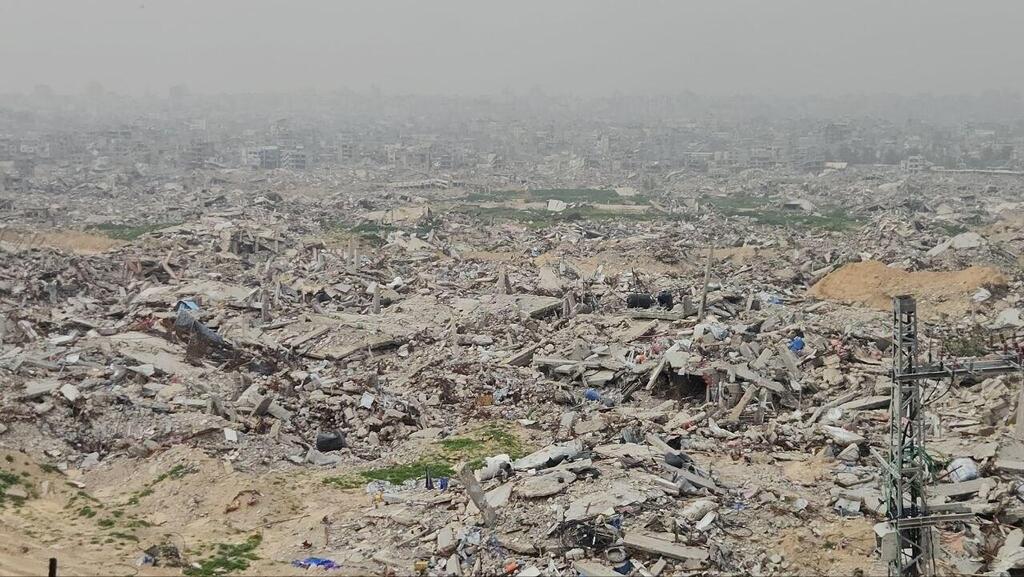
The Gaza Strip
(Photo: Yoav Zitun)
For more than three decades, critics argue that the international community has failed to adequately monitor the flow and use of aid directed to Palestinian institutions. Tens of billions of dollars sent to both the Palestinian Authority and the Hamas-controlled administration in Gaza have allegedly been lost to corruption, diverted by terrorist groups or mismanaged by political leadership.
Since October 2023 alone, Hamas is reported to have generated around $500 million by seizing humanitarian aid shipments and reselling supplies to Gaza residents at inflated prices.
Corruption and the diversion of resources have repeatedly undermined reconstruction efforts in the Gaza Strip. Construction materials intended for civilian housing have frequently been redirected to build Hamas’s extensive tunnel network and military infrastructure. Funds meant for schools, hospitals and public development have instead strengthened militant capabilities and reinforced political patronage networks.
As a result, Gaza has become a unique and troubling case: a territory where terrorist groups can wage repeated wars while international donors finance rebuilding the same battlefield afterward.
There is no question that Gaza’s population urgently needs humanitarian aid, housing, infrastructure and economic opportunity. However, simply pouring more money into the territory without strict safeguards is unlikely to solve the underlying problems.
Despite being one of the most heavily funded territories in the world in terms of aid per capita, Gaza remains impoverished, unstable and dominated by armed factions. Much of the international assistance intended for development has instead been absorbed by a governing system that prioritizes military confrontation over civilian reconstruction.
If the proposed “Board of Peace” truly seeks to help Palestinians, it must move beyond the assumption that financial assistance alone will transform the situation. Any credible reconstruction plan must begin with strict conditions: transparent tracking of every dollar spent, rigorous monitoring of construction materials and a firm requirement that Hamas and other terrorist groups disarm and withdraw from governing structures.
Without such measures, the belief that writing larger checks will produce different results risks repeating the same cycle that has defined Gaza for decades.
- Rami Al Dabbas is a writer/commentator known for opinion pieces on Middle East politics, critiques of Islamist movements, advocacy of political realism and engagement and a controversial presence on social media.