

A decade after Israel opened the door to medical cannabis with the stated goal of easing patients’ suffering and integrating it as a therapeutic tool, the country finds itself in a very different place: one of the world’s most active and expansive cannabis markets, with features that resemble a loosely regulated consumer market more than a health care system.
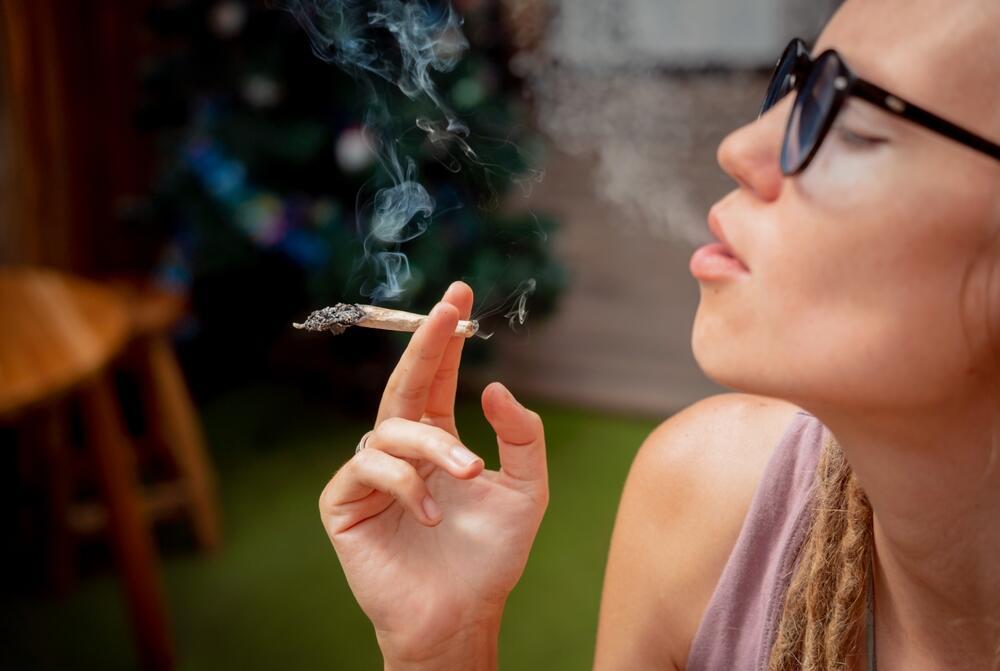
The Health Ministry identified the developments in real time and decided to act. The recommendations of the committee examining trends in cannabis treatment, headed by Dr. Gilad Bodenheimer, head of the ministry’s mental health division, were submitted to Director General Moshe Bar Siman-Tov. At their center is a phased ban on smokable cannabis within three years.
This is not a technical update. It is a fundamental change in approach and an explicit attempt to “hit the brakes” on a worsening trend.
The recommendations touch on a wide range of areas, but the central message is clear: The medicalization process launched in 2016, and still viewed skeptically by senior ministry officials, has lost direction.
The numbers make that clear. According to New Frontier Data’s 2025 global report, more than a quarter of Israelis ages 15 and older, 27%, reported using cannabis with a high THC concentration. THC is the main psychoactive compound in cannabis. That is the highest rate in the world, above Canada, the United States and Jamaica.
At the same time, the number of medical cannabis licenses jumped from about 33,000 when the medicalization reform was launched to about 140,000 in 2024 — a fourfold increase in about a decade. Usage patterns point to conduct that is not necessarily therapeutic: About 62% of patients consume more than 30 grams a month; about 88% of licenses are for high-THC products; about 87% of patients consume cannabis by smoking; and about 98% of licenses involve that form of use — precisely the form that worries the Health Ministry.
The data also show that about 85% of consumption is through licenses, rather than prescriptions, mainly for pain, post-traumatic stress disorder and “other” indications. Consumption skews male and is especially prominent among people under 45.
A normalization process that moved too fast
Alongside the surge in consumption, a broad industry has also been built. According to the same report, Israel’s medical cannabis market was estimated at about $159 million, with a forecast of about $327 million by 2025. Total spending on cannabis, legal and illegal, was estimated at about $7.4 billion. From 2020 to 2025, Israel was among the world’s largest cannabis importers, alternating with Germany. The report described Israel as the most developed medical cannabis market outside North America, with a penetration rate of about 1% — 10 times that of leading European countries such as Germany and Luxembourg.
At the Health Ministry, officials fear that a psychoactive substance underwent a normalization process too quickly, without the health care system building treatment protocols, training systems or oversight mechanisms around it. Policy also played a role: In Israel, medical cannabis costs less than cannabis on the black market, turning the license into an economic and cultural channel, not only a therapeutic one. The prescription reform of April 2024, which eased purchase routes, together with price gaps, accelerated demand.
According to ministry officials, the trigger for tightening policy was the impact of the war: an expected sharp increase in the number of patients with PTSD and pain. Without intervention, ministry officials estimated, consumption could have doubled within several years — a scenario with significant health implications.
The most dramatic recommendation is a phased ban on smokable cannabis within three years. There is no medicine in the medical world that is administered by smoking, and the U.S. Food and Drug Administration has not approved any smoked product as medicine. In Canada, Germany and Australia, medical treatment forms include extracts, oils or inhalers. That is why the Health Ministry stresses, rightly, that Israel is a global anomaly. The committee recommends a full shift to other forms, with only a grace period for patients over 75 and terminally ill patients.
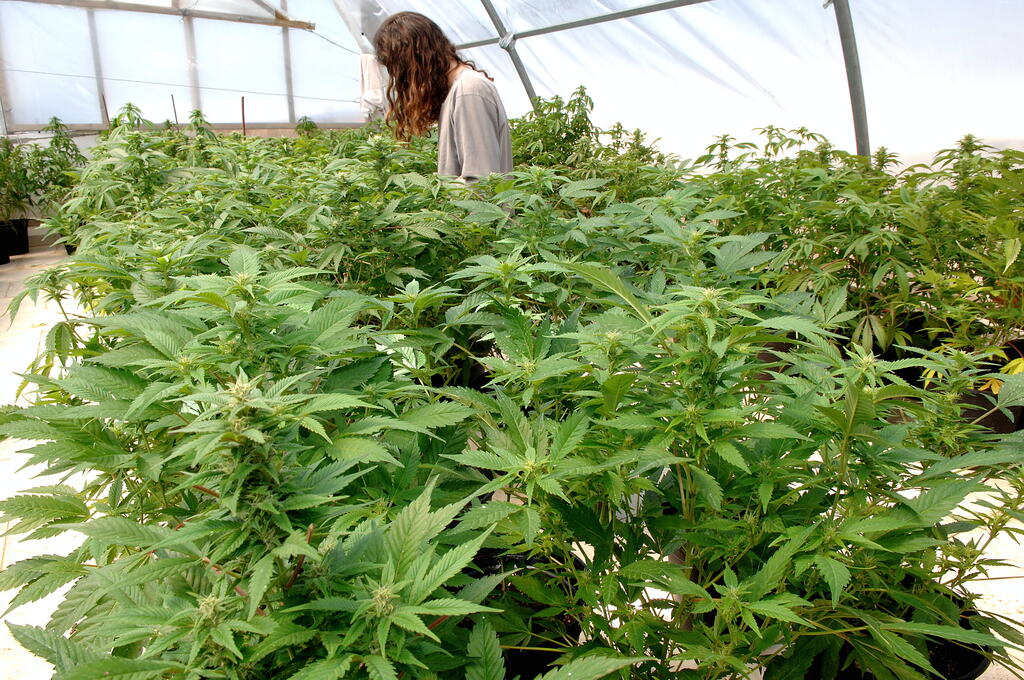
The second recommendation, no less critical, is to transfer all medical treatment to the responsibility of Israel’s health maintenance organizations — a move that would turn cannabis into a drug “for real.” Diagnosis, approval, dispensing and follow-up would be concentrated within the patient’s insurer, without bypass routes, within one year.
(Photo: Efi Shrir)
The third recommendation, and the most controversial, concerns PTSD. The committee recommends “extra caution” in approving cannabis for PTSD, in line with the positions of the FDA and Israel’s National Council for Post-Trauma. The document says the “long-term harm is proven, while the benefit has not been sufficiently proven.” Ultimately, the committee was driven by a medical consideration: Smoking is not a medical practice, and the accumulating evidence of health risks cannot be ignored. “It must not be forgotten that to this day there is no evidence of medical benefits,” a senior Health Ministry official said.
Still, the ministry says patients will be able to receive cannabis for PTSD only “in severe states of distress involving lack of sleep, significant agitation and flashbacks,” and alongside proven treatment such as psychotherapy. The indication will not be canceled, but access to it will be significantly tightened. In a country emerging from a long war, that is a position requiring considerable professional courage.
The fourth recommendation is systemic: Renewing prescriptions beyond six months would require an in-person follow-up with the recommending doctor and approval from an authorizing doctor. The goal is twofold — to stop doctor shopping and return clinical judgment to the center.
The fifth recommendation includes a questionnaire to identify addiction risk at the start of any treatment, a “red flags” protocol and a protocol for ending treatment — because it turns out that patients who begin treatment almost never end it. Such tools are standard in treatments with addiction potential, but until now have been absent from Israel’s cannabis track.
Finally, the committee recommends reducing dosages, lowering THC concentrations, providing financial incentives for safer products and training doctors at all levels in the field. It also proposes establishing an indications committee that would convene at least once every two years for systematic monitoring.
Ultimately, this is a move by a health care system that understood an entire market had been built beside it over the past decade, without the institutional tools needed to supervise it. The 2016 reform was a reform of “relief,” born of a desire to help patients but also under public, political and economic pressure. The 2026 reform is a reform of “restraint,” the product of medical and factual pressure. The public did not demand it. The data and the regulator did.
The logic of the recommendations is clear: Medicalization is not being canceled, but it is being significantly narrowed. Those who need treatment will receive it, but under a far stricter protocol. “Treatment will not be taken from those who need it, but it will be ensured that this treatment is given in the correct and safest way,” Health Ministry officials say.
The principles of the reform — or “counter-reform” — are already clear, and Bar Siman-Tov is expected to approve the recommendations. But the real challenge is political approval and implementation. The health, social and economic drama also has a significant political dimension: Elections will be held in less than six months. More than 100,000 medical cannabis license holders constitute an electoral mass of their own, alongside their families, additional consumers and politicians who know how to identify a pool of votes.
An announcement of a phased ban on smoking comes at an especially sensitive time, when coalitions tend to avoid steps that provoke public opposition. Add to that the tightening of indications for PTSD in a society still dealing with the effects of war, and the sensitivity only increases. That is why the Health Ministry’s move is bold, and why it will need political approval.
Implementation itself is also complicated. Three years to stop marketing smokable cannabis is an aggressive timetable for a market in which 98% of sales are in flower form. Hundreds of thousands of patients, growers, pharmacies and regulators will be required to change patterns in an environment that has grown accustomed to almost unrestricted cannabis. When political and economic interests are added, the challenge becomes even greater.
Still, if the recommendations are translated into actual implementation and are not eroded in prolonged discussions, Israel could carry out one of the sharpest transitions in the world — from a relatively soft market to a tightly supervised one, using the tools of the health care system.
There is also what the document does not say. Two central issues are absent from the 46-page report. The first is leakage of cannabis from the medical market outside the therapeutic framework. When a patient buys 30 grams a month and medical cannabis is cheaper than the gray market, clear arbitrage is created. Some of the flower does not reach the registered patient, but moves to relatives, friends or a secondary market. The document does not estimate the scope of the phenomenon and does not offer a new oversight mechanism to prevent it.
The second issue, even more troubling, is the 27% figure itself, which refers to people ages 15 and older. That means the world’s highest usage rate also includes teenagers. Exposure to THC at a young age does not align with medical use, and the neurological effect on the developing brain is well documented, especially up to age 25. These two issues — leakage and young age — are linked: The larger the medical market becomes, the larger the pool from which material leaks to populations that should not be exposed to it.
The committee document focuses on the doctor, the patient and the prescription. It does not address the broader ecosystem that has formed around them, especially minors. That will be the next challenge.
First published: 07:30, 05.04.26