


The Health Ministry is moving to sharply tighten oversight of medical cannabis, recommending a phased ban on smoking cannabis for medical use within three years, new caution in treating post-traumatic stress disorder and a full transfer of responsibility to the country’s health funds for closer monitoring.
The recommendations, submitted Sunday by a special ministry committee, mark a major shift a decade after Israel regulated the use of medical cannabis. Doctor-issued prescriptions would replace the current license system.

The proposed overhaul comes after Israel rose to first place worldwide in medical cannabis consumption relative to population size, according to data presented by the committee.
In 2016, the government approved a framework meant to give patients a reliable supply of cannabis for medical use while protecting public health. Ten years later, Health Ministry Director-General Moshe Bar Siman-Tov appointed a committee headed by Dr. Gilad Bodenheimer, head of the ministry’s mental health division.
The committee found that the number of medical cannabis license holders rose from 33,000 in 2019 to 140,000 today, more than quadrupling. It also found that 87% of consumers use cannabis by smoking and 98% of licensed purchases are for smokable products.
The panel said 88% of licenses are for products with high concentrations of THC, the psychoactive compound in cannabis, and 62% of consumers use more than 30 grams a month. Some use twice that amount, raising serious concerns about addiction, the committee said.
Bodenheimer said the ministry is seeing higher doses and increased use for pain, PTSD and fibromyalgia.
“We are seeing growing use of high concentrations of THC, the psychoactive component of cannabis, which produces effects that concern us,” he told reporters. “We are at the extreme end of very widespread use by smoking.”
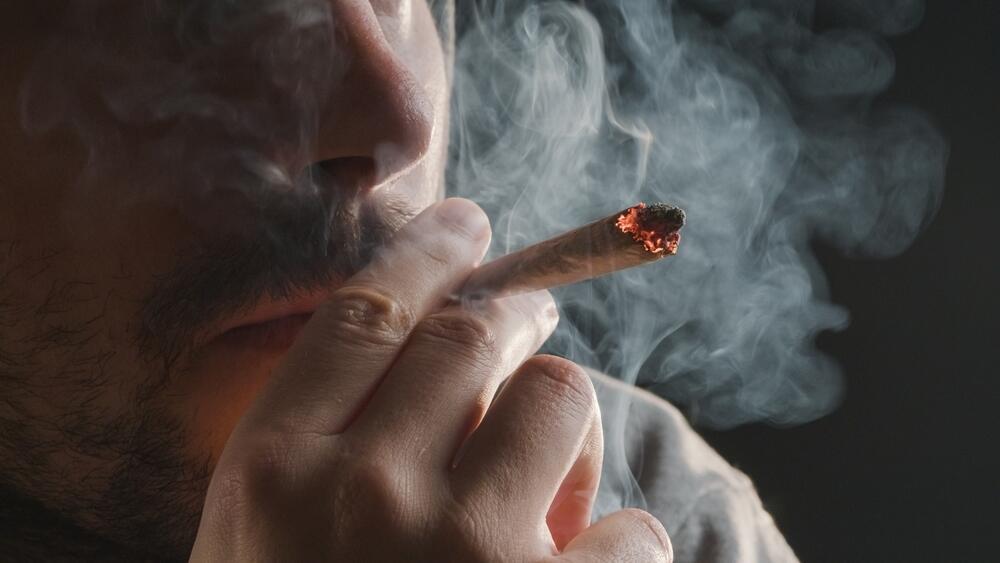
The committee said smoking is not a legitimate medical form of treatment because dosage and absorption are inconsistent and cannot be properly monitored. It also said smoking encourages behavior that endangers public health and noted that most countries that permit medical cannabis no longer allow it to be smoked.
Under the recommendation, smoking would be phased out within three years. During the transition, it would be allowed only in exceptional cases, when a doctor recommends it after extracts or inhalers fail, and with personal approval from a senior official. After the transition, smokable cannabis would be replaced by inhalers with similar effects.
Bodenheimer said the goal is to create alternatives, not harm patients.
“With an inhaler, we know exactly how much the patient inhaled, unlike flowers and smoking, where it is impossible to understand what is happening,” he said.
The committee also recommended using the lowest possible doses by default and prescribing products with lower THC levels relative to CBD, the nonpsychoactive compound in cannabis. It urged greater use of cannabis extracts, such as oils, and less use of cannabis flowers.
The panel recommended considering eased rules for patients over 75 and for patients with incurable illnesses whose life expectancy is no more than six months.
A major part of the recommendations focuses on preventing addiction. The committee said doctors should complete a risk questionnaire with patients at the start of treatment and watch for warning signs, including use of multiple addictive medications, repeated pressure for a prescription, frequent switching of doctors, steady dose increases and refusal to try stopping treatment.
When “red flags” appear, such as insistence on a specific treatment outside the care plan, aggression or moving between many doctors, the physician should follow a protocol for ending treatment, the committee said.
The committee also recommended that renewing a prescription beyond six months require an in-person visit with the recommending doctor and approval from an additional authorizing physician.
Bodenheimer said cannabis is usually not the treatment itself, but a supplement to treatment.
“It can help with various symptoms and is not supposed to cure different illnesses,” he said. “The problem is that patients sometimes stop taking treatment because they think cannabis will take its place.”
The committee urged special caution in prescribing cannabis for PTSD, one of the most sensitive issues in Israel since the Oct. 7 Hamas-led attack and the war that followed. PTSD, pain and other indications account for more than 85% of medical cannabis consumption, the committee said.
The panel said existing research, including assessments by the FDA and the national PTSD council, shows proven long-term harm while the benefit has not been sufficiently proven. It also warned of a significant risk that cannabis use could impair a patient’s return to regular functioning.
(Photo: shutterstock)
The committee did not recommend removing PTSD as an approved indication. Patients with PTSD who need medical cannabis would continue to receive it. The ministry said research points to possible benefit for specific symptoms, including sleep problems, severe restlessness and intrusive memories, and that some patients are helped by it individually.
In such cases, the committee said, treatment should include close monitoring and evidence-based accompanying care, such as psychotherapy. Committee members were not unanimous on the issue but agreed that existing research does not sufficiently justify the treatment and that more research is needed.
Another central recommendation is to transfer all medical cannabis care to the health funds. The Health Ministry wants a prescription reform approved by the Knesset three years ago and launched two years ago to apply to all indications.
Officials said the patient’s medical file is held by the health fund, allowing the treating doctor to see the patient’s broader care plan and other treatments while monitoring cannabis use.
Today, many licenses are issued outside the health fund system, making follow-up and oversight more difficult. Under the recommendation, approval and dispensing of medical cannabis would be handled only by the patient’s health fund, which would also be responsible for monitoring the effects of treatment. The committee recommended giving the health funds about a year to prepare.
The Health Ministry said more people in Israel have been coping with pain, anxiety and trauma in recent years, especially since the start of the war, leading to a rise in medical cannabis use.
The ministry said the trends underscore the need to ensure that cannabis treatment helps patients and does not cause further harm.
“Treatment will not be taken from those who need it,” the ministry said, “but it will be ensured that it is given in the correct and safest way.”
The recommendations will now be reviewed in ministry discussions before any implementation.
First published: 16:16, 05.03.26